





Why do ISO hydraulic cylinder systems matter beyond a procurement checkbox?
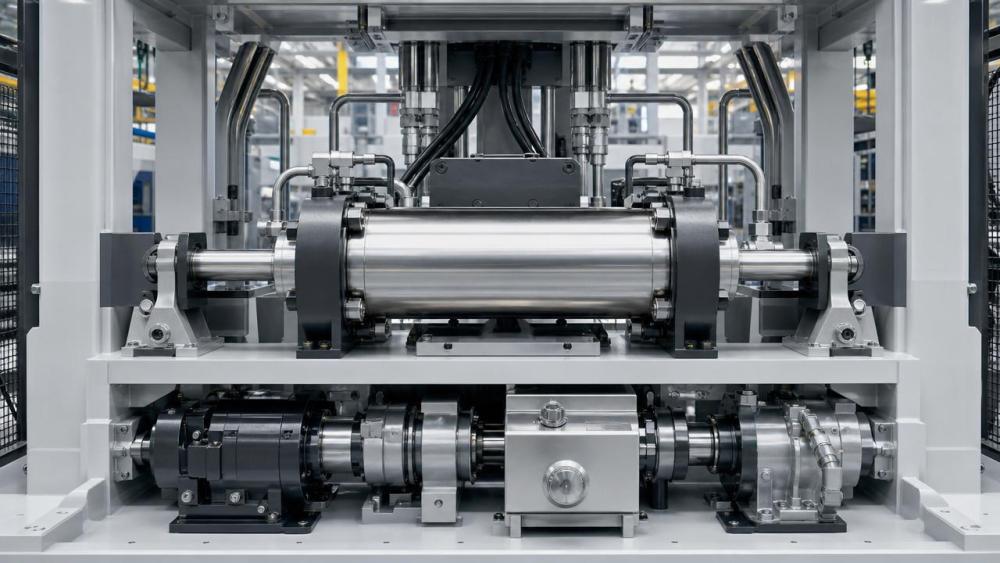
ISO hydraulic cylinder systems usually enter discussion during sourcing, audits, or project approval. Yet their real value appears later, during operation, inspection, maintenance, and failure review.
That is why compliance should never be reduced to a certificate file. In practice, it shapes stroke control, pressure integrity, mounting stability, seal behavior, and replacement consistency.
For industrial equipment, these points affect not only uptime, but also guarding strategy, lockout procedures, contamination control, and incident prevention.
In the wider precision components field, PCTS often connects hydraulic cylinder decisions with seals, rods, bearings, pumps, couplings, and MRO planning. That broader view matters.
A cylinder that looks compliant on paper can still create risk if tolerances drift, seal materials mismatch the fluid, or inspection criteria remain vague.
So when people ask what compliance really means, the useful answer is simple: ISO hydraulic cylinder systems should behave predictably under daily load, not just pass document review.
What does compliance actually cover in daily operation?
The common assumption is that ISO hydraulic cylinder systems only refer to dimensional interchangeability. That is only one part of the picture.
Daily compliance is more operational. It includes whether the cylinder can be installed correctly, inspected consistently, and maintained without improvised workarounds.
More specifically, the following areas usually deserve attention:
- Mounting dimensions remain consistent with the machine design.
- Pressure rating matches actual duty, including shock loads.
- Rod finish and sealing surfaces support leak control.
- Materials tolerate fluid chemistry, temperature, and washdown exposure.
- Marking and documentation support traceability during inspections.
In actual service, these details influence whether motion stays stable and whether maintenance can identify wear before it becomes a safety event.
This is especially relevant in presses, lifting tables, mobile equipment, packaging lines, and automated handling systems, where repeated cycles expose design weakness quickly.
A useful way to read ISO hydraulic cylinder systems is not “Does the unit have an ISO reference?” but “Can the unit deliver repeatable, inspectable, low-risk performance?”
Which signs show that a cylinder system is compliant in practice, not only on paper?
The strongest signs are operational consistency and audit clarity. When both are present, compliance is usually mature rather than cosmetic.
The table below helps distinguish document-level claims from daily-use evidence.
In other words, ISO hydraulic cylinder systems become meaningful when they reduce ambiguity. People know what was installed, how it should behave, and when intervention is needed.
That kind of consistency also supports root-cause analysis. If a failure occurs, the team can separate misuse, contamination, overload, and component deviation more quickly.
Where do compliance gaps usually appear first?
They rarely begin with dramatic rupture. More often, the first clues are small and easy to dismiss.
A rod seal starts weeping after temperature swings. A mount pin shows uneven wear. Stroke timing changes. A replacement cylinder needs minor adaptation to fit.
These are not minor housekeeping issues. They often indicate that ISO hydraulic cylinder systems are misaligned with the machine’s real duty profile.
The most common gap areas include:
- Seal material selected for nominal fluid, not contaminated or aged fluid.
- Pressure calculations based on steady load, ignoring spikes and side load.
- Poor alignment that transfers bending stress into the rod and bearings.
- Documentation that names a standard, but omits inspection criteria.
- Substitution with visually similar parts lacking verified interchangeability.
In mixed industrial environments, hydraulic cylinders do not work alone. Pump pulsation, filtration level, hose routing, bearing play, and couplings can all influence service life.
That system-level view is one reason technical portals such as PCTS are useful. They connect fluid power performance with sealing, transmission, lubrication, and MRO economics.
The practical lesson is clear: if a cylinder repeatedly needs adjustment, the issue may be compliance quality, not only maintenance discipline.
How should ISO hydraulic cylinder systems be evaluated before approval or replacement?
A useful review starts with the machine, not the catalog. The cylinder has to match actual motion, environment, and consequence of failure.
Before approval, it helps to ask a small set of direct questions.
Are the operating conditions fully defined?
Pressure range, cycle frequency, side load, ambient temperature, fluid cleanliness, and emergency stop behavior should all be documented. Missing one can distort the selection.
Can the sealing package survive the real environment?
This matters in dusty plants, corrosive areas, outdoor equipment, and washdown zones. Seal compatibility often decides whether compliance remains stable after installation.
Will inspection and replacement be straightforward?
If access is poor, marking is unclear, or spare kits differ by revision, maintenance quality will drop. Good ISO hydraulic cylinder systems reduce that friction.
Is traceability practical, not theoretical?
The best setup links nameplate data, pressure test records, material records, and service history. That supports audits and post-incident learning.
Where replacement is involved, compare more than bore and stroke. Rod diameter, port position, cushioning, mounting tolerance, seal specification, and rod coating all deserve confirmation.
What mistakes make compliant systems unsafe or expensive over time?
The biggest mistake is treating ISO hydraulic cylinder systems as self-explanatory. Compliance is not self-sustaining once the cylinder is in service.
Another frequent error is separating safety review from maintenance planning. A cylinder may meet dimensional standards, yet still create repeated risk through poor lubrication control or fluid contamination.
Cost also rises when replacement policy is reactive. Waiting for visible failure usually means scoring, leakage spread, downtime extension, and secondary component damage.
A more reliable approach is to build a short control list around the installed cylinder population:
- Record installation date, duty profile, and seal material.
- Define allowable leakage and rod surface condition limits.
- Inspect mounts, pins, and alignment together with the cylinder.
- Review fluid cleanliness and filter change history.
- Verify spare part equivalence before emergency substitution.
This kind of routine turns ISO hydraulic cylinder systems into a living control standard. It also prevents the false economy of buying a nominally similar but operationally weaker unit.
So what is the smartest next step if compliance needs to be checked now?
Start with one installed application, not the whole site. Review the cylinder against actual load, environment, seal performance, traceability, and maintenance history.
Then compare the findings with the original specification. If repeated leakage, fit-up issues, or undocumented substitutions appear, the compliance gap is already visible.
For organizations tracking broader component reliability, it helps to place cylinders beside related assets such as pumps, bearings, seals, and transmission parts. That reveals hidden interactions and cost drivers.
The most useful outcome is not a thicker document set. It is a clearer decision standard for approval, replacement, and preventive action.
When ISO hydraulic cylinder systems are understood this way, compliance stops being a formal checkbox. It becomes a practical method for safer motion, cleaner inspections, and lower failure exposure over the equipment lifecycle.
Want to dive deeper into these market dynamics, or need data-driven support for your next business move? Drop a line below and let the analysts at PCTS provide customized insights.
We respect your privacy. Your information is strictly confidential.
Related News
- 00
0000-00
How sealing technology reduces contamination in semiconductor manufacturing - 00
0000-00
Where to install vibration sensors on rotating machinery - 00
0000-00
NTSB Probe Finds Boeing Warned of MD-11 Engine Bearing Risk Years Earlier - 00
0000-00
How to size pneumatic grippers for packaging system integration - 00
0000-00
How to size alloy steel power transmission chains for heavy loads
Weekly Insights
Stay ahead with our curated technology reports delivered every Monday.