





Hydraulic System Efficiency: where does energy loss usually begin?
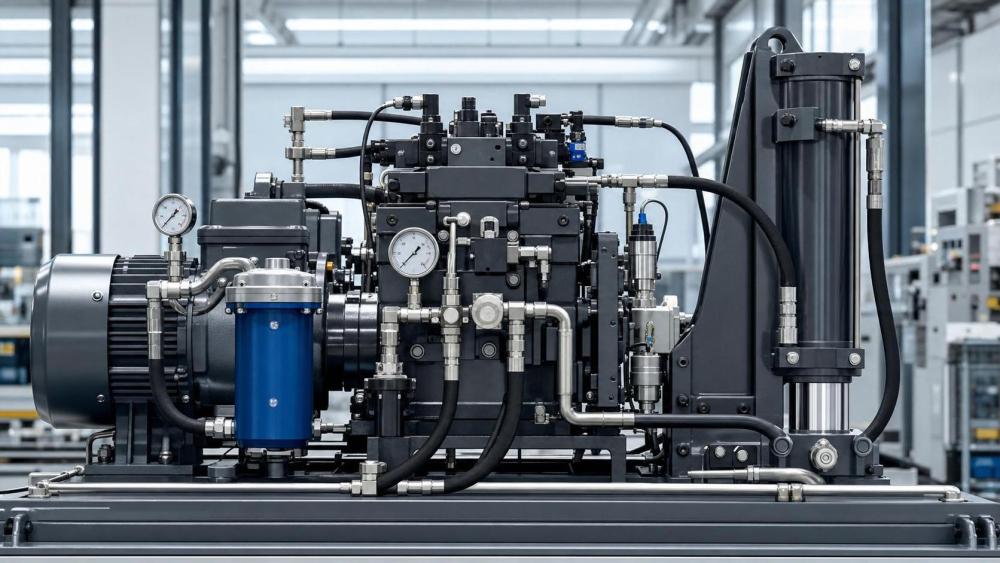
Hydraulic System Efficiency rarely drops all at once. In most systems, the first losses appear quietly, long before visible failure or alarming downtime.
That is why this question matters in equipment review, retrofit planning, and lifecycle cost analysis. A stable machine can still waste power every hour.
In practical terms, early energy loss usually starts with internal leakage, avoidable pressure drop, fluid condition decline, or poor component matching.
These issues affect pumps, motors, valves, cylinders, seals, filters, and even connected transmission elements that shape total machine performance.
Across industrial platforms such as PCTS, this topic sits at the intersection of fluid power, sealing reliability, smart monitoring, and maintenance economics.
So when Hydraulic System Efficiency starts slipping, what should be checked first, and what often gets misread as a minor issue?
Is internal leakage really the first hidden source of hydraulic energy loss?
In many cases, yes. Internal leakage is often the earliest and most underestimated reason Hydraulic System Efficiency begins to decline.
The system may still hold motion, pressure, and cycle completion. Yet more input energy is needed to deliver the same output work.
This usually happens inside pumps, motors, directional valves, and cylinders where clearances increase through wear, heat, or contamination.
A piston pump with rising case drain flow is a typical sign. It does not always fail immediately, but efficiency has already moved in the wrong direction.
Seal condition also matters here. Even if external leakage is not obvious, degraded seals can change pressure retention and volumetric stability.
A useful judgment method is to compare commanded output, actual speed, and required pressure over time rather than relying only on pass or fail inspection.
- Rising case drain flow often points to pump wear.
- Slower actuator movement under unchanged load suggests internal bypassing.
- Higher oil temperature with steady duty can indicate lost energy becoming heat.
- Frequent pressure compensation activity may reveal leakage elsewhere in the circuit.
When these signs appear together, Hydraulic System Efficiency is already being consumed before anyone sees an external fault.
If there is no leak outside, why do pressure drops still matter so much?
Because energy is not lost only through leakage. It is also lost when fluid must fight unnecessary resistance across the circuit.
Pressure drop across undersized valves, long hose routing, sharp fittings, blocked filters, and restrictive manifolds can quietly erode Hydraulic System Efficiency.
The effect is simple. The pump works harder, but useful output does not increase in the same proportion.
This is common in systems that were expanded later, modified for new duty, or assembled from acceptable but poorly matched components.
In real applications, one small restriction may not seem critical. Several minor restrictions together create a large operating penalty.
The table below helps sort early symptoms from likely causes before deeper teardown begins.
A good evaluation does not stop at pump pressure. It follows where pressure is lost and whether that loss creates useful work.
Can fluid contamination reduce Hydraulic System Efficiency before components look damaged?
Absolutely. Contamination often drives efficiency loss early, even when surfaces still look acceptable during routine inspection.
Particles increase wear rates in precision clearances. Water changes lubrication behavior, corrosion risk, and compressibility. Air entrainment disturbs power transfer and control stability.
The result is not only durability loss. Hydraulic System Efficiency also suffers because friction rises, leakage grows, and response becomes less predictable.
This matters especially in systems using high-pressure piston pumps, servo valves, or finely controlled actuators where tolerance sensitivity is high.
Contamination should be viewed as an energy issue, not only a cleanliness issue. That shift in thinking changes maintenance priorities.
More advanced industrial intelligence platforms increasingly connect fluid condition, sealing quality, filter behavior, and condition monitoring into one reliability picture.
That broader view is useful because contamination rarely originates from one source alone. Breathers, worn seals, service practices, and fluid aging all contribute.
Are mismatched components a bigger problem than obvious wear?
In many retrofit or multi-supplier systems, yes. Poor component matching can reduce Hydraulic System Efficiency from the first day of operation.
A pump may be efficient by itself, yet perform poorly with an oversized relief setting, an unsuitable valve response, or a cylinder selected without realistic duty data.
The same logic applies to seals, hoses, couplings, and drive elements around the hydraulic package. One weak interface can shift losses upstream.
This is where cross-domain review becomes valuable. Fluid power performance is linked with tribology, sealing materials, transmission behavior, and thermal control.
PCTS-style technical analysis is helpful in this context because it treats pumps, bearings, seals, monitoring, and MRO decisions as connected variables, not isolated catalog items.
A common mistake is to compare components only by rated pressure or price. Early efficiency loss is often caused by interaction, not by one bad specification.
- Check actual duty cycle, not nominal operating point.
- Review relief settings against real load requirements.
- Verify valve flow capacity at the intended viscosity range.
- Confirm seal compatibility with temperature, pressure spikes, and media condition.
What is the most reliable way to judge early efficiency decline in the field?
The best approach is comparative, not isolated. One pressure reading or one temperature point rarely explains the whole Hydraulic System Efficiency picture.
Instead, compare input power, delivered flow, actuator speed, pressure differential, fluid cleanliness, and operating temperature under a repeatable load condition.
Trend data matters more than snapshots. Early decline usually appears as a pattern, not a sudden event.
If direct instrumentation is limited, even a structured review can reveal a lot. The point is to judge consistency, not just peak performance.
A practical field checklist often includes these questions:
- Does the system need more pressure than before for the same task?
- Has oil temperature climbed without a production increase?
- Are cycle times drifting even though control settings are unchanged?
- Do filter replacement intervals keep getting shorter?
- Is noise, aeration, or unstable motion appearing during normal duty?
When several answers point in the same direction, Hydraulic System Efficiency is usually declining before any dramatic fault is visible.
So what should be reviewed first when efficiency becomes a cost issue?
Start with the losses most likely to hide in plain sight. Internal leakage, pressure drop, contamination, and poor matching deserve early review.
Then connect those findings to operating cost, maintenance frequency, and expected service life rather than treating them as separate technical notes.
Hydraulic System Efficiency is not just a pump metric. It reflects the combined behavior of components, fluid condition, sealing integrity, and system design discipline.
A sensible next step is to build a comparison sheet for pressure loss, leakage indicators, cleanliness targets, and temperature trend by application.
That makes design review, supplier comparison, and maintenance planning more objective, especially when systems look acceptable but operating costs keep rising.
If further analysis is needed, focus on measurable signals first. The earliest energy loss is usually easier to confirm than to guess.
Related News
- 00
0000-00
Where are axial piston pumps used in mining equipment? - 00
0000-00
Embodied AI Robotics and Drive Control Forum Held in Shanghai - 00
0000-00
How does seal service life affect the total cost of ownership? - 00
0000-00
Schaeffler to Cut 3,460 Jobs and Close Five European Plants - 00
0000-00
How does system size affect the price of a belt drive system?
Weekly Insights
Stay ahead with our curated technology reports delivered every Monday.