





Hydraulic Motors for Excavators: Key Checks Before You Choose
Choosing hydraulic motors for excavators is not just about torque and speed. The harder part is checking what will still perform after long hours, shock loads, heat, dust, and unstable duty cycles.
That is why hydraulic motors for excavators need a wider evaluation framework. Pressure rating, mounting fit, contamination tolerance, sealing design, and efficiency stability all affect service life and downtime risk.
In practical selection work, a motor that looks acceptable on paper may fail once it meets high back pressure, poor oil cleanliness, or repeated load reversals. This article focuses on the checks that reduce those surprises.
Start With the Real Application Load
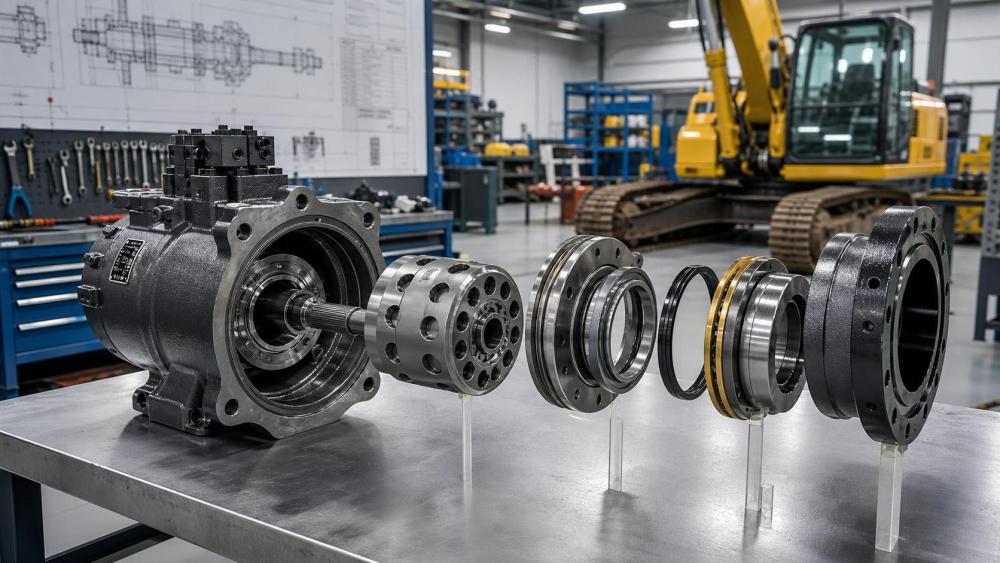
Before comparing suppliers, define how the excavator actually uses the motor. Hydraulic motors for excavators work in travel drives, swing drives, attachments, and auxiliary circuits, and each duty profile is different.
A swing motor may see frequent starts, stops, and reversals. A travel motor faces continuous load, slope demand, and shock from rough terrain. Attachment motors may run with highly variable flow and pressure.
This matters because nameplate torque alone says very little. What matters more is how often peak load appears, how long the motor stays at elevated pressure, and how quickly heat builds.
Useful questions at this stage include:
- Is the motor for travel, swing, or a hydraulic attachment?
- What are the normal and peak pressure ranges?
- How long does the motor remain near peak torque?
- How frequent are reversals, stalls, and shock loads?
- What is the actual ambient temperature and contamination level?
When these inputs are vague, selection risk rises fast. Hydraulic motors for excavators should always be matched to a measured duty cycle, not a simplified catalog estimate.
Check Pressure Rating Beyond the Headline Number
Many selection mistakes start here. Buyers compare one pressure number and move on, but hydraulic motors for excavators should be checked against continuous pressure, intermittent pressure, and peak pressure limits.
The difference is important. A motor may tolerate a short pressure spike, yet suffer internal wear if that level appears too often or lasts too long.
Also verify case drain pressure. In excavator hydraulic systems, return conditions are not always ideal. Excessive case pressure can damage seals, raise leakage, and shorten bearing life.
A solid pressure review should confirm:
- Continuous operating pressure under normal duty.
- Intermittent pressure allowance with time limits.
- Peak pressure tolerance during shock events.
- Permitted case drain back pressure.
- Pressure rise impact on seal and shaft life.
If the supplier cannot clearly define these limits, the specification is incomplete. For hydraulic motors for excavators, missing pressure detail usually leads to higher lifecycle cost later.
Verify Displacement, Speed Range, and Efficiency Together
Displacement defines theoretical torque and speed, but real performance depends on volumetric and mechanical efficiency. That is where many side-by-side comparisons become misleading.
Hydraulic motors for excavators may show acceptable rated speed, yet lose output under hot oil or internal leakage. Lower efficiency means less usable torque and more heat inside the circuit.
Ask suppliers for efficiency curves, not just nominal values. Ideally, review data across multiple pressure points, flow conditions, and oil viscosity ranges.
The most useful comparison points are:
- Starting torque efficiency at low speed.
- Volumetric efficiency at working temperature.
- Mechanical efficiency near rated load.
- Overall efficiency across the duty cycle.
- Performance drift after wear testing.
In real equipment, efficiency affects fuel use, thermal load, and controllability. For that reason, hydraulic motors for excavators should be assessed as energy devices, not just torque devices.
Review Mounting, Shaft, and Circuit Compatibility
Mechanical fit can look simple until installation starts. Even strong hydraulic motors for excavators can create problems if shaft dimensions, flange patterns, or coupling tolerances do not match the existing assembly.
Check shaft type carefully. Spline form, keyway dimensions, and surface hardness all influence torque transfer and wear. Misalignment can increase bearing stress and create premature leakage.
Hydraulic compatibility is equally important. Port size, port orientation, drain routing, and allowable fluid type must align with the machine layout and service practice.
Key checks include:
This step often decides whether a replacement remains a routine maintenance item or becomes a redesign project. That distinction matters for uptime and procurement speed.
Pay Close Attention to Sealing and Contamination Resistance
Jobsite conditions are rarely clean. Dust, mud, water ingress, and inconsistent maintenance all affect motor life. Hydraulic motors for excavators must therefore be evaluated for sealing structure, not only output performance.
Look at shaft seal design, seal material, and pressure resistance. A seal that works in controlled factory conditions may fail early in abrasive outdoor service.
Internal contamination tolerance also matters. Fine particles raise wear on bearings, rotating groups, and distribution surfaces. Over time, that reduces efficiency and increases leakage.
Useful evaluation points are:
- Seal material suitability for temperature and fluid chemistry.
- External sealing protection against dust and water.
- Internal leakage control under pressure cycling.
- Required oil cleanliness level and filter recommendation.
- Wear behavior under contaminated oil conditions.
In recent projects, stronger attention to sealing has become a more obvious signal of quality. It directly affects maintenance intervals and field failure frequency.
Assess Service Life, Parts Support, and Supplier Evidence
A lower unit price can look attractive, but hydraulic motors for excavators should be judged on total operating value. Service life, repairability, and parts access often outweigh the purchase gap.
Ask for evidence, not broad claims. Test reports, application references, material details, and failure analysis capability reveal far more than marketing language.
A reliable supplier should be able to discuss:
- Expected operating life under defined duty conditions.
- Availability of seal kits, bearings, and rotating parts.
- Lead time for replacement units and critical spares.
- Field failure response and root cause support.
- Quality control traceability and inspection records.
For procurement decisions, this is where technical review and supply risk review meet. Hydraulic motors for excavators are rarely standalone purchases. They sit inside uptime, warranty, and service commitments.
Build a Practical Selection Checklist
The best selection process is structured and repeatable. That reduces bias, speeds comparison, and makes supplier discussions more precise.
A practical checklist for hydraulic motors for excavators should cover five areas: load profile, pressure limits, efficiency data, compatibility details, and service support.
Use this short decision sequence:
- Define the actual duty cycle and worst-case operating condition.
- Confirm continuous, intermittent, and peak pressure limits.
- Compare efficiency curves at realistic oil temperature.
- Verify mounting, shaft, drain, and fluid compatibility.
- Review sealing design and contamination tolerance.
- Check service life data, spare parts access, and supplier responsiveness.
This approach makes decision-making more defensible. It also helps separate acceptable options from high-risk ones before field problems appear.
When hydraulic motors for excavators are chosen through these checks, selection becomes less about catalog similarity and more about verified operating fit. That is usually what protects uptime, cost control, and long-term reliability.
Want to dive deeper into these market dynamics, or need data-driven support for your next business move? Drop a line below and let the analysts at PCTS provide customized insights.
We respect your privacy. Your information is strictly confidential.
Related News
- 00
0000-00
How sealing technology reduces contamination in semiconductor manufacturing - 00
0000-00
Where to install vibration sensors on rotating machinery - 00
0000-00
NTSB Probe Finds Boeing Warned of MD-11 Engine Bearing Risk Years Earlier - 00
0000-00
How to size pneumatic grippers for packaging system integration - 00
0000-00
How to size alloy steel power transmission chains for heavy loads
Weekly Insights
Stay ahead with our curated technology reports delivered every Monday.