





Why Crane Hydraulics High Pressure Problems Rarely Start as Major Failures
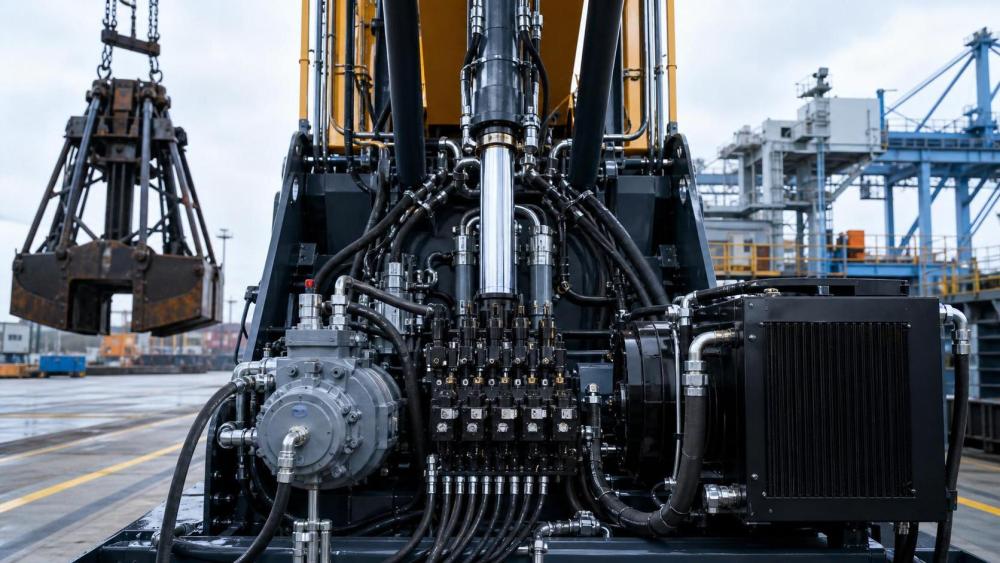
Crane Hydraulics high pressure issues usually appear long before a full shutdown. Slow boom response, rising oil temperature, pressure drift, and unstable lifting are early signs that deserve attention.
In practical service work, the real challenge is not only finding a fault. It is deciding which fault matters first under actual lifting conditions.
A truck crane in intermittent urban work behaves differently from a port crane running long duty cycles. The same pressure loss can point to different causes.
That is why Crane Hydraulics high pressure troubleshooting should be tied to load pattern, motion frequency, contamination risk, and heat exposure, not just gauge readings.
Across industrial MRO practice, hydraulic reliability is linked with seals, bearings, transmission components, and condition monitoring. Pressure stability depends on the whole power path staying healthy.
Actual operating conditions change what needs to be checked first
When Crane Hydraulics high pressure circuits fail during frequent short lifts, overheating often comes from restricted flow, bypass leakage, or valve response problems.
In longer duty cycles, attention shifts faster toward pump wear, oil aeration, cooler efficiency, and internal leakage across cylinders or motors.
Cold-start environments create another pattern. Pressure may spike quickly, but movement remains delayed because viscosity is too high and flow cannot stabilize.
Dusty or wet sites introduce a different risk. Crane Hydraulics high pressure systems may still build force, yet contamination starts damaging spool clearances and seal lips.
A useful field approach is to judge the symptom together with the operating rhythm. Heat, noise, vibration, and movement quality often explain more than pressure alone.
Where the fault path usually starts
- Pump side: worn pistons, damaged swash plate surfaces, suction restriction, or case drain increase.
- Valve side: relief valve instability, sticking proportional valves, blocked pilot lines, or incorrect pressure setting.
- Actuator side: cylinder seal bypass, rod scoring, hose expansion, or motor internal leakage.
- Fluid side: wrong viscosity, oxidized oil, entrained air, water contamination, or filter collapse.
When slow lifting points to pressure loss rather than mechanical overload
Slow lifting is often treated as a simple overload issue. In many cases, Crane Hydraulics high pressure performance has already dropped before rated load is reached.
If the crane moves slowly but smoothly, pump wear or relief valve leakage becomes more likely than severe cylinder damage. The force is there, but not enough flow reaches the actuator.
If movement is slow and jerky, the check should widen. Air ingress, suction line cracks, blocked breathers, and emulsified oil often create that pattern.
In applications with repeated extension and retraction, hose condition matters more than many teams expect. High-pressure hose fatigue can absorb energy and distort response timing.
A practical fix sequence is to confirm actual pressure under load, compare case drain flow, inspect suction integrity, and then isolate valve leakage from pump inefficiency.
Heat buildup usually means the system is wasting power somewhere
Excess heat is one of the most valuable warnings in Crane Hydraulics high pressure service. Heat means energy is being lost through restriction, leakage, or repeated pressure bypass.
On cranes with frequent holding and positioning, relief valves are common suspects. A small setting drift can force the system to dump energy for hours.
In mobile units exposed to mixed climates, cooler blockage and incorrect oil grade become more common than dramatic component failure. The system works, then fades as temperature rises.
Heat should also trigger inspection of seals and elastomers. Once oil runs too hot, hardness changes accelerate leakage and shorten the life of adjacent components.
This is where broader component knowledge helps. Bearings, couplings, and drive interfaces around the hydraulic pump can add load and indirectly increase system temperature.
Common heat-related fixes
- Clean or test the oil cooler and verify fan or water-side performance.
- Recheck relief valve settings under real operating pressure.
- Measure pump efficiency instead of assuming the pump is healthy.
- Replace degraded seals when heat has already changed leakage behavior.
Unstable movement often comes from control quality, not only raw pressure
Some Crane Hydraulics high pressure faults appear only during fine motion. The crane lifts, but inching, holding, or synchronized movement becomes unreliable.
That usually points toward valve contamination, pilot pressure fluctuation, or actuator-side internal bypass. The system can still produce force while losing control accuracy.
In more demanding lifting environments, this distinction matters. A crane that can raise a load but cannot stabilize it creates a different level of risk.
Pressure pulsation should also be checked against pump drive condition. Misalignment, coupling wear, or speed variation can create hydraulic symptoms that look like valve faults.
For that reason, Crane Hydraulics high pressure diagnosis should include mechanical transmission interfaces, not only the fluid circuit.
Different operating patterns create different troubleshooting priorities
The table below helps separate common field patterns. It is more useful than treating every Crane Hydraulics high pressure failure as the same type of breakdown.
Misjudgments that make Crane Hydraulics high pressure repairs less effective
One common mistake is replacing the pump because pressure is low, without checking whether the relief valve is bleeding off flow under load.
Another is focusing only on the hydraulic schematic. Real failure points can sit in couplings, shaft support, seals, or contaminated breathers.
There is also a cost mistake. A cheaper seal or hose may look acceptable, but repeated downtime can raise total ownership cost far above the part price.
Sites with mixed loads often treat similar cranes as identical. Yet duty cycle, attachment weight, ambient temperature, and maintenance habits can change failure patterns significantly.
Crane Hydraulics high pressure work becomes more accurate when pressure data is combined with oil analysis, leak history, temperature trend, and actuator behavior.
What should be confirmed before parts replacement
- Whether the fault appears only hot, only cold, or across the full duty cycle.
- Whether pressure loss is external leakage, internal bypass, or control instability.
- Whether filtration, oil cleanliness, and seal material match the operating environment.
- Whether surrounding mechanical components are adding load to the hydraulic drive.
A better next step is building a site-specific repair standard
The most useful response to Crane Hydraulics high pressure faults is not a generic checklist. It is a site-specific standard built around actual lifting conditions.
Start with three records: pressure under load, oil temperature trend, and movement quality during key motions. Those reveal the real fault direction quickly.
Then compare component condition across the whole system, including pump drive parts, seals, hoses, valves, and filtration hardware. High-pressure reliability is always interconnected.
Where failure repeats, review not only the component model but also contamination control, replacement intervals, and compatibility with the operating medium.
For Crane Hydraulics high pressure improvement, the best next move is to map real operating scenarios, define priority inspection points, and separate urgent faults from recurring design weaknesses.
Want to dive deeper into these market dynamics, or need data-driven support for your next business move? Drop a line below and let the analysts at PCTS provide customized insights.
We respect your privacy. Your information is strictly confidential.
Related News
- 00
0000-00
How sealing technology reduces contamination in semiconductor manufacturing - 00
0000-00
Where to install vibration sensors on rotating machinery - 00
0000-00
NTSB Probe Finds Boeing Warned of MD-11 Engine Bearing Risk Years Earlier - 00
0000-00
How to size pneumatic grippers for packaging system integration - 00
0000-00
How to size alloy steel power transmission chains for heavy loads
Weekly Insights
Stay ahead with our curated technology reports delivered every Monday.