





Why does cost versus service life matter so much in mining hydraulics?
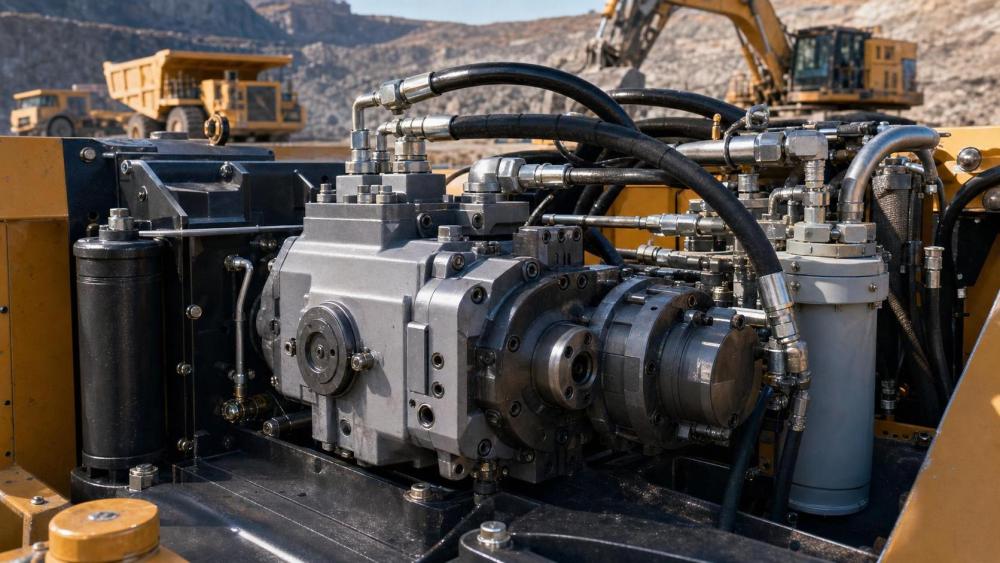
When evaluating hydraulic pumps and motors for mining equipment, purchase price rarely tells the full story.
A lower quote can look attractive, yet harsh duty cycles often expose weak durability very quickly.
Mining machines work under shock loads, abrasive dust, vibration, long operating hours, and uneven maintenance conditions.
In that environment, service life becomes a cost driver, not just a technical detail.
That is why hydraulic pumps and motors for mining equipment should be judged through total ownership impact.
The real question is simple: how much output, uptime, and maintenance stability will each unit deliver over time?
A pump that lasts longer, holds pressure better, and tolerates contamination can reduce emergency replacement frequency.
A motor with stable torque and good sealing can also protect connected transmissions, hoses, and control valves.
In practical sourcing work, this shifts the discussion from unit price to cost per operating hour.
Platforms such as PCTS are useful here because component decisions rarely stand alone.
Hydraulic performance interacts with bearings, seals, filtration, condition monitoring, and broader MRO planning.
What usually shortens the service life of hydraulic pumps and motors in mining equipment?
The most common cause is not dramatic failure. It is gradual wear that goes unnoticed until efficiency drops.
Contaminated oil is often the first problem to check.
Fine particles damage internal surfaces, increase leakage, and accelerate wear on gears, pistons, vanes, and bearings.
Heat is another major factor.
When the system runs beyond its thermal comfort range, oil degrades faster and lubrication films become less reliable.
Misalignment, pressure spikes, and repeated cold starts also shorten usable life.
More importantly, these issues often combine rather than appear alone.
For example, poor sealing allows dirt ingress, dirt raises wear, wear creates leakage, and leakage increases heat.
That chain reaction makes hydraulic pumps and motors for mining equipment look overpriced only after installation.
A useful early warning list includes the following points:
- Rising case drain flow or internal leakage
- Slower actuator response under the same load
- Higher oil temperature during normal cycles
- Noise, cavitation signs, or unstable pressure
- Frequent seal replacement around connected components
These are not just maintenance notes. They directly affect replacement timing and procurement risk.
How can you compare low-price and premium options without overspending?
A practical comparison starts with expected duty, not catalog claims.
Some hydraulic pumps and motors for mining equipment are priced lower because their design target is lighter industrial service.
That does not make them poor products. It makes them unsuitable for extreme mining cycles.
Premium units usually cost more for measurable reasons.
Those reasons may include higher pressure capability, stronger surface treatment, tighter tolerances, better bearing support, and improved sealing systems.
The decision becomes easier when the trade-off is written down.
This is where many buying decisions improve.
Instead of asking which unit is cheaper, ask which option keeps cost predictable across the next overhaul cycle.
That approach fits the wider PCTS view of total cost, reliability, and spare parts planning.
Which technical details deserve the closest attention before placing an order?
Catalog flow rate and pressure are only the starting point.
For hydraulic pumps and motors for mining equipment, durability usually depends on the details around those numbers.
Start with operating profile.
Is the machine facing steady loads, sharp cycling, long idle periods, or frequent reversing?
Then check contamination control requirements, fluid compatibility, shaft load limits, and allowable case pressure.
Seal material matters more than many buyers expect, especially in dusty and high-temperature sites.
Bearing design matters too, because internal support quality affects vibration resistance and long-term alignment stability.
Useful pre-order questions include:
- What is the expected life under actual pressure and contamination levels?
- Which failure modes appear most often in similar mining applications?
- What filtration level is required to keep warranty and performance stable?
- Are repair kits, rotating groups, and seals available locally or regionally?
- Can the supplier provide testing, inspection records, or field references?
These checks help prevent a common mistake: buying a technically compatible part that is operationally expensive.
Where do buyers make the biggest mistakes when selecting hydraulic pumps and motors for mining equipment?
The first mistake is treating all failures as component quality issues.
In reality, installation quality, oil cleanliness, hose routing, cooling capacity, and alignment often decide actual service life.
The second mistake is ignoring the cost of downtime during comparison.
If a stopped machine interrupts loading, hauling, or crushing, the hourly impact can exceed the original price difference quickly.
Another frequent error is focusing on one part instead of the system around it.
A durable pump paired with poor seals, weak filtration, or unsuitable bearings still faces premature wear.
That broader system thinking is increasingly important across industrial MRO.
PCTS highlights this well by connecting hydraulics with sealing, transmission parts, monitoring, and lifecycle maintenance economics.
A short decision checklist can reduce these errors:
- Confirm actual duty cycle instead of nominal machine rating
- Estimate downtime cost per failure event
- Check rebuildability and spare parts lead time
- Review seal, bearing, and filtration compatibility together
- Use field data, not brochure claims alone
What is the most practical way to make a lower-risk decision?
A good decision usually comes from a simple scoring model.
List the shortlisted hydraulic pumps and motors for mining equipment, then score each one on price, expected life, efficiency retention, rebuild options, lead time, and support quality.
Give heavier weight to uptime-related factors if the machine is production-critical.
Give more weight to interchangeability if spare availability is the bigger risk.
In real operations, the best choice is often not the cheapest or the most expensive.
It is the option with the most stable lifecycle cost under site conditions.
If internal data is limited, compare three things first: historical failure pattern, contamination exposure, and replacement lead time.
Those signals usually reveal whether a higher-spec unit will repay its premium.
Before final selection, it also helps to align hydraulic choices with the wider component strategy.
That means reviewing seals, hoses, bearings, and monitoring practices together rather than in isolation.
In the end, the smartest path is to document operating demands, compare service-life evidence, and challenge every quote against downtime risk.
That creates a cleaner basis for supplier comparison and a more reliable long-term ownership decision.
Want to dive deeper into these market dynamics, or need data-driven support for your next business move? Drop a line below and let the analysts at PCTS provide customized insights.
We respect your privacy. Your information is strictly confidential.
Related News
- 00
0000-00
How to check vibration analysis software for sensor compatibility - 00
0000-00
IndexBox Forecasts 3.8% Annual Growth for Global Radial Seals Market Through 2035 - 00
0000-00
How to assess the chemical compatibility of FFKM sealing sheets - 00
0000-00
IndexBox Forecasts 3.6% Annual Growth for Construction Bearings Market - 00
0000-00
When do hydraulic components require an export license?
Weekly Insights
Stay ahead with our curated technology reports delivered every Monday.