





Fluid Power Component Design Priorities for Reliable Performance
Fluid Power Component Design decides how stable, efficient, and durable a system will be under real operating pressure.
In hydraulic and pneumatic applications, reliability rarely comes from one feature alone.
It comes from balanced decisions on materials, sealing, geometry, cleanliness, load response, and maintenance access.
That is why Fluid Power Component Design matters far beyond initial performance data.
It influences downtime risk, service intervals, energy loss, replacement frequency, and procurement confidence.
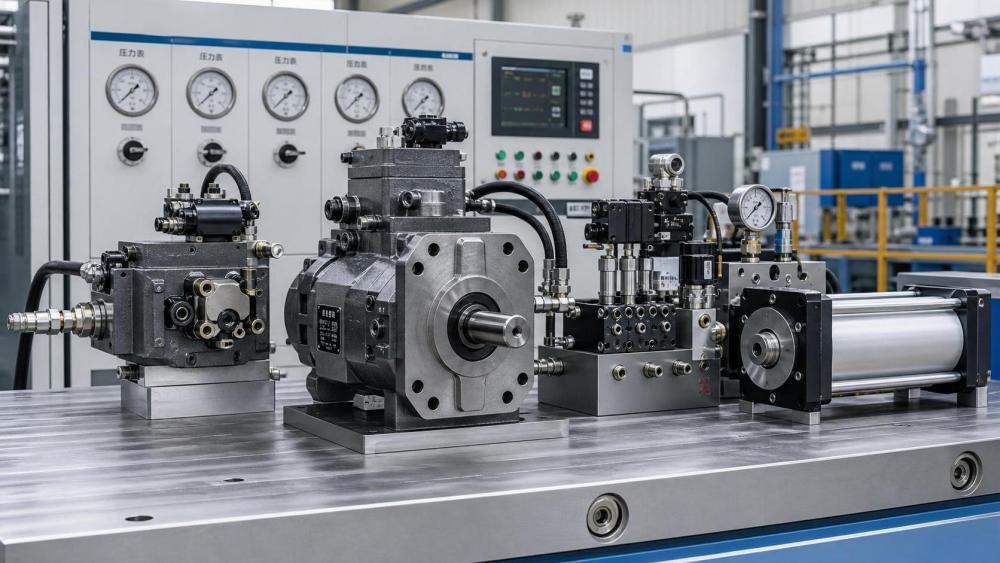
From a technical evaluation standpoint, the best design is not always the most powerful.
It is the one that keeps performance predictable across pressure spikes, contamination exposure, thermal swings, and duty-cycle variation.
The sections below explain the main priorities that shape dependable Fluid Power Component Design in industrial use.
Why System Context Must Guide Fluid Power Component Design
A common mistake is judging components by catalog ratings alone.
In practice, pressure range, fluid type, cycle speed, shock loading, and ambient conditions change what good design looks like.
For example, a hydraulic pump in a mobile machine faces vibration, dust, and variable loads.
A pneumatic actuator in automated packaging faces rapid cycling, seal wear, and air quality issues.
This means Fluid Power Component Design should always be reviewed against the application, not in isolation.
More clearly, reliable performance comes from fit-for-duty engineering.
- Match pressure rating to normal and peak operating conditions.
- Check compatibility with fluid chemistry, air quality, and temperature range.
- Review response under continuous, intermittent, or high-cycle operation.
- Assess vibration, shock, and external contamination exposure.
When that context is missing, even a premium component can become a weak point.
Material Selection and Surface Integrity
Material choice is one of the most direct indicators of serious Fluid Power Component Design.
Strength matters, but so do hardness stability, corrosion resistance, fatigue behavior, and surface finish retention.
In cylinders, rods and bores must resist wear and scoring.
In pumps and valves, internal contact surfaces must control friction while surviving repeated pressure loading.
Surface treatments also deserve close review.
Coatings, nitriding, chrome alternatives, and precision grinding affect leakage, efficiency, and long-term stability.
From recent industry changes, one stronger signal is the demand for materials that handle aggressive media and stricter environmental rules.
That also means evaluators should ask not only what material is used, but why it was chosen for that duty profile.
What to verify in material decisions
- Base alloy suitability for pressure and cyclic fatigue.
- Resistance to corrosion, moisture, and chemical exposure.
- Surface roughness control at sealing and sliding interfaces.
- Consistency of heat treatment and dimensional stability.
Sealing Strategy Is Central to Fluid Power Component Design
Seals often decide whether a fluid power system performs cleanly or fails early.
Good Fluid Power Component Design treats sealing as a system function, not as a small accessory.
Seal geometry, groove design, compression control, rod finish, and media compatibility must work together.
In hydraulic systems, poor sealing leads to leakage, pressure loss, contamination entry, and unstable actuator motion.
In pneumatic systems, it can reduce response speed and raise compressed air consumption.
Seal material selection is equally important.
NBR, FKM, PTFE blends, polyurethane, and other compounds perform differently under heat, friction, and media exposure.
This is where technical review should move beyond basic compatibility charts.
The better question is whether the sealing system remains stable after repeated starts, stops, and pressure reversals.
Warning signs of weak sealing design
- Frequent leakage near dynamic interfaces.
- Rapid seal hardening or swelling.
- Inconsistent actuator motion under load.
- High maintenance demand after short service intervals.
Pressure Management, Flow Stability, and Efficiency
Reliable Fluid Power Component Design must keep pressure and flow under control across changing operating states.
That includes startup, steady operation, overload, and shutdown.
In hydraulic components, internal leakage paths, port geometry, spool fit, and pressure balancing affect controllability.
In pneumatic components, airflow restriction and response timing influence cycle precision.
Efficiency is not only an energy topic.
It is also a thermal management topic, because wasted energy usually becomes heat.
Once temperatures climb, seals age faster, lubricating films weaken, and tolerances become harder to control.
So when reviewing Fluid Power Component Design, stable efficiency under partial load can matter more than peak efficiency on paper.
That is especially true in industrial systems that rarely run at ideal conditions.
Contamination Resistance and Tolerance Control
Contamination remains one of the biggest threats to fluid power reliability.
Particles, moisture, degraded fluid, and poor air preparation can quickly damage precision surfaces.
This is why Fluid Power Component Design should include realistic tolerance control and contamination resilience.
Extremely tight clearances can improve efficiency, but they also increase sensitivity to dirty operating conditions.
The best designs balance precision with survivability.
This may include wipers, filtration strategy, vent protection, robust surface finishes, and smarter internal flow paths.
In actual operations, contamination performance is often a stronger predictor of lifecycle cost than peak output data.
That is a practical point many procurement decisions still underestimate.
Evaluation checklist for contamination control
- Required fluid cleanliness or air preparation level.
- Seal and wiper protection at exposed interfaces.
- Internal sensitivity to particle scoring or sticking.
- Maintenance implications if contamination occurs.
Maintainability, Standardization, and Lifecycle Value
A technically strong component still creates risk if it is hard to service.
For that reason, maintainability is a core part of Fluid Power Component Design.
Access to seals, replaceable wear parts, standard interfaces, and clear failure diagnostics all support uptime.
This also affects spare parts planning and supplier comparison.
Components built around recognized standards are usually easier to integrate and less risky to source globally.
Documentation quality matters too.
Tolerance data, pressure curves, material traceability, and maintenance instructions reveal how mature the design really is.
In business terms, better Fluid Power Component Design reduces both technical uncertainty and procurement risk.
Practical review points
- Confirm service access for seals and wear parts.
- Check interface standardization and installation tolerances.
- Review documentation for traceability and test evidence.
- Estimate downtime cost, not only purchase price.
Key Technical Questions Before Approval
Before approving any hydraulic or pneumatic part, it helps to ask direct questions linked to real failure modes.
This keeps Fluid Power Component Design evaluation practical and evidence-based.
Final Takeaway
Strong Fluid Power Component Design is about controlled trade-offs, not isolated specifications.
The most dependable components combine material strength, sealing reliability, pressure stability, contamination resistance, and service-friendly construction.
That approach improves uptime and lowers lifecycle cost across hydraulic and pneumatic systems.
In practical evaluation work, it helps to move beyond headline ratings and review design logic under real operating conditions.
When Fluid Power Component Design is assessed this way, supplier decisions become clearer and long-term performance becomes easier to predict.
Use these priorities as a working checklist when comparing pumps, valves, cylinders, actuators, and related motion-control parts for demanding industrial service.
Want to dive deeper into these market dynamics, or need data-driven support for your next business move? Drop a line below and let the analysts at PCTS provide customized insights.
We respect your privacy. Your information is strictly confidential.
Related News
- 00
0000-00
How to check vibration analysis software for sensor compatibility - 00
0000-00
IndexBox Forecasts 3.8% Annual Growth for Global Radial Seals Market Through 2035 - 00
0000-00
How to assess the chemical compatibility of FFKM sealing sheets - 00
0000-00
IndexBox Forecasts 3.6% Annual Growth for Construction Bearings Market - 00
0000-00
When do hydraulic components require an export license?
Weekly Insights
Stay ahead with our curated technology reports delivered every Monday.