





China will roll out nationwide cross-border cash pooling for multinational companies from September 14, following a joint notice issued by the People’s Bank of China and the State Administration of Foreign Exchange on August 14. Based on the information provided for this update, the policy is set to extend domestic and foreign currency fund centralization nationwide, with direct relevance for export settlement in higher-value industrial components.
For suppliers of hydraulic systems, precision bearings, sealing products and other technically demanding components, the immediate significance is less about headline trade volume and more about transaction quality. The policy is expected to improve fund collection, internal liquidity allocation and multi-currency settlement efficiency between foreign-invested manufacturers, overseas buyers and Chinese suppliers. In practice, that could help reduce exchange-related costs and ease some of the timing pressure that often affects longer payment cycles in industrial procurement.
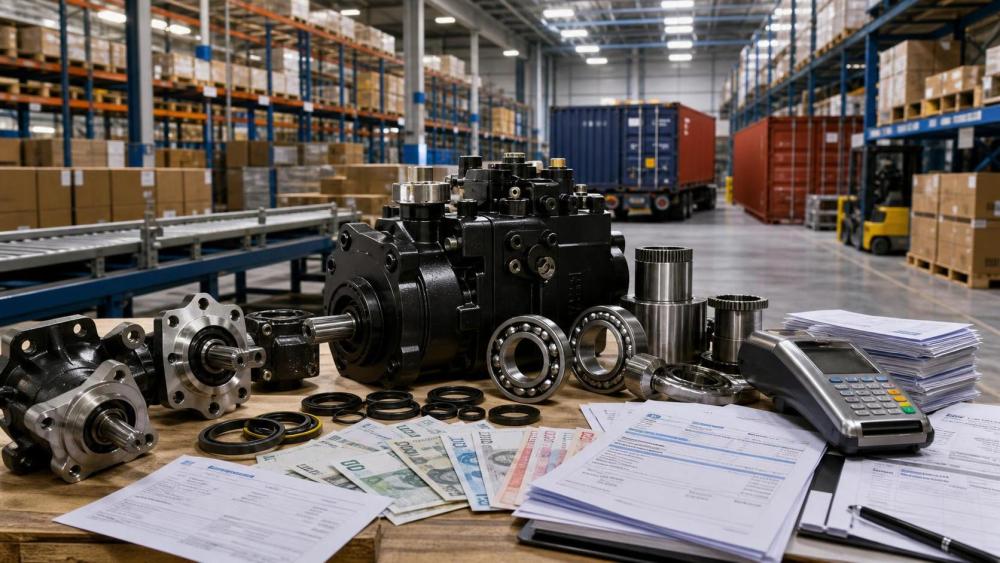
This matters most in product categories where delivery reliability and financial coordination are closely linked. In segments such as wind power bearings, electro-hydraulic pumps and FFKM seals, suppliers are often judged not only on manufacturing capability, but also on their ability to support stable cross-border transactions under complex payment arrangements. From that perspective, more efficient pooled management of domestic and foreign currency funds could strengthen the commercial credibility of Chinese exporters, particularly where buyers value flexible settlement terms and predictable execution.
The policy signal also points to a broader shift in how advanced component trade may be supported. High-barrier industrial parts typically involve longer validation cycles, tighter quality expectations and more customized order structures than standardized goods. When settlement efficiency improves, exporters may gain more room to manage receivables, coordinate delivery schedules and respond to overseas procurement needs without the same degree of friction from fragmented cross-border fund flows.
That said, the full industry effect will still depend on how businesses adopt the new framework in actual operations. The most visible short-term impact may appear first in treasury coordination, foreign exchange handling and settlement arrangements rather than in immediate changes to order flow. For manufacturers and trading teams involved in hydraulic, bearing and sealing supply chains, it will be worth watching whether the new nationwide rollout translates into faster capital turnover, lower payment risk and greater flexibility in multi-entity transactions.
This article is based solely on the information provided in the current briefing. For follow-up assessment, the most relevant signals will likely come from official regulatory releases, company disclosures and other public information related to cross-border settlement practices after the September 14 implementation date.
Related News
- 00
0000-00
Where are axial piston pumps used in mining equipment? - 00
0000-00
Embodied AI Robotics and Drive Control Forum Held in Shanghai - 00
0000-00
How does seal service life affect the total cost of ownership? - 00
0000-00
Schaeffler to Cut 3,460 Jobs and Close Five European Plants - 00
0000-00
How does system size affect the price of a belt drive system?
Weekly Insights
Stay ahead with our curated technology reports delivered every Monday.