





Early on June 22, 2026, U.S. Customs and Border Protection announced that the ACE system has fully enabled the F865 intelligent verification module for fluid power products such as axial piston pumps and pneumatic grippers. The change matters because HTS declarations will now be checked against technical product parameters in real time, which may affect import filing, customs release, AEO-related standing, and fast-clearance eligibility for manufacturers, exporters, importers, and supply chain service providers handling these categories.
What the ACE change formally introduces
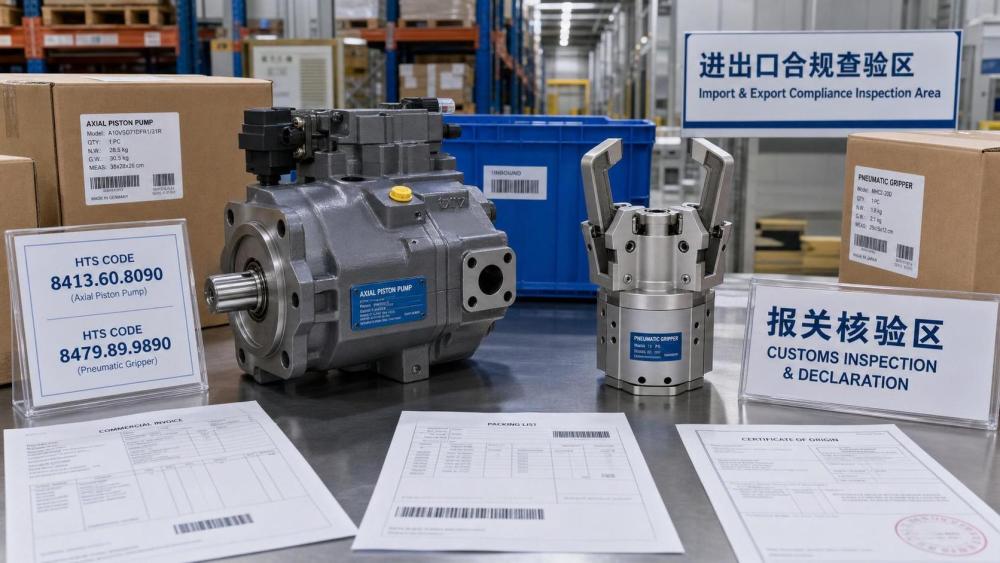
According to the provided event summary, CBP activated the F865 intelligent verification module across ACE on June 22, 2026. The module applies dynamic HTS code comparison to products including Axial Piston Pumps and Pneumatic Grippers.
The stated control logic is that when a declared HTS code conflicts with the product's technical parameters, including pressure rating, control method, or material, the system will automatically reject the filing and generate an F865 risk label.
The summary also states that such a risk label may affect subsequent AEO certification ratings and fast customs clearance qualification.
Where operational pressure may appear first
Technical classification work moves closer to the filing stage
From an industry perspective, companies directly involved in trade may face the most immediate pressure in pre-declaration review. If HTS classification is no longer judged mainly on tariff text alone but also against technical attributes submitted in practice, then product specification accuracy, internal classification review, and consistency across customs documents become more important operational checkpoints.
Manufacturing and export teams may need tighter document alignment
For manufacturers and exporters of fluid power products, the main issue is not only the customs entry itself, but whether technical descriptions used in datasheets, quotations, packing documentation, and trade paperwork remain logically consistent with the declared HTS code. Analysis shows that any mismatch between commercial and technical records could become a practical compliance risk under automated screening.
Importers and procurement functions may see added verification steps
Importers and procurement teams may need to pay closer attention to supplier-provided technical data before shipment. Observably, if the system flags logical inconsistencies tied to pressure class, control mode, or material, then pre-shipment document checks could become more important for delivery timing, customs predictability, and supplier qualification review.
Customs brokers and logistics service providers may carry greater review responsibility
Supply chain service providers, including customs filing and logistics support functions, may be affected because filing errors now appear more likely to trigger automated rejection rather than remain a matter for later clarification. What deserves closer attention is whether brokers and service teams have enough product-level technical detail to support HTS filing decisions for these goods.
What companies should watch in day-to-day execution
Check whether HTS coding is supported by technical parameters
Companies handling the covered product types should pay closer attention to whether declared HTS codes can be consistently supported by product specifications. In this case, pressure rating, control method, and material are specifically relevant because they are named in the provided summary as factors used in the ACE logic comparison.
Review the consistency of filing and technical records
Analysis shows that customs declarations, product datasheets, technical descriptions, and related supporting records may need a tighter consistency review before filing. This is not yet a conclusion about broader enforcement outcomes, but it is a practical signal that document alignment may become more important where automated validation is involved.
Monitor possible effects on trusted-trade standing
The event summary states that an F865 risk label may affect later AEO certification ratings and fast-clearance qualification. For that reason, companies with a strong interest in predictable border processing may want to monitor whether filing quality in these categories becomes a factor in broader compliance performance assessments.
Follow later clarifications in execution standards
Because the provided information does not include detailed enforcement guidance, businesses should continue watching for more specific official wording, implementation interpretation, and operational practice. This includes how technical conflicts are assessed in real cases and whether supporting documentation standards become more explicit over time.
Why this looks like an enforcement signal, not just a system update
Observably, this development is more than a routine IT adjustment because the system function described in the summary links product technical logic directly to customs admissibility and risk marking. From an industry perspective, that suggests a shift toward more automated, parameter-based scrutiny in classification control for at least some fluid power products.
At the same time, it is more appropriate to understand this as an implemented enforcement signal with further execution details still worth watching, rather than as a fully transparent rule set whose practical boundaries are already settled. The core confirmed fact is the activation of the module and the consequences described for mismatched declarations; the broader market impact still requires observation.
How to read the latest development
In practical terms, this update is best understood as a compliance execution change that could tighten the link between product data, HTS classification, and customs processing outcomes for certain fluid power goods. A cautious reading is more appropriate than a sweeping one: the confirmed change is real and operational, while the exact depth of enforcement practice, document expectations, and market response still needs continued attention.
Basis of this article and points still requiring verification
This article is generated from the user-provided news title, event date, and event summary. For events of this type, relevant source categories would usually include official notices, releases from regulatory authorities, customs or trade administration information, industry association updates, standard-setting documents, and reporting by authoritative media.
No specific official source link was provided in the input, so the exact official publication path still requires continued verification. Analysis also suggests that further attention should remain on any later policy detail, enforcement interpretation, changes in tender or technical filing documents, industry feedback, and how companies implement compliance checks in practice.
Want to dive deeper into these market dynamics, or need data-driven support for your next business move? Drop a line below and let the analysts at PCTS provide customized insights.
We respect your privacy. Your information is strictly confidential.
Related News
- 00
0000-00
Where to install vibration sensors on rotating machinery - 00
0000-00
NTSB Probe Finds Boeing Warned of MD-11 Engine Bearing Risk Years Earlier - 00
0000-00
How to size pneumatic grippers for packaging system integration - 00
0000-00
How to size alloy steel power transmission chains for heavy loads - 00
0000-00
Where are axial piston pumps used in mining equipment?
Weekly Insights
Stay ahead with our curated technology reports delivered every Monday.