





Choosing axial piston hydraulic motors is rarely a matter of matching catalog torque and speed. In real systems, performance depends on how the motor behaves under pressure peaks, load variation, fluid contamination, installation limits, and maintenance reality.
That is why model selection has become a broader technical and commercial decision. Across mobile equipment, industrial machinery, marine systems, and heavy-duty power transmission, the wrong choice can create heat, leakage, unstable motion, and premature overhaul costs.
Within the wider precision components market, axial piston hydraulic motors sit at the intersection of fluid power, sealing, bearing support, contamination control, and lifecycle economics. A sound evaluation method helps reduce uncertainty before a unit reaches the machine.
Why axial piston hydraulic motors remain under close scrutiny
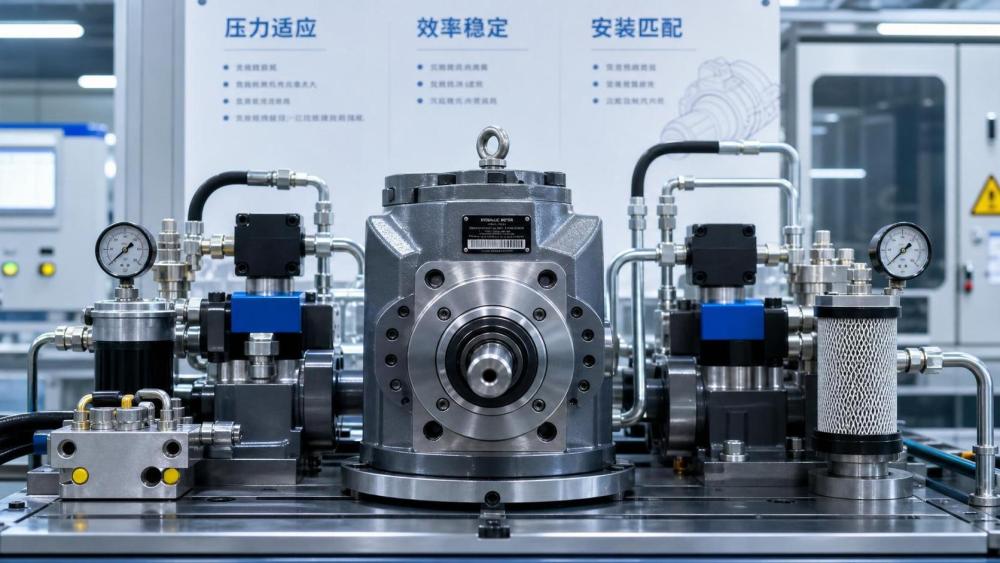
Axial piston hydraulic motors convert hydraulic energy into rotary motion through pistons arranged parallel to the drive shaft. Their appeal comes from high power density, strong efficiency potential, compact design, and precise controllability.
They are widely considered when systems need variable speed, reversible rotation, reliable torque at pressure, and smoother control than simpler motor architectures can provide. That makes them relevant in construction equipment, winches, conveyors, machine tools, and offshore handling systems.
Interest is also rising because machines are expected to do more with less energy loss. Operators want stable output, lower downtime, and clearer maintenance intervals. Suppliers, meanwhile, must demonstrate technical credibility beyond headline ratings.
This is where a platform such as PCTS becomes useful. It frames hydraulic motor selection alongside bearings, seals, transmission parts, smart monitoring, and MRO decision factors, which is how machines actually behave in service.
Start with duty profile, not the nameplate
Before comparing brands or model families, define the application duty profile. Axial piston hydraulic motors can look similar on paper while responding very differently in cyclic, shock-loaded, or continuous-duty environments.
The first check is operating pressure. Rated pressure, maximum intermittent pressure, and pressure spike tolerance must all be reviewed. A motor that survives the average load may still fail early if peak events are frequent.
Displacement range matters next. It shapes output torque, speed behavior, and controllability. Fixed displacement units suit stable operating windows, while variable displacement designs support broader control demands and dynamic machine response.
Speed should never be evaluated in isolation. Minimum stable speed, overspeed capability, and response during start-up under load are often more important than the top speed shown in a brochure.
A useful early screening table looks like this:
Efficiency must stay stable in working conditions
Efficiency figures are easy to misuse. A single test-point value says little about actual machine behavior. For axial piston hydraulic motors, the better question is how volumetric and mechanical efficiency change across pressure, speed, viscosity, and temperature.
If internal leakage rises quickly at elevated temperature, usable torque may drop when the machine is fully warmed up. If mechanical losses increase under low-speed, high-load duty, control precision may suffer even when nominal efficiency looks attractive.
This matters in energy-sensitive operations. Higher losses increase oil temperature, load the cooling circuit, and indirectly affect seals, hoses, and neighboring components. In other words, the motor should be reviewed as part of the whole power package.
Ask for efficiency maps, not only summary values. A meaningful comparison should include:
- Performance at normal operating pressure, not only at light load
- Behavior at low speed where stick-slip may appear
- Thermal sensitivity during long cycles
- Drain flow changes that indicate internal wear potential
Installation details often decide practical fit
Many selection problems appear after the hydraulic motor is purchased. Mounting flange pattern, shaft type, case drain routing, envelope size, and port orientation can all limit integration, especially in retrofits or compact machine frames.
Bearing arrangement also deserves attention. External radial and axial loads should not be assumed acceptable without confirmation. In many machines, coupling alignment, sprocket loads, or belt tension introduce shaft forces that exceed the motor’s support design.
Sealing compatibility is another overlooked point. Fluid chemistry, pressure pulses, and ambient contamination can shorten seal life if materials are not aligned with operating conditions. This is especially relevant in dirty, wet, or chemically aggressive sites.
PCTS frequently links such questions across component categories because hydraulic reliability does not come from the motor alone. Bearings, couplings, seals, filtration, and condition monitoring influence whether the selected unit performs as expected.
Mechanical interface checks worth documenting
- Mounting standard and dimensional interchangeability
- Output shaft geometry and torque transmission method
- Allowable overhung and thrust loads
- Case drain requirement and back-pressure limit
- Space for maintenance access and removal
Contamination tolerance and oil quality are central checks
Axial piston hydraulic motors are precision components. Tight internal clearances support efficiency, but they also make the unit sensitive to particles, water ingress, and poor fluid control.
A model with strong theoretical performance may become a weak field choice if the hydraulic system cannot maintain the required cleanliness class. Selection should therefore include realistic review of filtration, reservoir condition, seal integrity, and service discipline.
This is where lifecycle thinking becomes more useful than simple acquisition cost. A cheaper motor that demands cleaner oil than the site can consistently maintain may produce higher downtime, more frequent rebuilds, and unstable output quality.
In harsh industrial settings, contamination tolerance should be assessed alongside spare part availability and inspection visibility. Drain flow monitoring, vibration data, and oil analysis can support earlier fault detection.
Typical selection differences by application context
The same family of axial piston hydraulic motors may serve very different purposes. Selection logic changes with the machine’s motion profile and business priorities.
Seen this way, model selection becomes less about finding the highest rating and more about finding the most credible fit for the real duty cycle.
How to compare options with fewer blind spots
A disciplined shortlist usually combines technical data, supplier transparency, and service practicality. For axial piston hydraulic motors, useful comparison points extend beyond the datasheet headline.
Review the motor’s test evidence, seal and bearing design logic, contamination sensitivity, field support capability, and overhaul path. Also verify whether documentation covers duty-specific limits rather than generic marketing claims.
It is worth asking whether the supplier can discuss interaction with pumps, valves, couplings, filtration, and monitoring hardware. That systems-level view often signals stronger application understanding.
A practical comparison checklist includes:
- Pressure margin against real peak events
- Efficiency behavior across the expected operating map
- Mechanical fit within the installed drive architecture
- Oil cleanliness requirement versus site capability
- Seal, bearing, and spare parts support over service life
- Diagnostic visibility for maintenance planning
For teams working across fluid power, transmission parts, sealing, and MRO planning, that broader framework is often the difference between a technically acceptable motor and a durable equipment decision.
The next step is to translate application duty into a selection matrix, then compare axial piston hydraulic motors against that matrix instead of relying on nominal ratings alone. That approach makes follow-up testing, supplier discussions, and risk review much more useful.
Want to dive deeper into these market dynamics, or need data-driven support for your next business move? Drop a line below and let the analysts at PCTS provide customized insights.
We respect your privacy. Your information is strictly confidential.
Related News
- 00
0000-00
How sealing technology reduces contamination in semiconductor manufacturing - 00
0000-00
Where to install vibration sensors on rotating machinery - 00
0000-00
NTSB Probe Finds Boeing Warned of MD-11 Engine Bearing Risk Years Earlier - 00
0000-00
How to size pneumatic grippers for packaging system integration - 00
0000-00
How to size alloy steel power transmission chains for heavy loads
Weekly Insights
Stay ahead with our curated technology reports delivered every Monday.