





Wind Turbine Components Checklist for Reliability and Maintenance Planning
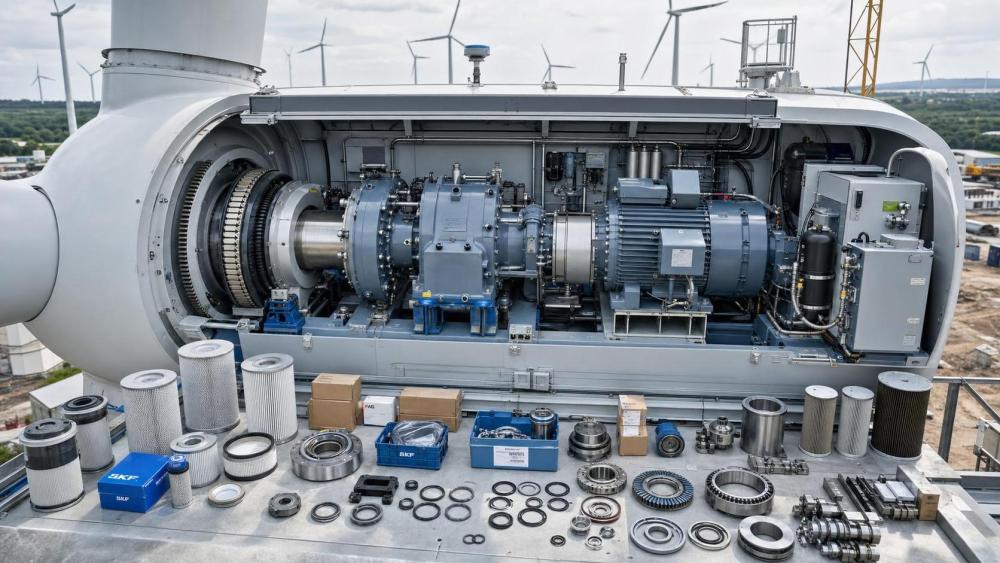
A practical wind turbine components checklist helps teams connect reliability targets with daily maintenance decisions.
It turns scattered inspections into a structured process that supports uptime, budget control, and safer field execution.
For utility-scale projects, the challenge is rarely one failed part alone.
More often, weak planning around wind turbine components creates avoidable downtime, delayed repairs, and higher lifecycle cost.
That is why a component checklist should cover function, failure modes, inspection intervals, spare strategy, and supplier readiness.
In practice, the most useful checklist is not overly technical or overly generic.
It should help maintenance planning teams decide what to inspect first, what to stock, and what to monitor continuously.
Why wind turbine components planning matters early
Reliability problems usually start long before a visible breakdown.
Misaligned lubrication, slow spare delivery, poor sealing, and weak monitoring can build hidden risk across the asset base.
A checklist for wind turbine components creates a common reference for engineering, procurement, and service teams.
This also improves handover quality between construction, commissioning, and long-term operations.
From a cost perspective, planned replacement is usually cheaper than reactive crane mobilization and secondary damage.
That is especially true for remote sites, offshore platforms, and high-wind seasonal windows.
What a useful checklist should include
- Component name and location
- Criticality to generation and safety
- Expected wear pattern and failure mode
- Inspection method and service interval
- Lubrication, sealing, and contamination risks
- Lead time, spare stock level, and supplier options
- Condition monitoring signals and alarm thresholds
Core wind turbine components to prioritize
Not all wind turbine components carry the same operational risk.
A practical checklist starts with the parts that drive torque transfer, load control, and environmental protection.
1. Rotor bearings and main shaft support
Main bearings absorb heavy radial and axial loads under variable wind conditions.
Poor lubrication, false brinelling, and contamination can shorten service life quickly.
Check grease condition, vibration trend, temperature drift, and shaft alignment history.
2. Gearbox assemblies
The gearbox remains one of the most closely watched wind turbine components in many fleets.
Planetary stages, high-speed shafts, and internal bearings need regular oil analysis and vibration review.
Look for micropitting, abnormal particle counts, thermal stress, and seal leakage around interfaces.
3. Generator and coupling systems
Generator bearings, couplings, and cooling paths affect electrical output stability.
Even minor misalignment can raise vibration and accelerate wear in connected wind turbine components.
Track insulation integrity, coupling condition, and signs of heat concentration.
4. Pitch and yaw systems
Pitch bearings, yaw bearings, drives, and brakes handle constant motion and position control.
These wind turbine components face uneven loading, lubrication breakdown, and exposure to moisture and dust.
Check backlash, grease purge condition, motor response, and gear tooth wear.
5. Hydraulic and pneumatic support systems
Some turbines rely on hydraulic power for pitch control, braking, or auxiliary movement.
Pressure instability, hose aging, seal wear, and fluid contamination can affect response time.
Where pneumatic devices are installed, air quality and leakage rates deserve regular review.
6. Seals, O-rings, and contamination barriers
Sealing parts look small, but they protect many high-value wind turbine components.
A failed seal can lead to lubricant loss, water ingress, corrosion, and sensor inaccuracy.
Material choice should match temperature range, media compatibility, and UV or salt exposure.
Maintenance checklist by inspection category
A strong maintenance plan groups wind turbine components by how they are inspected and managed.
This makes work orders clearer and helps teams schedule labor around access limits.
Visual inspection items
- Oil leakage around gearbox, seals, and hydraulic units
- Corrosion on housings, fasteners, and exposed interfaces
- Grease discharge color and contamination signs
- Hose cracking, clamp damage, and cable abrasion
Condition-based monitoring items
- Bearing vibration spectrum and envelope analysis
- Temperature trend deviations across wind turbine components
- Oil particle count, moisture level, and viscosity change
- Motor current behavior and brake response data
Time-based maintenance items
- Lubricant replacement by operating hours
- Filter replacement and breather inspection
- Seal and O-ring renewal during planned shutdowns
- Torque verification on critical bolted interfaces
How to link wind turbine components with spare parts planning
A checklist becomes more valuable when it supports spare decisions, not only inspections.
The key is to separate high-cost critical wind turbine components from routine wear items.
Main bearings, gearbox internals, pitch drives, and control electronics usually need deeper risk review.
Seals, hoses, filters, belts, and sensors often fit regional stock programs with faster turnover.
Use a simple decision screen
- How long is the supplier lead time?
- What is the outage cost if this part fails?
- Can adjacent wind turbine components suffer secondary damage?
- Can field crews replace it during standard service windows?
- Does the site need weather-dependent lifting support?
This screening method keeps inventory practical while protecting uptime during the most expensive failures.
Supplier and quality checkpoints for critical components
Reliability depends on product quality as much as maintenance discipline.
When sourcing wind turbine components, quality checkpoints should be explicit and documented.
In actual projects, supplier performance should be reviewed against failure history, not brochure claims alone.
A workable checklist for ongoing reliability
The best wind turbine components checklist is simple enough to use and detailed enough to guide action.
It should identify critical parts, inspection methods, spare strategy, and supplier controls in one view.
That approach helps reduce unplanned stoppages and supports better lifecycle cost planning across the fleet.
Start with the highest-risk wind turbine components, standardize inspection records, and connect every finding to a maintenance decision.
When the checklist is updated regularly, it becomes a practical reliability tool rather than a static document.
Want to dive deeper into these market dynamics, or need data-driven support for your next business move? Drop a line below and let the analysts at PCTS provide customized insights.
We respect your privacy. Your information is strictly confidential.
Related News
- 00
0000-00
How to check vibration analysis software for sensor compatibility - 00
0000-00
IndexBox Forecasts 3.8% Annual Growth for Global Radial Seals Market Through 2035 - 00
0000-00
How to assess the chemical compatibility of FFKM sealing sheets - 00
0000-00
IndexBox Forecasts 3.6% Annual Growth for Construction Bearings Market - 00
0000-00
When do hydraulic components require an export license?
Weekly Insights
Stay ahead with our curated technology reports delivered every Monday.