





Germany remains one of the most watched markets in European wind manufacturing, not only for installed capacity but for the depth of its component ecosystem.
For companies tracking wind energy components Germany, the discussion is no longer limited to price or lead time alone.
Supply resilience, technical verification, and long-term serviceability now shape sourcing decisions across turbines, drivetrains, pitch systems, sealing packages, and maintenance inventories.
That shift matters because Germany combines advanced engineering, strict quality culture, and pressure from energy transition targets, while also facing cost competition and localization demands.
Why Germany Still Matters in Wind Component Supply
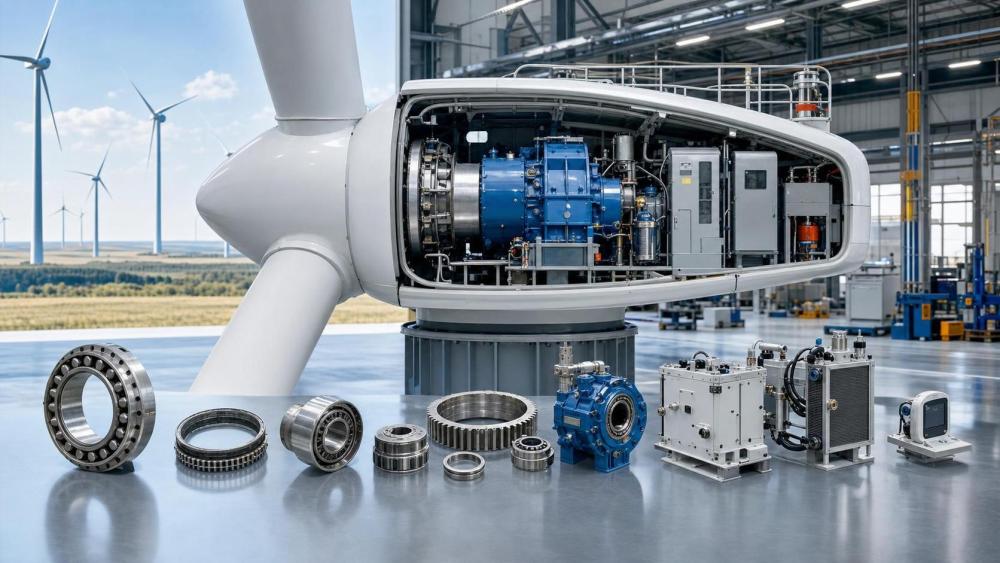
Germany holds a strong position in precision manufacturing linked to rotating equipment, power transmission, sealing, hydraulics, and industrial reliability.
Those capabilities map directly onto modern wind systems, where uptime depends on how well each component performs under variable loads and harsh outdoor conditions.
In practical terms, wind energy components Germany often refers to a broad supply base rather than one narrow product category.
It includes main shaft bearings, gearbox parts, couplings, seals, hydraulic units, lubrication elements, fasteners, condition monitoring hardware, and MRO-critical spares.
This is also why industrial intelligence platforms such as PCTS are relevant.
Wind sourcing decisions increasingly depend on cross-component understanding, from tribology and sealing materials to vibration monitoring and lifecycle cost analysis.
The Quality Conversation Has Moved Beyond Certification
Formal compliance still matters, but it is no longer enough to differentiate a supplier in the Germany wind supply chain.
The stronger question is whether component quality remains consistent across batches, operating climates, and long maintenance intervals.
For wind energy components Germany, several quality themes now receive closer attention:
- bearing raceway precision and lubrication behavior under fluctuating loads;
- seal resistance to moisture, contamination, and temperature cycling;
- gear and transmission durability during peak torque events;
- hydraulic and pneumatic response stability in pitch and control functions;
- traceability of raw materials, machining, heat treatment, and final inspection.
More buyers also want evidence from field performance, not just factory testing.
A component that passes bench validation but creates unplanned maintenance after two winter cycles can quickly erase any initial cost advantage.
Cost Pressure Is Reshaping Supply Patterns
Germany’s wind component market sits between two strong forces.
One is the demand for high technical performance. The other is sustained pressure to reduce total project cost.
That combination is changing how sourcing is structured.
Instead of relying on a single premium supplier for every subsystem, many organizations are separating strategic and non-strategic parts more carefully.
Critical rotating interfaces may stay with proven specialists, while secondary hardware may open to broader competition.
This does not mean quality is being relaxed.
It means quality is being measured through risk-adjusted value, including warranty exposure, replacement intervals, logistics reliability, and service complexity.
Which Component Groups Deserve the Closest Review
Not every part in the wind system carries the same operational consequence.
The most sensitive categories in wind energy components Germany are usually the ones tied to motion control, load transfer, and contamination protection.
Bearings and drivetrain interfaces
Main bearings, gearbox bearings, and associated housings remain central because failure can trigger long outages and expensive crane intervention.
Attention should go to fatigue life assumptions, lubrication strategy, grinding quality, and operating data feedback.
Seals and leakage control systems
Seals rarely dominate the headline budget, yet they often influence contamination, lubricant retention, and downstream wear.
Material selection, compression set, media compatibility, and temperature stability all deserve review.
Hydraulic and control elements
Pitch systems and braking functions depend on stable hydraulic performance.
Even small inconsistencies in pumps, cylinders, valves, or sealing interfaces can reduce response quality and maintenance predictability.
Condition monitoring components
A notable quality shift in Germany is the move toward components that support data visibility.
Sensors, edge monitoring devices, and vibration tracking tools increasingly support supplier evaluation and maintenance planning.
How to Read Supplier Strength More Accurately
A supplier profile can look strong on paper while still leaving operational gaps.
For wind energy components Germany, stronger assessment usually comes from connecting technical capability with manufacturing discipline and aftermarket support.
Several checks tend to be more revealing than sales claims:
- process control over machining, heat treatment, sealing, and assembly;
- batch traceability and documented root cause analysis;
- experience with offshore, cold-weather, or high-duty operating profiles;
- response capability for urgent replacement and failure investigation;
- willingness to discuss lifecycle performance, not only quotation terms.
This is where a broader industrial intelligence view helps.
PCTS reflects that reality by connecting bearings, hydraulics, transmission parts, seals, and MRO issues inside one operating framework.
That matters because wind failures are rarely isolated to one part number.
They often emerge from interaction between lubrication, load, sealing, contamination, and maintenance timing.
What the Current Market Signals Suggest
The next phase of wind energy components Germany will likely favor suppliers that combine reliable process quality with transparent technical communication.
Pure manufacturing scale is less persuasive when downtime costs are rising and warranty scrutiny is tighter.
At the same time, buyers are unlikely to accept premium pricing without measurable performance evidence.
That creates room for suppliers that can show stable tolerances, application-specific material choices, and credible field support.
It also raises the importance of MRO planning.
Replacement cycles, spare stock logic, and service documentation now influence sourcing decisions much earlier in the project lifecycle.
A Practical Next Step for Evaluation
A useful starting point is to separate component review into three layers: operational criticality, quality verification depth, and service dependency.
That structure makes wind energy components Germany easier to assess without treating every item as equally strategic.
From there, compare suppliers using evidence that reflects actual operating conditions, not only catalog performance.
When that review includes bearings, seals, hydraulics, transmission parts, and monitoring elements together, sourcing choices become more defensible.
In a market where reliability and cost are being tested at the same time, that broader view is becoming the more practical one.
Want to dive deeper into these market dynamics, or need data-driven support for your next business move? Drop a line below and let the analysts at PCTS provide customized insights.
We respect your privacy. Your information is strictly confidential.
Related News
- 00
0000-00
How to check vibration analysis software for sensor compatibility - 00
0000-00
IndexBox Forecasts 3.8% Annual Growth for Global Radial Seals Market Through 2035 - 00
0000-00
How to assess the chemical compatibility of FFKM sealing sheets - 00
0000-00
IndexBox Forecasts 3.6% Annual Growth for Construction Bearings Market - 00
0000-00
When do hydraulic components require an export license?
Weekly Insights
Stay ahead with our curated technology reports delivered every Monday.