





On June 20, 2026, the OECD confirmed that a temporary deep-water alternative route via the Gulf of Oman and the Arabian Sea was opened for traffic linked to the Strait of Hormuz after easing regional tensions. For exporters and buyers of wind turbine main shaft bearings, yaw and pitch bearings, and Heavy Roller Chains moving into Europe, the Middle East, and India, the development is worth close attention because it directly affects vessel passage efficiency and shortens lead times on relevant sea lanes.
What Has Been Confirmed So Far
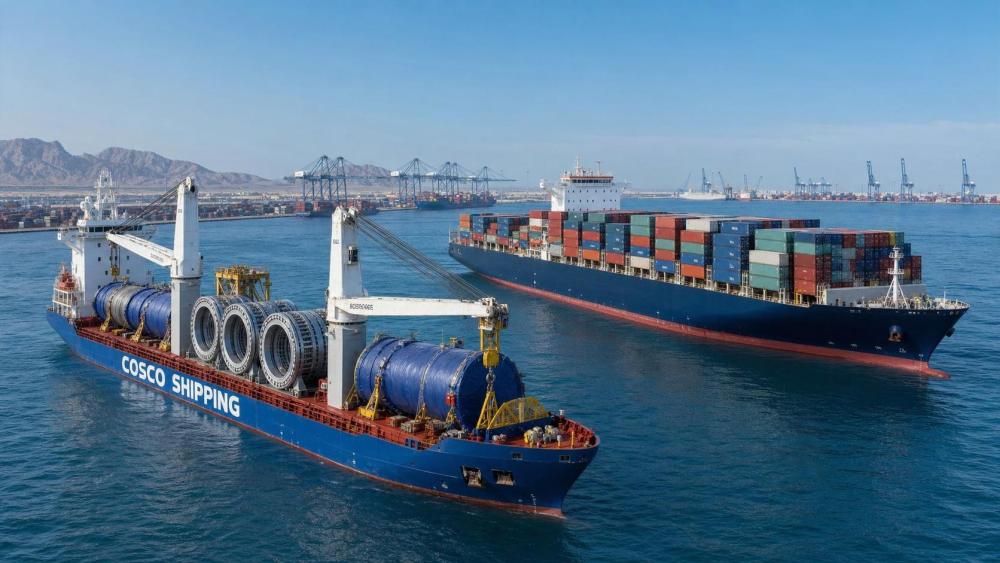
According to the information provided, the temporary alternative route began operating on June 20, 2026. The route runs through the Gulf of Oman and the Arabian Sea and is described as a deep-water option. The OECD report states that passage efficiency has improved for large container vessels and heavy-lift ships. The same update indicates that this change is favorable for exports of wind turbine main shaft bearings, yaw and pitch bearings, and Heavy Roller Chains to Europe, the Middle East, and India. On the Yangon-to-Rotterdam route, the average sea transit time is currently 32 days, which is six days shorter than in May.
Where the Impact May Be Felt First
Export-oriented component suppliers may see delivery schedules ease
From an industry perspective, suppliers shipping large, heavy, or project-related components may be among the first to feel the effect. The reason is straightforward: the reported improvement applies to vessel types commonly used for oversized or heavy cargo. The main business impact may appear in outbound scheduling, promised shipment windows, and coordination with overseas customers in Europe, the Middle East, and India.
Manufacturers may need to reassess production-to-shipment timing
Analysis shows that manufacturers of wind power bearings and heavy chain products may need to review how they sequence production completion, packing, and port handover. A shorter ocean transit time does not automatically resolve every delivery issue, but it can change the timing assumptions used in export planning and customer commitments.
Procurement teams and overseas buyers gain a narrower planning buffer
For procurement teams, importers, and project buyers, the reported reduction in transit time can affect replenishment expectations and order timing. What deserves closer attention is whether shortened shipping cycles lead to revised ordering rhythms, especially for products linked to installation schedules, maintenance planning, or inventory positioning in destination markets.
Logistics service providers may need to adjust routing and communication
Supply chain service providers, including freight coordinators working with container and heavy-lift cargo, may be affected at the execution level. Observably, the key issue is not only route availability, but also how quickly sailing plans, booking arrangements, and customer updates reflect the new operating conditions.
What Companies Should Watch Now
Separate confirmed route changes from broader assumptions
Companies should distinguish between the confirmed opening of a temporary alternative route and any broader expectation of lasting stability. The available information confirms an operational improvement, but it does not by itself confirm a permanent routing pattern or a fully settled long-term logistics environment.
Recheck lead times for priority export categories
Businesses handling wind turbine main shaft bearings, yaw and pitch bearings, and Heavy Roller Chains should revisit quoted lead times for shipments to Europe, the Middle East, and India. The practical focus is whether existing delivery promises, shipment milestones, and internal planning still match the newly reported transit conditions.
Keep customer communication tied to current, verifiable timings
For sales, export operations, and account teams, customer communication should reflect what is currently confirmed rather than projecting further reductions. The most relevant point is that the Yangon-to-Rotterdam route is now averaging 32 days based on the provided information, compared with a longer average in May.
Maintain documentation and execution discipline
Even when transit conditions improve, execution still depends on accurate shipping documents, booking coordination, and alignment across suppliers, forwarders, and buyers. From a practical standpoint, companies should ensure that any adjustment in promised delivery cycles is supported by operational readiness rather than by headline interpretation alone.
Why This Matters Beyond a Single Route Update
Analysis shows that this development is best understood as a logistics signal with immediate commercial relevance, rather than as a final conclusion about regional shipping conditions. The confirmed reduction in transit time is meaningful for sectors moving heavy industrial components, especially where vessel suitability and route efficiency directly influence delivery performance. At the same time, because the route is described as temporary, the industry still needs to watch whether the improvement becomes a sustained operating pattern.
How to Read the Latest Shipping Improvement
At this stage, it is more appropriate to understand the news as a near-term operational change with clear value for export planning, rather than as a guaranteed long-term reset in maritime lead times. For the wind bearing and heavy chain segments in particular, the most relevant takeaway is that route efficiency has improved enough to shorten delivery cycles on a named corridor, but follow-through in scheduling and execution remains the key business question.
Basis of This Article
This article is based on the user-provided news title, event date, and event summary. For reporting of this type, commonly relevant source categories may include official notices, company statements, industry association updates, authoritative media coverage, and documents from standard-setting or multilateral institutions. No specific official source link was provided in the input, so the underlying source chain still requires ongoing verification. Further attention should remain on subsequent official wording, route operating continuity, and whether the reported delivery improvement holds across relevant shipments and destinations.
Want to dive deeper into these market dynamics, or need data-driven support for your next business move? Drop a line below and let the analysts at PCTS provide customized insights.
We respect your privacy. Your information is strictly confidential.
Related News
- 00
0000-00
How sealing technology reduces contamination in semiconductor manufacturing - 00
0000-00
Where to install vibration sensors on rotating machinery - 00
0000-00
NTSB Probe Finds Boeing Warned of MD-11 Engine Bearing Risk Years Earlier - 00
0000-00
How to size pneumatic grippers for packaging system integration - 00
0000-00
How to size alloy steel power transmission chains for heavy loads
Weekly Insights
Stay ahead with our curated technology reports delivered every Monday.