





How to Evaluate a Wind Energy Components Exporter in 2026
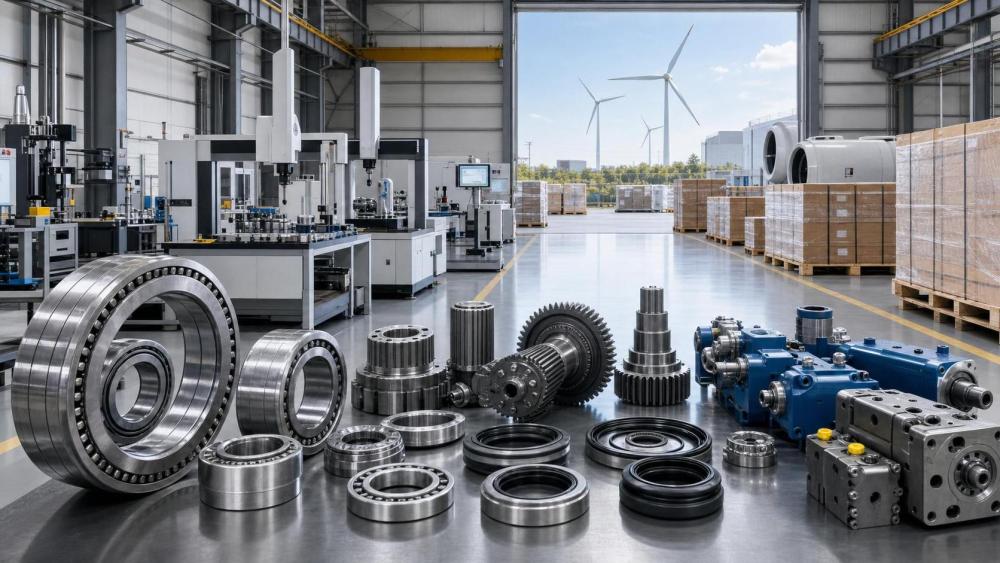
Choosing the right wind energy components exporter in 2026 requires more than checking price lists or delivery claims.
The real decision sits deeper.
Buyers need to verify technical reliability, compliance readiness, supply resilience, and after-sales support across the full operating lifecycle.
That is especially true as wind projects face tighter margin control, stricter grid expectations, and more demanding uptime targets.
A capable wind energy components exporter should help reduce risk, not just fill a purchase order.
In practical sourcing work, that means comparing exporters on evidence.
You need proof of manufacturing control, traceability, testing discipline, and stable delivery performance.
For wind turbines, weak component quality can trigger high downstream costs.
That includes crane replacement, downtime losses, warranty disputes, and safety exposure.
So the best sourcing decision usually comes from total value analysis, not unit price alone.
Start with Product Scope and Wind Application Fit
Not every industrial exporter understands wind-specific operating conditions.
That is the first filter.
A qualified wind energy components exporter should show experience with parts used in nacelles, pitch systems, yaw drives, gearboxes, hydraulic circuits, and sealing assemblies.
Ask for a detailed component map.
This should cover bearings, transmission parts, seals, chains, couplings, hydraulic elements, and maintenance replacement items.
The strongest exporters explain where each component sits in the turbine system.
They also explain how it handles vibration, variable loads, corrosion, and lubrication stress.
This is where technical depth starts to separate serious suppliers from trading-only operations.
- Can they match components to onshore, offshore, or hybrid projects?
- Do they understand heavy-load, salt spray, and fatigue requirements?
- Can they support both OEM supply and MRO replacement demand?
Check Manufacturing Capability, Not Just Catalog Claims
A catalog can look polished while factory control remains weak.
That gap matters.
When evaluating a wind energy components exporter, verify whether it owns production, controls subcontractors, or mainly consolidates external sources.
Each model carries different risks.
Owned production usually gives better process visibility.
A multi-source model can still work, but only with disciplined supplier qualification and inspection controls.
Request evidence around machining precision, heat treatment, surface finishing, sealing material control, and batch consistency.
For rotating and load-bearing parts, process stability is often more important than headline capacity.
A reliable wind energy components exporter should provide:
- Process flow documents for key components.
- Inspection plans with critical tolerance checkpoints.
- Material certificates and traceability records.
- Testing data tied to shipment batches.
- Corrective action examples from prior quality issues.
Those details show whether the exporter can protect consistency when volumes rise.
Review Certifications, Standards, and Compliance Readiness
Compliance has become a stronger buying signal in 2026.
More projects now require documented readiness before approval.
A wind energy components exporter should clearly state which standards apply to each product group.
That may include ISO 9001, ISO 14001, RoHS, REACH, CE-related documentation, or sector-specific testing and traceability requirements.
For seals, bearings, hydraulic components, and transmission parts, the compliance file should be practical, not generic.
Ask to see sample documents before placing a larger order.
The speed and accuracy of the response tells you a lot.
A capable exporter usually has version control, document ownership, and customer-specific submission routines already in place.
That saves time during vendor onboarding and reduces customs or project approval delays.
Measure Supply Chain Stability and Delivery Risk
Supply risk often shows up after the contract is signed.
That is why pre-checking matters.
A wind energy components exporter may offer attractive pricing, yet depend on unstable sub-suppliers, long raw material lead times, or single-point logistics routes.
In wind projects, delay costs escalate quickly.
Late delivery can affect installation windows, vessel scheduling, crane planning, or maintenance shutdown timing.
Ask exporters how they manage raw materials, safety stock, alternate suppliers, and packaging for long-distance shipment.
More importantly, ask for real performance indicators.
This part of the review often exposes hidden procurement costs faster than price analysis does.
Compare Total Cost, Not Only Quoted Price
A lower quote can still produce a more expensive project.
That is common in wind component sourcing.
When evaluating a wind energy components exporter, build a cost picture that includes failure risk, maintenance intervals, inspection frequency, replacement logistics, and documentation workload.
For critical components, even a small defect rate can erase any purchase savings.
This is particularly relevant for bearings, seals, hydraulic systems, and transmission assemblies.
Use a simple evaluation model.
- Unit price per component
- Expected service life
- Installation or replacement labor cost
- Probable downtime exposure
- Inventory carrying requirements
- Warranty responsiveness
This gives a more realistic view of exporter value in procurement and lifecycle terms.
Evaluate Engineering Support and Problem Response
A strong wind energy components exporter does more than ship parts.
It helps solve operational problems.
In 2026, buyers increasingly value exporters that can discuss failure modes, material selection, lubrication conditions, sealing compatibility, and replacement planning.
That support becomes critical when field conditions differ from original assumptions.
Test responsiveness before awarding volume.
Send a technical query with actual operating parameters.
Then assess response time, technical accuracy, and clarity.
This small step often predicts future support quality better than a sales presentation.
Exporters with real engineering capability usually answer with data, tradeoffs, and practical recommendations.
Use a Practical Supplier Evaluation Framework
A structured scorecard makes the decision cleaner.
It also helps internal alignment.
For a wind energy components exporter, a useful framework should combine commercial and technical factors in one view.
That reduces bias toward price or presentation quality alone.
- Define critical component categories and project risk level.
- Assign scoring weights for quality, compliance, delivery, cost, and support.
- Request the same evidence package from each exporter.
- Run a pilot order or sample validation round.
- Review findings with procurement, engineering, and operations together.
This process makes supplier comparison more defendable.
It also shortens later dispute cycles because expectations were documented early.
For platforms such as PCTS, this kind of framework fits well with industrial component sourcing.
It connects bearings, seals, hydraulic parts, transmission systems, and MRO decisions into one consistent evaluation logic.
Final Decision Signals for 2026
The best wind energy components exporter in 2026 is rarely the one with the lowest initial quote.
It is usually the one with the clearest evidence.
Look for exporters that understand wind operating realities, manage quality with discipline, support compliance efficiently, and respond well when technical problems appear.
Those strengths protect both cost and continuity.
In actual procurement work, the most useful question is simple.
Can this exporter support reliable turbine performance over time, under real operating pressure, with fewer surprises?
If the answer is supported by data, not promises, you are likely looking at the right partner.
That is the standard worth applying to every wind energy components exporter review this year.
Want to dive deeper into these market dynamics, or need data-driven support for your next business move? Drop a line below and let the analysts at PCTS provide customized insights.
We respect your privacy. Your information is strictly confidential.
Related News
- 00
0000-00
How sealing technology reduces contamination in semiconductor manufacturing - 00
0000-00
Where to install vibration sensors on rotating machinery - 00
0000-00
NTSB Probe Finds Boeing Warned of MD-11 Engine Bearing Risk Years Earlier - 00
0000-00
How to size pneumatic grippers for packaging system integration - 00
0000-00
How to size alloy steel power transmission chains for heavy loads
Weekly Insights
Stay ahead with our curated technology reports delivered every Monday.