





On July 20, 2026, CEN released the revised EN 15088:2026 for wind turbine main shaft and pitch bearing sealing systems, tightening compliance requirements around sealing performance, lubricant behavior, and sensor integration. With mandatory application to all wind bearing assemblies entering the EU market from October 1, 2026, the update deserves close attention from bearing exporters, seal suppliers, compliance teams, and EU-facing procurement and certification functions, particularly where CE conformity pathways depend on component-level documentation and test evidence.
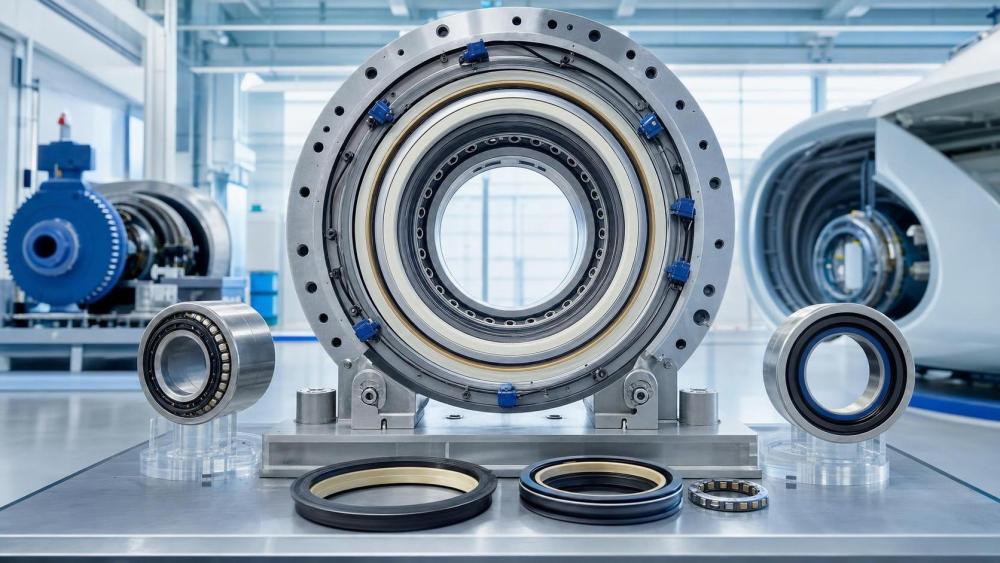
What the revised standard now requires
The revised EN 15088:2026, published by CEN, covers performance requirements and test methods for sealing systems used in wind turbine main shaft and pitch bearings. According to the provided information, the update adds three specific areas of requirement: dynamic sealing life verification for FFKM/PU composite seals across a wide temperature range of -40°C to +120°C; a migration limit for low-volatility grease of no more than 0.3 mg/cm²/1000h; and compatibility provisions for integrated smart sensors.
The standard is set to become mandatory on October 1, 2026 for all wind power bearing components entering the EU market. The provided information also makes clear that this change directly affects the CE conformity route for Chinese export-oriented bearing manufacturers and supporting seal suppliers.
Where the impact is likely to be felt first
Export-oriented bearing manufacturers face a narrower compliance window
From an industry perspective, manufacturers shipping wind bearing assemblies into the EU may be affected first because the new requirements apply directly to market access. The main business impact is likely to appear in product validation, technical files, test coordination, and customer delivery planning. What deserves closer attention is whether current sealing configurations, lubricant selections, and supporting documentation can be matched to the revised standard before the October 2026 enforcement date.
Seal suppliers may come under closer material and test scrutiny
Suppliers of sealing components, especially those involved with FFKM/PU composite designs, may see increased pressure around verification evidence. Analysis shows that the change is not only about material naming but about demonstrated dynamic life performance under the specified temperature range. For these suppliers, the impact is likely to center on test readiness, specification alignment with bearing customers, and the ability to support downstream CE documentation.
Lubricant-related decisions move closer to the compliance core
For businesses involved in grease selection, supply, or technical coordination, the newly stated migration limit introduces a more defined compliance checkpoint. The likely impact is on product qualification, compatibility reviews with sealing systems, and document consistency across customer-facing submissions. Observably, lubricant performance in this context is being treated as part of the bearing assembly compliance picture rather than as a secondary maintenance matter.
Certification, procurement, and supply chain teams will need earlier coordination
Service providers, sourcing teams, and compliance coordinators may also be affected because the standard links technical performance to EU market entry timing. The operational pressure point is likely to be earlier cross-functional alignment: test status, supplier declarations, certification materials, and shipment planning may need to be reviewed together rather than in sequence.
What companies should watch in practice
Check whether existing validation covers the new test language
Analysis shows that companies should first compare current validation records against the newly stated requirements on dynamic sealing life, grease migration, and smart sensor compatibility. The practical question is not whether a component has been tested in general, but whether its evidence can support the revised EN 15088:2026 wording used in EU-facing compliance work.
Review supplier documents tied to CE conformity
What deserves closer attention is the quality and completeness of supplier-side materials. For bearing manufacturers and seal suppliers, this includes technical specifications, test records, declarations, and any other documents that may feed into CE conformity assessment. Where multiple suppliers are involved, document consistency may become as important as technical performance itself.
Separate standard publication from business implementation risk
Observably, the standard publication date and the mandatory application date create two different business milestones. The publication on July 20, 2026 confirms the rule change as a fact, while the October 1, 2026 deadline turns that change into an execution issue covering testing, sourcing, customer communication, and shipment planning. Companies should treat these as distinct stages rather than a single compliance event.
Prepare for customer and market-side questions early
For exporters and supporting suppliers, practical preparation may include clarifying which product lines are EU-bound, which assemblies rely on affected seal and grease combinations, and which customer projects may require updated conformity materials. Analysis shows that early communication may matter where qualification cycles and delivery commitments overlap with the enforcement date.
Why this looks like more than a narrow technical revision
As an editorial observation, this update is more appropriate to understand as both an immediate compliance change and a longer-term signal about how wind power bearing components are being assessed in the EU. The confirmed facts are limited to the revised standard text areas provided here and the October 2026 mandatory timeline. Even so, the inclusion of temperature-range life verification, lubricant migration limits, and smart sensor compatibility suggests that sealing systems are being evaluated in a more integrated way across materials, operating behavior, and monitoring functions.
At the same time, it would be premature to treat this single revision as a full market conclusion beyond the scope of the provided information. Continued attention is warranted because the direct compliance consequences are clear, while the broader commercial effects will depend on how manufacturers, suppliers, and certification workflows adapt in practice.
How this update should be read now
At this stage, the revision of EN 15088:2026 should be read as a confirmed near-term compliance requirement for wind bearing assemblies entering the EU, with likely operational implications for exporters, seal suppliers, and CE-related documentation chains. It is not just a technical footnote, but it is also not a basis for broad market claims that go beyond the available facts. The most reasonable interpretation for industry participants is that this is an actionable standards update with longer-term significance still worth monitoring.
Basis of this article and what still needs verification
This article is based on the user-provided news title, event date, and event summary. For this type of development, commonly relevant source categories usually include official announcements, standard organization documents, company disclosures, industry association updates, and reporting by authoritative trade media. A specific official source link was not provided in the input, so the underlying document trail still requires continued verification. Follow-up attention should focus on any subsequent official clarifications, implementation guidance, and market-side conformity interpretations related to EN 15088:2026.
Want to dive deeper into these market dynamics, or need data-driven support for your next business move? Drop a line below and let the analysts at PCTS provide customized insights.
We respect your privacy. Your information is strictly confidential.
Related News
- 00
0000-00
IndexBox Forecasts 3.8% Annual Growth for Global Radial Seals Market Through 2035 - 00
0000-00
How to assess the chemical compatibility of FFKM sealing sheets - 00
0000-00
IndexBox Forecasts 3.6% Annual Growth for Construction Bearings Market - 00
0000-00
When do hydraulic components require an export license? - 00
0000-00
How to size modular pneumatic valve systems for adequate airflow
Weekly Insights
Stay ahead with our curated technology reports delivered every Monday.