





On July 18, 2026, CEN issued EN 15088:2026 for wind turbine mainshaft bearings, replacing the 2013 edition and introducing new mandatory compliance items that directly affect market access for shipments bound for the EU. For bearing exporters, wind power component manufacturers, certification teams, and supply chain operators, the update is worth close attention because it links technical testing requirements more directly to customs clearance and delivery execution.
What the revised standard now requires
According to the provided information, EN 15088:2026 is the new technical specification for wind turbine mainshaft bearings released by CEN on July 18, 2026. It replaces the 2013 version of the standard.
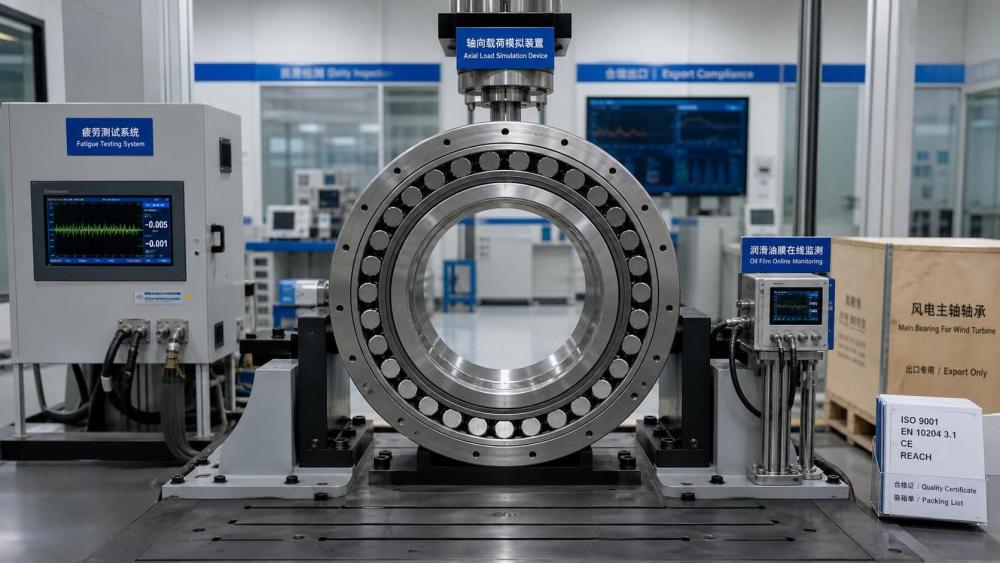
The revision adds three explicit requirements: a mandatory dynamic load cycle fatigue test of at least 10^7 cycles, simulation of axial misalignment load conditions, and online verification of lubricant film thickness.
The same information states that the standard has a direct impact on EU supply access for Chinese wind bearing exporters. Batches that do not obtain certification from TUV Rheinland or DNV will be refused customs clearance.
Where the pressure will show up in the supply chain
Export-facing bearing suppliers will feel the compliance shift first
From an industry perspective, companies shipping wind turbine mainshaft bearings to the EU are the most immediately exposed. The reason is straightforward: the updated standard is tied to supply access, and the provided information explicitly links non-certified batches to customs rejection. The main impact is therefore likely to appear in pre-shipment compliance preparation, certification scheduling, batch release, and export documentation readiness.
Manufacturing and testing functions may face tighter pre-delivery checks
Analysis shows that the new focus on dynamic load fatigue, axial offset simulation, and online lubricant film verification is likely to move attention upstream into production and validation stages. For processing and manufacturing teams, the practical concern is not only whether a product design meets a specification on paper, but whether the required test and verification path can be demonstrated in a way that supports certification and shipment.
Certification and trade support roles will become more operationally important
Observably, service providers and internal teams responsible for certification, customs files, and customer documentation may become a key control point in delivery execution. Where batches need TUV Rheinland or DNV certification to avoid clearance refusal, the effect is likely to be seen in document completeness, certificate alignment with shipment lots, and communication between suppliers, customers, and logistics counterparts.
EU-side buyers and procurement teams may tighten acceptance conditions
What deserves closer attention is the buyer side of the transaction. Where customs clearance can be blocked for non-certified batches, procurement and sourcing teams in the EU may place more weight on certification status earlier in supplier qualification and order confirmation. The business impact may show up in supplier screening, delivery conditions, and requests for technical and compliance evidence before shipment.
What companies should review now
Check whether current export batches align with the new certification threshold
For companies already serving EU customers, a practical priority is to review whether pending or future shipments of mainshaft bearings are prepared against EN 15088:2026 rather than the superseded 2013 version. The key issue is not abstract policy awareness, but whether batch-level compliance evidence is ready for trade execution.
Separate technical readiness from customs readiness
Analysis shows that passing internal technical review and achieving actual cross-border delivery are not the same thing. The provided information makes customs treatment a concrete issue for non-certified batches. Companies therefore need to pay attention to both the testing and verification side of compliance and the certification-document side that supports customs clearance.
Review communication with certification bodies and customers
Another immediate focus is coordination. Where TUV Rheinland or DNV certification is a condition affecting clearance, suppliers should closely track certification timing, document issuance, and how those records match customer delivery plans. Customer communication also matters, especially where order execution may depend on confirmation of the revised standard requirements.
Watch for further official wording and implementation details
Observably, the published requirements already create a concrete compliance signal, but companies should still follow any additional official clarification tied to implementation, interpretation, or supporting documentation. This matters most for businesses managing multiple shipments, overlapping standards references, or contracts signed before the new version took effect.
Why this matters beyond a single standards update
Analysis shows that this development should be read as more than a routine document revision. The added fatigue cycle testing, axial load condition simulation, and lubricant film verification indicate that compliance expectations are becoming more specific in areas tied to bearing operating performance and verifiability. That said, based strictly on the provided information, it is more appropriate to understand this as a confirmed market-access and compliance development rather than to generalize it into a broader market conclusion.
It is also more appropriate to understand this as both an immediate operational issue and a longer-term signal. The immediate issue is the stated customs consequence for non-certified batches. The longer-term signal is that technical compliance, certification, and shipment execution are becoming harder to separate in this product segment.
How the market should read this change
At this stage, the most grounded reading is that EN 15088:2026 has already created a clear compliance threshold for wind turbine mainshaft bearings entering the EU under the conditions described in the provided information. The short-term impact is concentrated in certification readiness, export delivery, and customer qualification processes. The broader industry meaning is still something to watch, but the current message is already clear: for affected suppliers, standards compliance now has a more direct bearing on whether product can move through trade channels without disruption.
Basis of this article and what still needs verification
This article is based on the user-provided news title, event date, and event summary. The core facts used here are limited to the stated release of EN 15088:2026 by CEN on July 18, 2026, the replacement of the 2013 version, the newly added mandatory testing and verification items, and the stated customs clearance consequence for batches lacking TUV Rheinland or DNV certification.
For this type of industry update, relevant source categories usually include official notices, standards organization documents, enterprise statements, industry association releases, and reporting by authoritative trade media. No specific official source link was provided in the input, so the exact publication record and any follow-on implementation details still require continued verification. Follow-up attention should remain on official wording, certification practice, and any further clarification affecting shipment execution.
Want to dive deeper into these market dynamics, or need data-driven support for your next business move? Drop a line below and let the analysts at PCTS provide customized insights.
We respect your privacy. Your information is strictly confidential.
Related News
- 00
0000-00
How sealing technology reduces contamination in semiconductor manufacturing - 00
0000-00
Where to install vibration sensors on rotating machinery - 00
0000-00
NTSB Probe Finds Boeing Warned of MD-11 Engine Bearing Risk Years Earlier - 00
0000-00
How to size pneumatic grippers for packaging system integration - 00
0000-00
How to size alloy steel power transmission chains for heavy loads
Weekly Insights
Stay ahead with our curated technology reports delivered every Monday.