





What a Vibration Monitoring Analysis Service Should Include in 2026
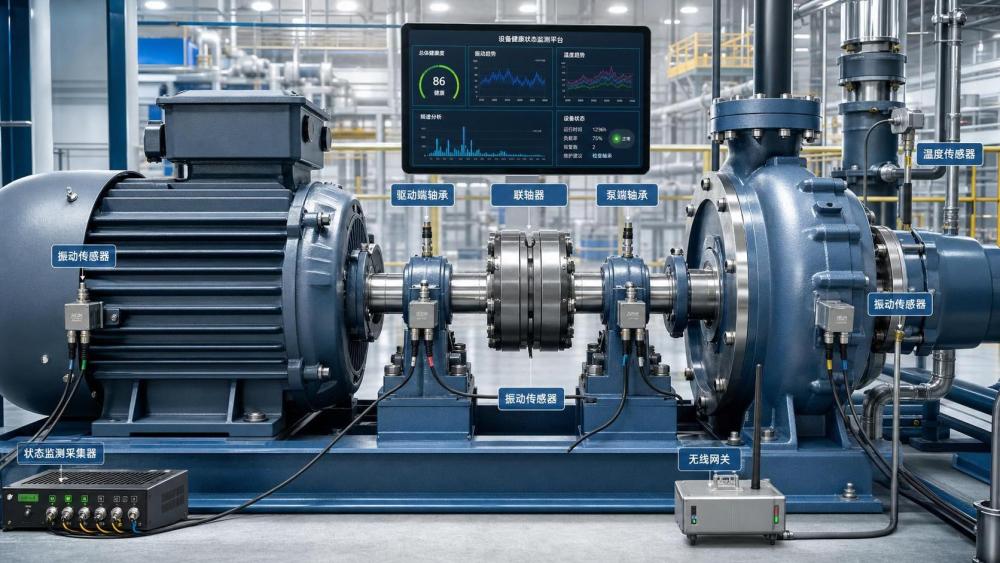
In 2026, expectations around a vibration monitoring analysis service are much higher than they were even a few years ago.
Plants no longer want raw alarms without context. They want decisions, priorities, and practical next steps.
That shift matters for rotating equipment, hydraulic systems, transmission assemblies, and production lines with little tolerance for unplanned downtime.
A modern vibration monitoring analysis service should connect condition data with maintenance timing, failure mechanisms, spare parts planning, and business risk.
It should also fit real industrial complexity, where pumps, motors, bearings, couplings, belts, chains, and seals interact under varying loads.
From a project perspective, the real value is not signal collection alone. It is clearer control over reliability, budget, and execution.
Why the Scope of a Vibration Monitoring Analysis Service Is Expanding
Industrial assets are becoming more instrumented, but many teams still struggle to convert data into confident action.
That is why a vibration monitoring analysis service must now cover diagnostics, prioritization, and operational follow-through.
The service must work across legacy machines and newer smart assets.
It should also account for mixed maintenance maturity across sites, suppliers, and contractors.
More importantly, analysis quality now affects procurement and lifecycle cost decisions.
If the service cannot explain whether a defect is lubrication related, alignment related, structural, or load induced, decision quality drops fast.
Core Elements Every Vibration Monitoring Analysis Service Should Include
A credible vibration monitoring analysis service in 2026 should include several non-negotiable layers.
Without them, teams may collect excellent data and still make poor reliability decisions.
1. Reliable data acquisition and sensor strategy
The service should define where to measure, how often to sample, and which sensor type fits each asset class.
That includes permanently installed sensors, route-based measurements, and wireless options where access is limited.
Good placement is essential for bearings, gearboxes, hydraulic power units, motors, and fan systems.
2. Multi-parameter analysis, not vibration alone
A useful vibration monitoring analysis service should combine vibration data with temperature, speed, load, lubrication condition, and process state.
This is where false positives drop and root-cause confidence improves.
For example, rising vibration during a load shift means something very different from rising vibration at constant conditions.
3. Standards-based diagnostics
The service should align with applicable standards such as ISO 10816, ISO 20816, and relevant machine-specific guidance.
Standards do not replace expertise, but they create a consistent baseline for severity interpretation and reporting.
That consistency matters when multiple sites compare assets or justify intervention budgets.
4. Root-cause oriented fault identification
A strong vibration monitoring analysis service should identify likely failure modes, not just symptom severity.
Typical issues include imbalance, misalignment, looseness, resonance, bearing defects, gear mesh problems, cavitation, and belt-related instability.
The report should clearly separate confirmed evidence from probable interpretation.
5. Actionable maintenance recommendations
This is often the missing part.
A vibration monitoring analysis service should tell teams what to inspect, when to intervene, and what happens if action is delayed.
It should also suggest whether alignment, balancing, lubrication review, seal inspection, or component replacement is the better next move.
What Good Reporting Looks Like in Practice
Reporting quality often determines whether a vibration monitoring analysis service becomes useful or ignored.
In practice, reports should be concise, visual, and decision oriented.
They should make it obvious which assets need immediate action and which can remain under observation.
- Asset criticality ranking and condition status
- Trend plots with timestamped operating context
- Fault interpretation with confidence level
- Recommended actions and target completion window
- Risk if no action is taken
- Suggested parts, tools, or specialist support
That format helps maintenance, operations, and sourcing teams align faster around the same facts.
Why Integration Matters More in 2026
A modern vibration monitoring analysis service should not sit in isolation.
It should connect with CMMS, historian platforms, SCADA, reliability dashboards, and spare parts workflows where possible.
This is becoming a baseline expectation, especially in multi-site industrial organizations.
Integration allows a vibration monitoring analysis service to trigger work orders, support shutdown planning, and improve evidence for maintenance economics.
It also reduces one common failure point: valuable analysis trapped inside a PDF that no workflow ever uses.
Key integration outcomes
- Faster maintenance execution
- Better spare parts timing
- Lower repeat failure rates
- Stronger audit trail for reliability decisions
- Clearer total cost of ownership analysis
How to Evaluate Service Quality Before You Buy
Not every vibration monitoring analysis service delivers the same depth.
Some providers are strong in hardware deployment but weak in diagnostics.
Others generate alerts but do little to support field action.
A practical evaluation should examine technical rigor and delivery discipline together.
This kind of screening prevents buying a data tool when the real need is a decision support service.
Common Gaps That Still Undermine Results
Even in 2026, some vibration monitoring analysis service programs will underperform for familiar reasons.
The technology may be fine, but the service model is incomplete.
- Sensors installed without a criticality-based asset strategy
- Alarm thresholds copied from generic templates
- Reports written for analysts, not operating teams
- No distinction between symptom and root cause
- Limited follow-up after a serious finding
- No feedback loop from maintenance results into future analysis
When these gaps persist, the vibration monitoring analysis service becomes reactive instead of predictive.
What Decision Makers Should Expect Going Forward
Going forward, a vibration monitoring analysis service should function as part of a broader reliability intelligence system.
That means better edge analytics, stronger remote diagnostics, and more disciplined links to maintenance execution.
It also means service providers should understand adjacent component behavior.
Bearing defects may be driven by lubrication failure. Pump vibration may reflect cavitation. Seal wear may follow misalignment or shaft instability.
The best vibration monitoring analysis service will treat those links as standard practice, not special investigation work.
In practical terms, that is what turns monitoring into lifecycle control.
Final Takeaway
In 2026, a vibration monitoring analysis service should include accurate sensing, standards-based interpretation, root-cause analysis, prioritized reporting, and direct maintenance guidance.
It should also integrate with operational systems and support better decisions on repairs, procurement, and asset lifecycle planning.
If a vibration monitoring analysis service cannot explain what happened, why it happened, what to do next, and how urgent it is, it is no longer enough.
The right service is the one that turns vibration signals into fewer surprises, sharper maintenance actions, and more dependable industrial performance.
Related News
- 00
0000-00
Where are axial piston pumps used in mining equipment? - 00
0000-00
Embodied AI Robotics and Drive Control Forum Held in Shanghai - 00
0000-00
How does seal service life affect the total cost of ownership? - 00
0000-00
Schaeffler to Cut 3,460 Jobs and Close Five European Plants - 00
0000-00
How does system size affect the price of a belt drive system?
Weekly Insights
Stay ahead with our curated technology reports delivered every Monday.