





On July 1, 2026, the mandatory rollout of UL 1998:2026 turned compliance for smart sensor bearings into a more immediate market-access issue for the U.S. industrial equipment supply chain. The change centers on bearings that integrate embedded sensors and communication modules, and it matters not only to exporters, but also to OEMs, distributors, testing-related service providers, procurement teams, and delivery planning functions that rely on valid certification and current technical documentation.
What the Rule Change Confirms
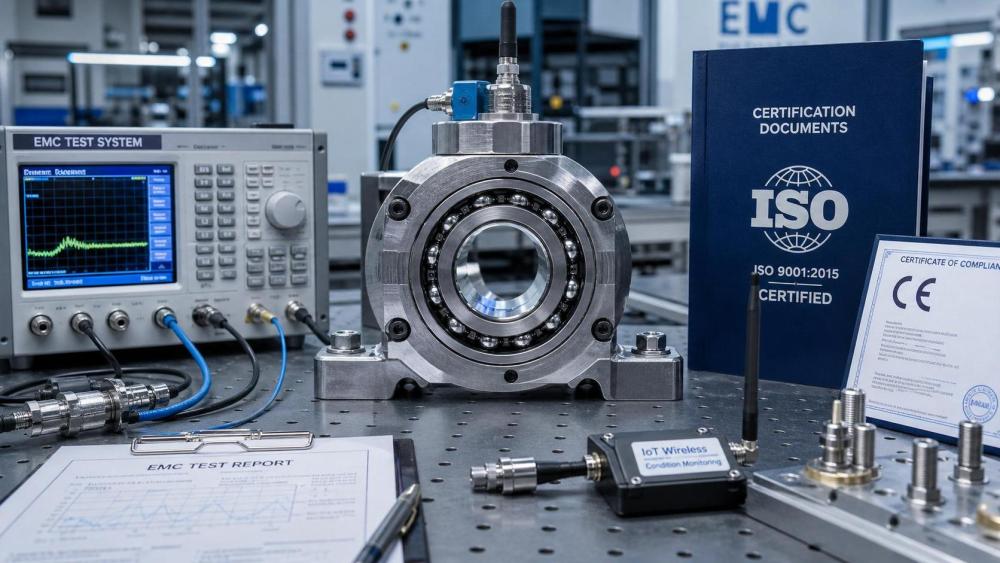
UL began fully enforcing the updated UL 1998:2026 standard for software-related safety control systems on July 1, 2026. Under the information provided, smart bearings with embedded sensors and communication modules, including Smart Sensor Bearings, are required to pass EMC immunity testing at Class A2 level. Products without UL listing or an equivalent certification may no longer enter the U.S. industrial equipment supply chain from that date. The same update also means OEMs and distributors must re-review technical documents and test reports.
Where the Immediate Pressure Falls
Export shipments now depend more directly on certification status
From an industry perspective, exporters dealing in sensor-integrated bearing products may face the clearest immediate exposure because market entry is tied to UL listing or an equivalent certification. The practical effect is likely to appear in shipment qualification, customer acceptance, and pre-delivery document checks. What deserves closer attention is whether product files, test records, and compliance statements are aligned with the revised requirement before goods move into the U.S. supply chain.
OEM sourcing reviews are likely to become stricter
OEMs are explicitly identified in the provided information as parties that need to re-examine technical documentation and test reports. Analysis shows that this can affect supplier approval, component selection, and internal specification review for industrial equipment programs using smart sensor bearings. For procurement and engineering teams, the change is less about general product preference and more about whether the supplied component can still support compliant sourcing and downstream integration.
Distributors and channel operators may need tighter document control
Distributors are also named among the parties that must revisit documentation. Observably, this places more weight on document validity during stocking, customer quotation, and order fulfillment. The issue is not limited to the physical product; it also concerns whether the supporting compliance file remains acceptable under the enforced standard and whether the product can still be presented as eligible for the intended U.S. industrial supply chain use.
Testing and certification-linked service work may move earlier in the sales cycle
Analysis shows that service activities connected to EMC testing, certification review, and technical file preparation may need to shift earlier in project timelines. Because the requirement is framed as a condition for supply-chain entry, affected businesses may need to check reports and certification scope before finalizing procurement, shipping, or delivery commitments. That does not establish a confirmed change in market practice, but it is a reasonable operational implication of the rule now being mandatory.
What Companies Should Check Now
Review whether the product falls within the affected scope
Companies handling bearings with embedded sensors and communication modules should first verify whether the product being supplied, sourced, or specified is within the scope described in the provided information. This is the starting point for deciding whether EMC immunity testing at Class A2 level and UL listing or equivalent certification are necessary conditions for continued supply.
Reconcile certificates, test reports, and technical files
What deserves closer attention is consistency across technical documents. If OEMs and distributors are expected to re-review reports and files, then manufacturers, exporters, and channel partners should check whether existing documentation is complete, current, and matched to the product configuration being sold. The provided information does not include detailed execution criteria, so companies should avoid assuming that older document sets will automatically remain sufficient.
Reassess procurement and delivery commitments
Analysis shows that purchase planning and delivery scheduling may need closer coordination with compliance status. Where a product requires UL listing or equivalent certification to enter the U.S. industrial equipment supply chain, procurement teams and sales operations should pay attention to whether orders, tender materials, or customer-required documents need to be updated. This should be treated as a practical review point rather than a confirmed disruption outcome.
Watch for changes in customer-facing specifications
It is more appropriate to understand this stage as one where customer documentation may tighten around certification and EMC evidence. Companies involved in bids, technical submissions, or after-sales traceability should monitor whether specification language, qualification checklists, or acceptance documents begin to reflect the enforced standard more explicitly. The current input does not provide those downstream documents, so this remains a point for follow-up observation.
Why This Looks More Like an Execution Signal
Observably, this update is not just a policy discussion or a draft-stage standards development. Based on the information provided, the requirement is already in force as of July 1, 2026, and non-listed or non-equivalently certified products are barred from entering the relevant U.S. industrial supply chain. Analysis shows that the more important reading is not abstract regulatory change, but an execution signal affecting how compliance proof is checked in trade, sourcing, and supply relationships. At the same time, the market still needs to watch how consistently the requirement is reflected in tender documents, supplier audits, and channel acceptance practices.
How the Market May Need to Read This Change
The clearest significance of this development is that EMC compliance and certification status for smart sensor bearings have moved closer to baseline entry requirements for affected U.S.-bound industrial supply. A neutral reading is that this is already a landed rule change, while some of its commercial and operational effects still need to be observed through implementation. It is more appropriate to understand the update as an active compliance threshold with ongoing implications for documentation review, supplier qualification, and delivery planning.
Basis of This Article and What Still Needs Verification
This article is based on the user-provided title, event date, and event summary. For developments of this kind, relevant source categories commonly include official announcements, regulator publications, trade or customs authority notices, industry association updates, standards organization documents, and reporting by authoritative media. No specific official source link was provided in the input, so the exact official source link remains unconfirmed and should be continuously verified. Follow-up attention is still needed on detailed implementation language, certification interpretation, tender document changes, industry feedback, and how affected companies carry out the requirement in practice.
Want to dive deeper into these market dynamics, or need data-driven support for your next business move? Drop a line below and let the analysts at PCTS provide customized insights.
We respect your privacy. Your information is strictly confidential.
Related News
- 00
0000-00
How sealing technology reduces contamination in semiconductor manufacturing - 00
0000-00
Where to install vibration sensors on rotating machinery - 00
0000-00
NTSB Probe Finds Boeing Warned of MD-11 Engine Bearing Risk Years Earlier - 00
0000-00
How to size pneumatic grippers for packaging system integration - 00
0000-00
How to size alloy steel power transmission chains for heavy loads
Weekly Insights
Stay ahead with our curated technology reports delivered every Monday.