





Industrial Monitoring Is Moving From Visibility to Foresight
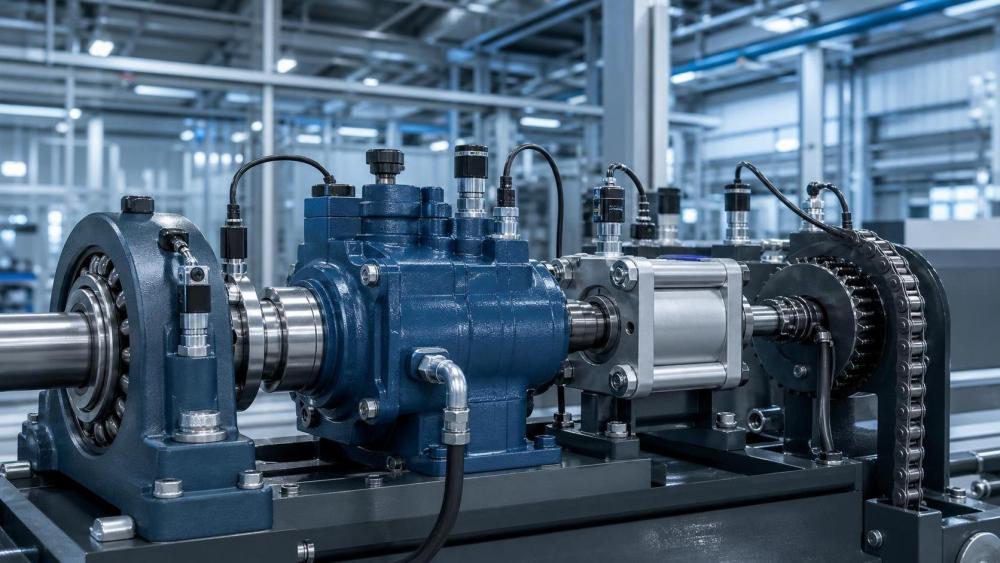
Smart sensing technology is no longer a niche upgrade inside industrial monitoring. It is becoming part of how operations judge reliability, risk, and capital efficiency.
The shift matters because monitoring used to confirm failure after symptoms appeared. Now, sensor-rich systems are expected to detect drift earlier and support intervention before production loss grows.
That change is especially visible across rotating equipment, hydraulic assets, pneumatic lines, transmission assemblies, and sealing systems. These are the components that often define uptime under harsh duty cycles.
Across the broader industrial landscape, smart sensing technology is changing the conversation from data collection alone to decision quality. Better sensing now influences maintenance timing, supplier expectations, and lifecycle cost models.
For platforms such as PCTS, this development fits a larger market need. Buyers and technical teams increasingly want connected insight across bearings, fluid power, transmission parts, and seals rather than isolated component information.
Why This Shift Has Become More Visible Recently
Several signals have made smart sensing technology more relevant than it was even a few years ago. The first is economic pressure around downtime, energy waste, and unplanned spare parts consumption.
The second is technical maturity. Sensors are smaller, more robust, and easier to integrate with edge devices, cloud analytics, and existing control environments.
A third factor is operational complexity. Equipment is running faster, with tighter tolerances and longer service expectations. That raises the value of early warning signals from vibration, pressure, temperature, leakage, torque, and contamination data.
Another important point is that maintenance teams are under pressure to do more with fewer interventions. Smart sensing technology supports this by helping prioritize which assets need immediate attention and which can safely remain in service.
- Energy costs make inefficient pumps, motors, and drivetrains easier to justify for replacement or optimization.
- Remote operations increase demand for condition visibility without constant physical inspection.
- Quality requirements push earlier detection of misalignment, wear, lubrication failure, and seal degradation.
- Digital transformation programs now need measurable operational outcomes, not dashboard volume.
The result is a more disciplined market. Smart sensing technology is being judged less as an innovation headline and more as an operational tool with expected returns.
The Strongest Demand Is Emerging Around Critical Components
From recent demand patterns, the most consistent growth appears where failure creates compound costs. Bearings, hydraulic pumps, cylinders, pneumatic actuators, chains, belts, couplings, and sealing interfaces are key examples.
In bearing applications, smart sensing technology is expanding beyond basic vibration alarms. It increasingly combines temperature, load behavior, lubrication condition, and speed patterns to identify degradation earlier.
Hydraulic systems are another strong area. Pressure fluctuation, fluid contamination, heat rise, and pump efficiency are becoming central monitoring indicators because hydraulic instability often spreads quickly through the system.
For pneumatic systems, the concern is slightly different. The focus is often on leakage, response inconsistency, and actuator performance drift that quietly erode energy efficiency and automation accuracy.
Transmission parts also show a clear shift. Chains, belts, sprockets, and couplings are no longer monitored only when visible wear appears. Smart sensing technology allows earlier detection of tension loss, misalignment, slip, and uneven torque transfer.
Sealing systems deserve more attention than they typically receive. In demanding environments, the cost of leakage, contamination, or media incompatibility often exceeds the price of the seal itself. Sensor-led monitoring helps expose that hidden cost sooner.
What The Market Is Actually Monitoring More Closely
This is where PCTS has a practical role. The market increasingly values technical content that connects component behavior, monitoring logic, and total cost of ownership rather than treating each part category in isolation.
The Bigger Change Is Happening In Decision Models
A more interesting development is not the sensor itself. It is the way smart sensing technology is changing how maintenance and investment decisions are made.
Previously, many industrial monitoring programs were built around fixed inspection cycles. That approach still exists, but it is being challenged by condition-led planning.
Condition-led planning changes spare parts strategy. It also changes how teams compare suppliers, because component durability now needs to be judged together with monitoring compatibility and diagnostic clarity.
This has direct implications for precision component markets. A bearing, seal, chain, or hydraulic unit is increasingly evaluated not only by nominal performance, but by how clearly its condition can be interpreted during service.
More companies are also linking smart sensing technology with edge analytics. That reduces response time, especially where latency or unstable connectivity makes cloud-only monitoring less practical.
In real operations, faster interpretation matters more than more raw data. The strongest systems are not the ones that collect everything. They are the ones that identify meaningful deviation early enough to change action.
Supplier Strategy Is Being Reshaped By Data Expectations
Another signal is appearing on the supply side. Smart sensing technology is affecting how industrial components are positioned, compared, and trusted in the market.
Technical claims now need stronger evidence. Buyers are more likely to ask how a component behaves under monitored conditions, how failure modes appear in data, and how quickly anomalies can be recognized.
This raises the importance of application intelligence. Suppliers that can explain vibration signatures, pressure stability, wear progression, sealing resistance, or lubrication behavior in specific contexts gain credibility.
For intelligence platforms covering industrial MRO and core mechanical systems, this creates room for deeper content. Market visibility increasingly depends on technical interpretation, not just catalog breadth.
That is particularly relevant in sectors with demanding conditions, such as wind power, automated manufacturing, chemical processing, and heavy equipment. In these settings, smart sensing technology supports both operational assurance and supplier differentiation.
Where Attention Should Be Directed Next
- Watch whether sensor outputs align with actual failure modes, not only with laboratory performance claims.
- Compare monitoring value across the asset chain, from bearings and couplings to seals and hydraulic subsystems.
- Assess whether data can support faster service decisions at the edge, not only in centralized dashboards.
- Review how monitoring signals affect spare parts timing, warranty logic, and lifecycle cost assumptions.
The Next Phase Will Reward Selective Adoption, Not Sensor Overload
One common mistake is assuming that more sensing automatically creates more value. In practice, smart sensing technology works best when tied to a clear reliability question.
The next phase of industrial monitoring will likely reward selective deployment. Critical assets, recurring failure points, and energy-intensive systems should remain the first priority.
It is also worth watching standardization. As data formats, communication protocols, and diagnostic methods mature, integration costs may fall and wider adoption may accelerate.
At the same time, market expectations will rise. Smart sensing technology will be judged by measurable outcomes such as reduced leakage events, lower bearing failure frequency, improved hydraulic stability, or better belt tracking consistency.
That means the most useful next step is not blanket digitization. It is a structured review of where sensing can change maintenance economics, component selection, and uptime confidence.
A practical approach starts with mapping high-value assets, identifying failure signals already available, and checking where monitoring gaps still affect reliability decisions.
From there, compare component categories through an integrated lens. Bearings, pumps, actuators, chains, belts, seals, and condition monitoring devices should be assessed as part of one operating system, not separate purchases.
Smart sensing technology is shaping industrial monitoring because it turns component behavior into earlier judgment. The organizations that benefit most will be the ones that connect data, application context, and lifecycle action with discipline.
Want to dive deeper into these market dynamics, or need data-driven support for your next business move? Drop a line below and let the analysts at PCTS provide customized insights.
We respect your privacy. Your information is strictly confidential.
Related News
- 00
0000-00
How sealing technology reduces contamination in semiconductor manufacturing - 00
0000-00
Where to install vibration sensors on rotating machinery - 00
0000-00
NTSB Probe Finds Boeing Warned of MD-11 Engine Bearing Risk Years Earlier - 00
0000-00
How to size pneumatic grippers for packaging system integration - 00
0000-00
How to size alloy steel power transmission chains for heavy loads
Weekly Insights
Stay ahead with our curated technology reports delivered every Monday.