





Smart Bearings: Key Features to Compare Before You Standardize
For many industrial teams, standardization looks like a purchasing exercise at first.
In practice, smart bearings change that discussion very quickly.
They combine mechanical performance with sensing, data output, and maintenance intelligence.
That also means a weak comparison process can lock in years of avoidable cost.
Before selecting smart bearings across plants or product lines, buyers need a broader evaluation frame.
Sensor accuracy matters, but so do load limits, connectivity, sealing, lubrication, and supplier support.
The best choice is rarely the unit with the longest feature sheet.
It is the smart bearing option that fits operating conditions, data workflows, and lifecycle targets.
Why smart bearings need a different standardization lens
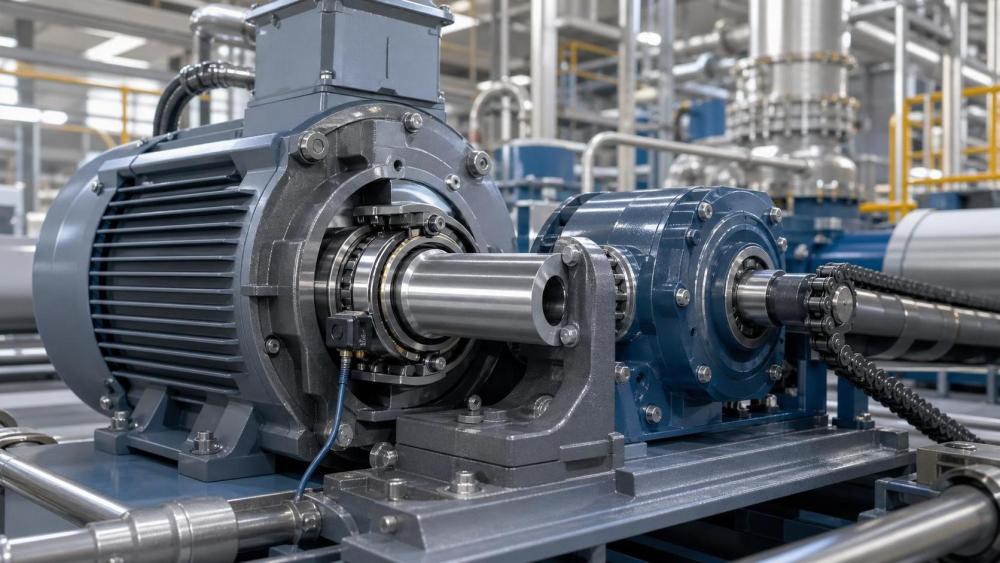
Traditional bearings are usually compared through dimensions, load ratings, materials, and price.
Smart bearings still require those checks, but they add another decision layer.
Now the question becomes how well the bearing senses, transmits, and supports action.
From a procurement view, this changes supplier comparison in three important ways.
- Mechanical failure risk and data failure risk must be reviewed together.
- Compatibility with existing monitoring systems becomes part of the specification.
- Total cost of ownership often outweighs the initial unit price.
This is especially relevant in rotating equipment with costly downtime.
Fans, pumps, conveyors, gearboxes, motors, and automated lines all expose weak smart bearing decisions fast.
1. Start with the operating load and speed envelope
A smart bearing is still a bearing first.
If the core mechanical design is wrong, the sensing layer will not save the application.
Begin with radial load, axial load, speed range, shock events, and duty cycle.
Also check misalignment tolerance, thermal growth, and housing fit conditions.
Some smart bearings perform well in stable laboratory conditions but struggle in variable industrial loads.
That gap matters when standardizing across several machine families.
Ask suppliers for application-specific derating assumptions, not just catalog values.
A reliable smart bearing program starts with realistic service conditions, not idealized test points.
2. Compare sensor accuracy in real operating conditions
Sensor accuracy is one of the main reasons companies move toward smart bearings.
Still, accuracy on paper is not enough for a purchasing decision.
The better question is how stable the data remains under vibration, heat, contamination, and speed variation.
Most smart bearings monitor temperature, vibration, speed, or lubrication condition.
Some advanced models also estimate load, misalignment, or remaining useful life.
Useful comparison points include:
- Measurement range and resolution
- Drift over time and recalibration requirements
- Sampling frequency under normal production speed
- Signal quality in noisy electromagnetic environments
- Alarm logic and false-positive rate
In actual business use, false alarms create their own costs.
A smart bearing that triggers unnecessary inspections can reduce confidence across maintenance teams.
3. Check connectivity, protocols, and system fit
Many standardization projects fail because the smart bearings cannot integrate smoothly.
This issue often appears after the purchase order, when plant teams start deployment.
A practical review should cover hardware and software fit at the same time.
Look at wired versus wireless transmission, power supply method, gateway needs, and edge processing options.
Then confirm compatibility with SCADA, PLC, CMMS, MES, or cloud monitoring platforms.
When comparing smart bearings, ask for supported protocols and integration examples.
This step usually separates a promising smart bearing product from a workable industrial standard.
4. Review lubrication strategy and sealing protection
Smart bearings often operate in the same harsh environments as conventional bearings.
Dust, washdown exposure, chemicals, and high temperature still drive failure.
That is why lubrication and sealing should never be treated as secondary details.
Check whether the smart bearing uses sealed-for-life grease, relubrication points, or automated lubrication support.
Also examine seal material, ingress protection, and resistance to cleaning agents or process fluids.
A common mistake is choosing smart bearings with strong electronics but weak contamination control.
That usually leads to premature wear and unreliable readings at the same time.
For food processing, mining, steel, pulp, and chemical operations, this review carries even more weight.
5. Test data reliability, not just data availability
It is easy to be impressed when smart bearings produce dashboards quickly.
What matters more is whether the data supports better maintenance decisions.
Reliable data should be consistent, traceable, and understandable across shifts and sites.
Ask suppliers how they validate algorithms, manage firmware versions, and document alarm thresholds.
If the smart bearing platform depends on black-box analytics, decision risk increases.
More clearly now, buyers need to know who owns the data and how portable it is.
That matters during supplier changes, plant expansion, or digital platform upgrades.
A standardization decision should improve visibility without creating a data lock-in problem.
6. Compare lifecycle cost with a disciplined model
Unit price alone can make smart bearings look expensive.
A better comparison includes maintenance labor, downtime exposure, spare inventory, and failure prevention value.
This is where selection decisions become more grounded and less reactive.
For a realistic smart bearing cost model, include these elements:
- Purchase price, accessories, gateways, and software fees
- Installation time and commissioning support
- Expected service life under actual duty conditions
- Planned and unplanned maintenance reduction
- Energy efficiency or friction-related gains where relevant
- Inventory simplification from standardization
When smart bearings prevent one major failure event, the economics can change fast.
Still, those claims should be checked against your own maintenance history and asset criticality.
7. Evaluate supplier depth before committing to a standard
A smart bearing program depends heavily on supplier maturity.
That maturity includes product quality, technical documentation, integration support, and after-sales response.
It also includes long-term commitment to firmware support and model continuity.
Before standardizing smart bearings, review supplier capability in a structured way.
- Application engineering support during selection
- Pilot testing references in similar industries
- Global service reach and spare parts availability
- Compliance documentation and quality traceability
- Training for maintenance and reliability teams
The stronger signal is not the sales presentation.
It is the supplier’s ability to support deployment after the first smart bearing batch arrives.
A practical decision framework for smart bearings
The most effective standardization projects stay simple in structure.
Build a weighted comparison matrix and score each smart bearing candidate consistently.
A practical weighting often includes mechanical fit, sensing quality, integration ease, lifecycle cost, and supplier capability.
Then validate the top options through a controlled pilot on critical equipment.
This reduces rollout risk and reveals issues that specifications may hide.
Smart bearings can deliver clear maintenance and reliability value.
But the return depends on disciplined comparison before standardization decisions are made.
Focus on the features that affect performance, usability, and long-term ownership.
That approach leads to smarter supplier alignment and fewer surprises after implementation.
When smart bearings are selected with that level of discipline, standardization becomes a reliability strategy, not just a sourcing exercise.
Want to dive deeper into these market dynamics, or need data-driven support for your next business move? Drop a line below and let the analysts at PCTS provide customized insights.
We respect your privacy. Your information is strictly confidential.
Related News
- 00
0000-00
How sealing technology reduces contamination in semiconductor manufacturing - 00
0000-00
Where to install vibration sensors on rotating machinery - 00
0000-00
NTSB Probe Finds Boeing Warned of MD-11 Engine Bearing Risk Years Earlier - 00
0000-00
How to size pneumatic grippers for packaging system integration - 00
0000-00
How to size alloy steel power transmission chains for heavy loads
Weekly Insights
Stay ahead with our curated technology reports delivered every Monday.