





Smart Bearing Technology looks attractive, but when does the ROI really appear?
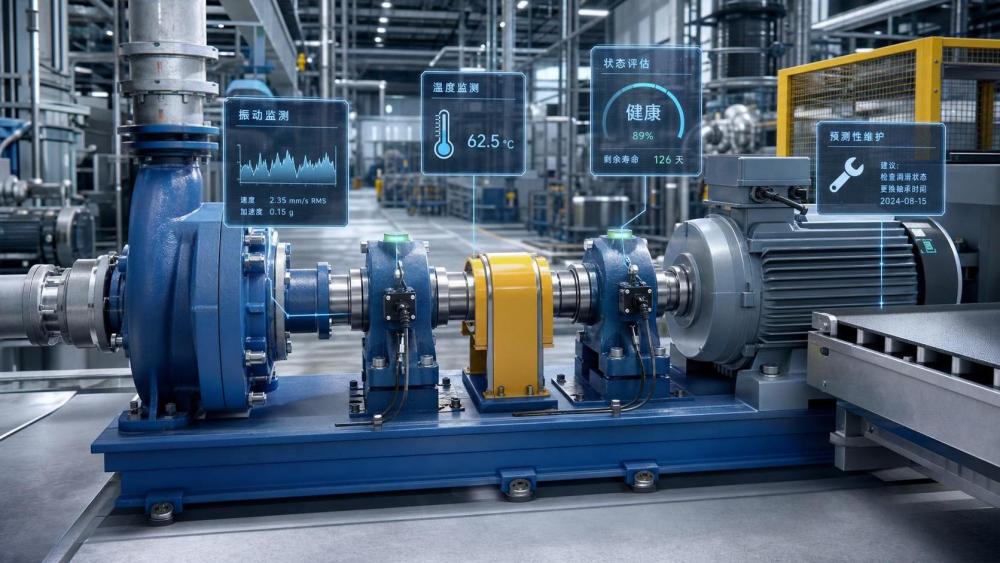
Legacy machines often keep running long after their original design assumptions have changed.
Loads rise, duty cycles increase, and unplanned stops become more expensive than the parts themselves.
That is where Smart Bearing Technology starts to matter.
In simple terms, it combines bearing performance with sensing, condition data, and earlier warning of wear or lubrication issues.
The upgrade is not only about buying a better bearing.
It is about reducing the hidden cost of emergency maintenance, scrap risk, energy loss, and unstable production scheduling.
On industrial intelligence platforms such as PCTS, this topic usually sits beside seals, chains, belts, hydraulics, and MRO planning.
That broader view is useful, because bearing ROI rarely stands alone.
A bearing upgrade may also affect lubrication intervals, coupling alignment, seal life, and spare stock strategy.
The real question is not whether Smart Bearing Technology is advanced.
The real question is whether it cuts lifecycle cost on a specific machine group.
What exactly should be counted in an ROI review?
Many evaluations fail because they compare only unit price.
For aging assets, that is usually too narrow.
A useful ROI review should include direct cost, avoided loss, and operating impact over time.
More practical reviews often use a twelve to thirty-six month window.
That period is long enough to capture maintenance cycles and short enough for budget planning.
Notice that the table includes both bearing and system effects.
That is important in conveyors, pumps, fans, mixers, machine tools, and packaging lines.
In these environments, a bearing problem can trigger belt slip, seal leakage, or shaft damage.
Smart Bearing Technology becomes easier to justify when one failure spreads cost across the whole transmission path.
Which legacy equipment usually benefits first?
Not every machine deserves immediate upgrade.
The strongest candidates usually share one of three patterns.
- The machine has recurring bearing failures, even after standard replacement and relubrication.
- A single stop interrupts upstream or downstream production for several hours.
- The asset operates in heat, dust, washdown, vibration, or variable load conditions.
Aging pumps and motors are common examples.
So are roll lines, heavy conveyors, gear-driven assemblies, and machines with difficult bearing access.
In actual applications, hard-to-reach positions often create stronger ROI than high-speed positions.
Why?
Because each inspection or replacement may require shutdown permits, lifting support, or extended labor windows.
Smart Bearing Technology can reduce unnecessary intervention by showing which location truly needs attention.
A practical filter is to rank equipment by failure cost, not by age alone.
Old assets with stable loads and low interruption cost may remain on conventional bearings for years.
Unstable assets with production impact deserve earlier review.
How can you compare Smart Bearing Technology with standard replacements fairly?
A fair comparison needs more than supplier quotations.
It should compare scenarios, not only products.
One scenario assumes routine replacement after failure or fixed intervals.
The other assumes condition visibility, earlier intervention, and fewer surprise events.
That difference changes the economics.
Useful questions during comparison
- Does the smart bearing include sensing inside the unit, or rely on external monitoring hardware?
- Can the data integrate with existing maintenance software or edge monitoring tools?
- What signal quality is available for vibration, temperature, speed, or lubrication condition?
- Will the upgrade require shaft modification, housing changes, or retraining?
- Is there field evidence from similar loads, contamination levels, or duty cycles?
This is where sources like PCTS can help frame comparison beyond catalog data.
Technical analysis around lubrication, vibration, seals, and transmission reliability often reveals hidden implementation cost.
A lower purchase price may lose value if signal quality is weak or retrofit work is excessive.
By contrast, a higher initial cost may pay back quickly if one avoided shutdown covers the premium.
Where do ROI calculations usually go wrong?
The most common mistake is assuming every failure has equal cost.
In reality, one bearing on a noncritical auxiliary line may be low risk.
Another bearing on a bottleneck asset may affect output, quality, and delivery commitments.
A second mistake is ignoring surrounding components.
If contamination remains uncontrolled, Smart Bearing Technology cannot fully offset poor sealing or damaged lubrication paths.
A third mistake is counting projected savings without a baseline.
Without failure history, intervention cost, and energy data, ROI becomes a guess.
Needless complexity can also hurt adoption.
If alerts are frequent, unclear, or disconnected from maintenance routines, the technology may be ignored.
A better approach is to start with one asset family and a defined baseline.
The lesson is simple.
Smart Bearing Technology should solve a known reliability problem, not create a digital project without operational discipline.
What is a practical path before approving an upgrade?
A useful approval path is usually staged rather than immediate plant-wide replacement.
Start by selecting one machine group with measurable failure history.
Then document current bearing spend, labor hours, downtime cost, and adjacent damage events.
After that, compare two upgrade cases.
One case focuses on premium conventional bearings.
The other adds Smart Bearing Technology with monitoring workflow included.
- Define a payback threshold before quotes arrive.
- Confirm retrofit fit, data access, and alarm ownership.
- Check whether seals, lubricants, and housings also need correction.
- Review service support, replacement lead time, and spare strategy.
- Measure results for at least one full maintenance cycle.
This method keeps the decision grounded in evidence.
It also fits the way industrial component decisions are increasingly made across bearings, seals, hydraulics, and power transmission parts.
Smart Bearing Technology earns its place when it improves reliability in a way that can be tracked, repeated, and scaled.
If the data shows fewer stoppages, longer service intervals, and lower emergency work, the business case becomes clear.
The next sensible step is to map critical assets, gather twelve months of failure records, and test ROI assumptions against one pilot application.
That creates a stronger sourcing decision than relying on price alone.
Want to dive deeper into these market dynamics, or need data-driven support for your next business move? Drop a line below and let the analysts at PCTS provide customized insights.
We respect your privacy. Your information is strictly confidential.
Related News
- 00
0000-00
How sealing technology reduces contamination in semiconductor manufacturing - 00
0000-00
Where to install vibration sensors on rotating machinery - 00
0000-00
NTSB Probe Finds Boeing Warned of MD-11 Engine Bearing Risk Years Earlier - 00
0000-00
How to size pneumatic grippers for packaging system integration - 00
0000-00
How to size alloy steel power transmission chains for heavy loads
Weekly Insights
Stay ahead with our curated technology reports delivered every Monday.