





On June 17, 2026, SK hynix said it would remove the hard requirement of a four-year university degree or above from all entry-level hiring and shift to capability-based assessment. For companies and professionals linked to AI-driven precision manufacturing, this is notable not only as a recruitment update, but also as a signal that roles tied to highly integrated components such as Smart Sensor Bearings and Axial Piston Pumps may increasingly be evaluated through hands-on execution, fault diagnosis, and cross-system collaboration rather than academic credentials alone.
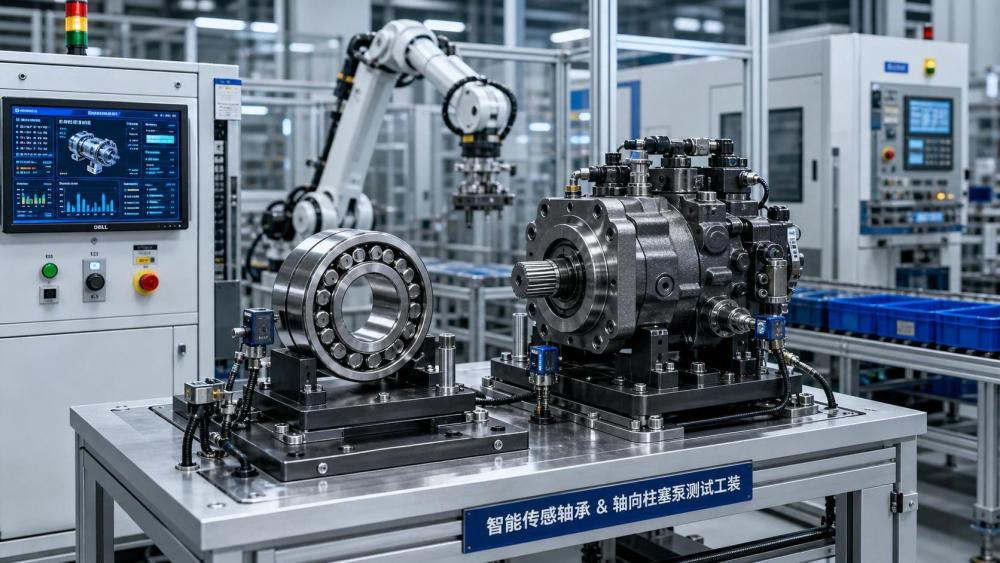
What SK hynix confirmed on June 17
According to the provided information, SK hynix announced on June 17, 2026 that it would abolish the rigid “four-year bachelor’s degree or higher” requirement across all new graduate recruitment. The stated direction is a move toward capability-based evaluation. The same information also indicates that, in AI-era precision manufacturing, the talent logic around research and development, testing, and application support for highly integrated parts including Smart Sensor Bearings and Axial Piston Pumps is being reshaped, with greater weight placed on practical experience, troubleshooting ability, and cross-system coordination.
Where the impact may be felt first
Component development and validation teams
Analysis shows these teams may feel the change most directly because their work is closely tied to real operating conditions, test feedback, and problem isolation. For roles connected to Smart Sensor Bearings and Axial Piston Pumps, the practical ability to connect design intent with field performance may receive more attention in candidate screening and team composition.
Application support and customer-facing technical roles
From an industry perspective, application support functions may also be affected because they often sit between product behavior, system compatibility, and customer-side troubleshooting. If capability-based hiring expands in practice, employers in these roles may pay closer attention to whether candidates can communicate across engineering, service, and integration contexts rather than relying mainly on formal education thresholds.
Manufacturing and supply chain coordination functions
Observably, the implications are not limited to pure R&D posts. In manufacturing and supply chain-linked functions, especially where integrated components require alignment between testing, delivery, and technical feedback, companies may start watching for talent standards that emphasize execution discipline and cross-functional coordination. What deserves closer attention is whether hiring criteria begin to affect how teams define role readiness and internal training priorities.
What companies and professionals should watch now
How capability-based criteria are described
What deserves closer attention is the exact language used in future hiring rules, job descriptions, and evaluation standards. The key issue is not only that the degree threshold was removed, but how practical experience, troubleshooting, and collaboration are translated into assessable criteria.
Which roles see the fastest adjustment
Analysis shows companies should monitor whether the earliest changes concentrate in R&D, testing, or application support roles tied to highly integrated industrial components. That distinction matters because not every position will necessarily adopt the same weighting of skills at the same pace.
The gap between policy signal and operational execution
From an industry perspective, firms should separate the headline policy shift from actual implementation. A formal removal of degree requirements signals a direction, but businesses still need to watch how recruitment workflows, interview design, technical assessment, and onboarding practices evolve in response.
How candidates prepare proof of competence
For professionals, the practical issue is how competence is documented and demonstrated. If employers increasingly value real troubleshooting and cross-system coordination, portfolios of project work, testing experience, and problem-resolution capability may become more relevant in hiring conversations than degree filters alone.
Why this looks like a structural talent signal
In editorial observation, this update is more appropriately understood as a longer-term signal rather than a short-lived recruiting adjustment. The reason is that the change is tied, in the provided summary, to a broader restructuring of talent standards in AI-driven precision manufacturing. At the same time, it should not yet be treated as proof of a fully settled industry-wide model. Observably, the market still needs to watch whether other manufacturers, suppliers, and technical service organizations adopt similar capability-first language and methods.
How to read the development at this stage
At this stage, the most balanced reading is that SK hynix’s move highlights a clear shift in emphasis: for certain industrial sensor and hydraulic system-related roles, practical execution and system-level coordination are becoming more central in talent evaluation. It is more appropriate to understand this as an important industry signal with possible long-tail effects across recruitment, training, and role design, while continuing to observe how broadly and how quickly such standards are implemented in practice.
Basis of this article and follow-up verification
This article is based on the user-provided news title, event date, and event summary. For this type of development, commonly relevant source categories may include official company announcements, corporate recruitment notices, industry association information, authoritative media coverage, and standards-related documents. A specific official source link was not provided in the input, so further verification remains necessary. Follow-up attention should focus on later official wording, any refinement of evaluation rules, and whether related hiring standards appear in adjacent precision manufacturing roles.
Want to dive deeper into these market dynamics, or need data-driven support for your next business move? Drop a line below and let the analysts at PCTS provide customized insights.
We respect your privacy. Your information is strictly confidential.
Related News
- 00
0000-00
How sealing technology reduces contamination in semiconductor manufacturing - 00
0000-00
Where to install vibration sensors on rotating machinery - 00
0000-00
NTSB Probe Finds Boeing Warned of MD-11 Engine Bearing Risk Years Earlier - 00
0000-00
How to size pneumatic grippers for packaging system integration - 00
0000-00
How to size alloy steel power transmission chains for heavy loads
Weekly Insights
Stay ahead with our curated technology reports delivered every Monday.