





Predictive Maintenance Diagnostics Is Moving from Optional to Operational
As industrial operations push for higher reliability and lower lifecycle costs, predictive maintenance diagnostics is becoming a strategic priority. The shift is visible across bearings, hydraulic systems, seals, and transmission components, where small faults can now be traced earlier and acted on before they interrupt production.
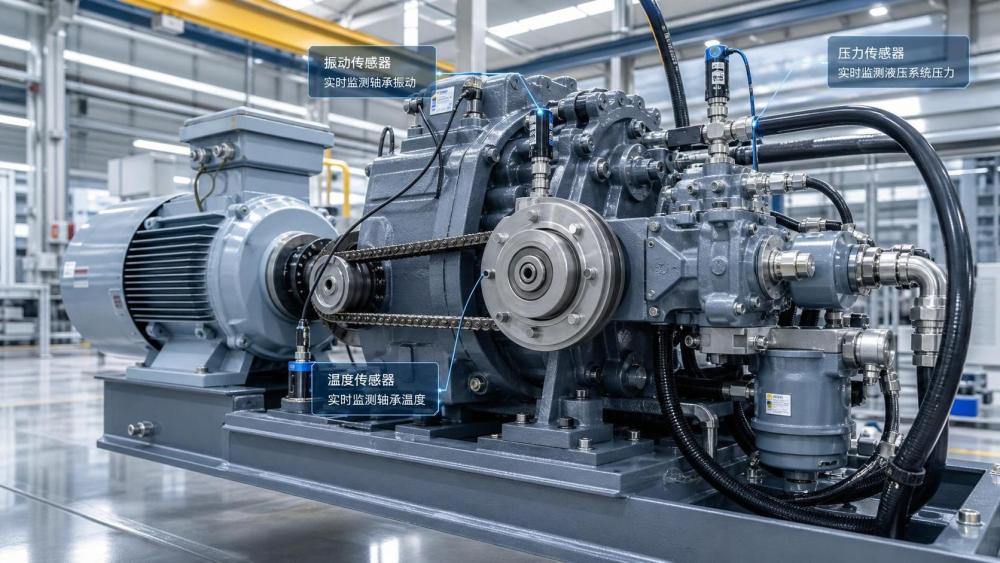
What makes this change important is not just the technology itself, but the way decision-making is changing around it. Maintenance is no longer judged only by how quickly a team reacts. It is increasingly judged by how well predictive maintenance diagnostics reduces uncertainty, supports uptime planning, and protects asset value over a longer operating cycle.
For industrial businesses, that means diagnostics is moving closer to the center of capital planning, spare parts strategy, and service budgeting. In the PCTS context, this also connects to the broader reality of precision components, power transmission systems, fluid power, and industrial MRO, where reliability data has become as important as component performance data.
Why the Signal Is Getting Stronger
The strongest driver is downtime economics. Unplanned stoppages are more expensive than they used to be because equipment is more interconnected, production schedules are tighter, and quality losses spread faster across the line. Predictive maintenance diagnostics helps identify abnormal vibration, heat, pressure drift, leakage, or wear patterns before they become full failures.
A second driver is sensor maturity. Lower-cost condition monitoring components, edge computing, and better data collection have made diagnostics easier to embed in daily operations. That matters in bearing systems, hydraulic pumps, pneumatic actuators, and chain and belt drives, where patterns are often detectable long before a visible breakdown appears.
- Vibration signatures reveal early bearing wear and lubrication loss.
- Pressure and temperature changes expose hydraulic inefficiency.
- Leakage and contamination trends point to seal degradation.
- Torque and slip signals help detect transmission stress in belts and chains.
A third reason is that buyers now expect maintenance logic to be easier to justify. Instead of asking whether a replacement was “necessary,” teams are asking which diagnostic signals support the decision, how much risk was avoided, and whether the next intervention can be delayed safely.
Where the Impact Is Showing Up First
In bearing-heavy applications, predictive maintenance diagnostics is changing how lubrication intervals and replacement timing are set. High-precision bearings, spindle bearings, and wind turbine bearings all benefit from earlier fault isolation because the cost of a missed warning is often much higher than the cost of a planned service visit.
Hydraulic systems show a different pattern. Here, diagnostics is less about a single failure and more about gradual loss of efficiency. Pump wear, fluid contamination, and pressure instability can quietly reduce output, raise energy use, and create inconsistent actuator behavior. Better diagnostics helps keep those losses visible.
Sealing applications are also becoming more data driven. Mechanical seals, O-rings, and chemical-resistant sealing materials are often judged by leakage behavior, contamination resistance, and operating stability. Predictive maintenance diagnostics makes those indicators measurable instead of anecdotal, which improves both technical review and supplier comparison.
The same logic extends to chains, belts, sprockets, and couplings. These parts rarely fail in silence. They usually leave traces through wear, alignment drift, and efficiency loss. The companies that capture those traces early gain more room to plan parts, labor, and shutdown windows.
What Business Leaders Need to Reassess
The first question is not whether predictive maintenance diagnostics works. It is whether the current data pipeline is useful enough to support action. Many programs collect signals but still struggle to link them to maintenance decisions, spare parts planning, or failure cost avoidance.
The second question is whether diagnostics covers the right assets. In practice, the best results usually come from critical equipment with high downtime cost, hard-to-replace parts, or tight quality tolerance. That is where predictive maintenance diagnostics delivers a clear return instead of becoming another layer of reporting.
The third question is governance. If fault data is fragmented across systems or left without ownership, the signal weakens fast. A useful program needs shared definitions, simple escalation rules, and a clear path from alert to action.
How the Market Is Likely to Move Next
Over the next phase, predictive maintenance diagnostics will probably become less about isolated tools and more about integrated maintenance intelligence. That means machine data, component condition, spare parts inventory, and service history will be interpreted together instead of in separate silos.
This is especially relevant for global precision components and industrial MRO ecosystems. PCTS already reflects a market where component quality, durability, application performance, and lifecycle cost are discussed in the same frame. Diagnostics fits naturally into that model because it helps connect component behavior with business outcomes.
Another likely shift is that suppliers will be judged more often by the quality of their reliability support. Technical capability will still matter, but so will monitoring compatibility, traceability, and the ability to explain failure patterns in practical terms. That changes how value is communicated across bearings, hydraulic products, seals, and transmission parts.
For organizations comparing options, the most useful path is to start with high-risk assets, define the few signals that matter most, and tie each signal to a real maintenance decision. That keeps predictive maintenance diagnostics focused on uptime, not just data volume.
The Practical Takeaway
Predictive maintenance diagnostics is gaining traction because it answers a board-level problem in operational language: how to keep equipment running without overbuying labor, parts, or downtime insurance. The companies that benefit most are the ones that treat diagnostics as part of reliability strategy, not as a standalone technology purchase.
The next step is simple to frame, even if execution takes time. Review the assets where failure is most costly, confirm which signals are already available, and decide where a tighter diagnostic loop can change maintenance timing. In a market that values uptime and lifecycle control, that is where predictive maintenance diagnostics becomes a real business advantage.
- high-precision bearings
- pneumatic actuators
- wind turbine bearings
- hydraulic pumps
- O-rings
- industrial MRO
- spindle bearings
- precision components
- transmission systems
- hydraulic systems
- mechanical seals
- chain and belt drives
- condition monitoring
- predictive maintenance
- power transmission systems
- predictive maintenance diagnostics
Want to dive deeper into these market dynamics, or need data-driven support for your next business move? Drop a line below and let the analysts at PCTS provide customized insights.
We respect your privacy. Your information is strictly confidential.
Related News
- 00
0000-00
How sealing technology reduces contamination in semiconductor manufacturing - 00
0000-00
Where to install vibration sensors on rotating machinery - 00
0000-00
NTSB Probe Finds Boeing Warned of MD-11 Engine Bearing Risk Years Earlier - 00
0000-00
How to size pneumatic grippers for packaging system integration - 00
0000-00
How to size alloy steel power transmission chains for heavy loads
Weekly Insights
Stay ahead with our curated technology reports delivered every Monday.