





How AI Condition Monitoring Solutions Cut Unplanned Downtime
Unplanned downtime rarely starts with a dramatic failure.
It often begins with weak vibration, rising temperature, pressure drift, or lubrication changes.
In plants using bearings, hydraulic systems, seals, and transmission parts, those signals matter.
AI Condition Monitoring Solutions turn those scattered signals into practical maintenance decisions.
Instead of relying on fixed service intervals, teams can act when risk is real.
That reduces surprise stoppages, protects asset life, and supports stronger lifecycle cost control.
For operations under constant load, this shift is no longer optional. It is becoming a reliability baseline.
Why downtime still grows from small component issues
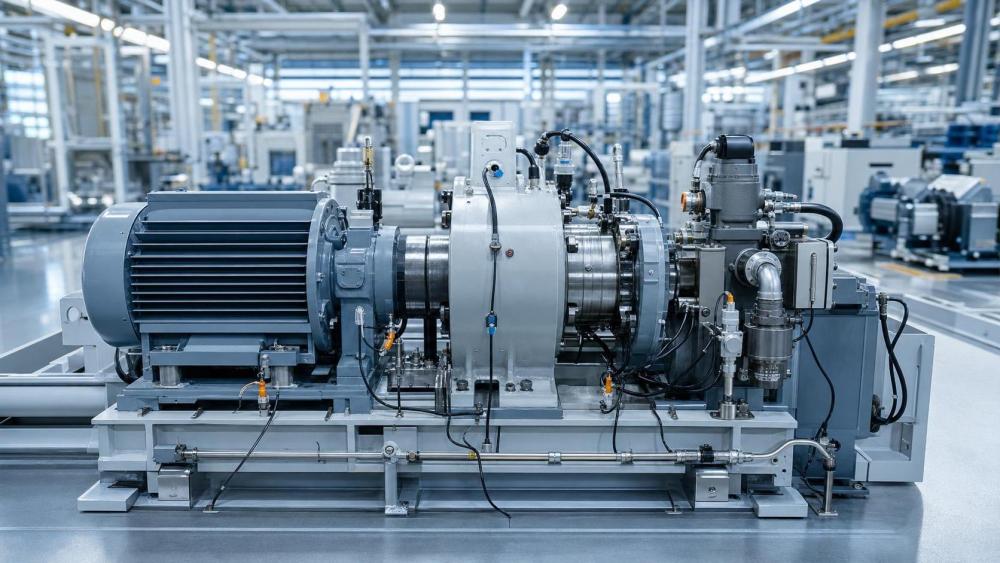
Many failures are visible only after damage has already spread.
A bearing may show minor imbalance before heat rises across the housing.
A hydraulic pump may lose efficiency long before pressure loss triggers alarms.
A seal may harden gradually, allowing contamination that later damages nearby assemblies.
Traditional maintenance plans miss these slow changes because fixed schedules assume average conditions.
Real equipment does not live in average conditions.
Load variation, dust, fluid contamination, start-stop cycles, and operator habits all change wear patterns.
This is where AI Condition Monitoring Solutions create value. They learn patterns from operating reality, not maintenance theory alone.
What AI Condition Monitoring Solutions actually do
At the core, AI Condition Monitoring Solutions collect equipment data and detect abnormal behavior early.
They combine sensors, connectivity, analytics models, and decision logic into one monitoring framework.
The input can include vibration, acoustic signals, oil condition, temperature, pressure, motor current, and speed.
The output is not just a raw alarm.
Good AI Condition Monitoring Solutions explain trend direction, fault probability, severity, and likely failure mode.
That can support earlier intervention on rotating assets, fluid power units, conveyors, compressors, and packaging lines.
In actual operations, the biggest benefit is clarity.
Maintenance teams stop chasing noise and focus on assets with rising business risk.
Typical functions in a practical deployment
- Continuous monitoring of bearings, motors, pumps, gearboxes, chains, belts, and seals.
- Automatic anomaly detection based on changing equipment behavior.
- Fault classification for issues such as misalignment, cavitation, leakage, looseness, and lubrication breakdown.
- Remaining useful life estimation for maintenance planning.
- Integration with CMMS, MES, SCADA, or edge devices for faster action.
How these systems reduce unplanned downtime in real operations
The most direct impact comes from earlier warning windows.
If a spindle bearing starts generating abnormal frequency patterns, AI can flag the shift before seizure occurs.
If a hydraulic motor shows rising temperature and pressure instability together, the system can prioritize inspection.
That earlier timing changes maintenance economics.
A planned bearing replacement during a scheduled stop costs far less than a line shutdown plus secondary damage.
The same logic applies to couplings, belts, pneumatic actuators, and sealing systems.
AI Condition Monitoring Solutions also improve maintenance prioritization across large equipment fleets.
Instead of treating every alert equally, teams can rank assets by production criticality, failure likelihood, and repair lead time.
This matters when spare parts, labor, and shutdown windows are all limited.
Where the savings usually appear
- Fewer emergency repairs and overtime callouts.
- Lower scrap and rework caused by unstable equipment behavior.
- Reduced collateral damage across connected components.
- Better spare parts timing for bearings, seals, chains, and hydraulic elements.
- Longer service life through earlier lubrication and alignment correction.
Best-fit use cases across industrial components
AI Condition Monitoring Solutions work best where failure patterns are costly, repeatable, and measurable.
That includes many component categories covered by PCTS markets.
Bearings and rotating assemblies
These assets generate rich vibration and temperature data.
AI models can identify raceway damage, lubrication starvation, cage wear, and imbalance before failure accelerates.
Hydraulic and pneumatic systems
Pressure fluctuation, flow instability, heat buildup, and cycle deviations often signal early degradation.
AI Condition Monitoring Solutions help separate normal load variation from developing pump or actuator faults.
Chains, belts, and transmission parts
Wear, slip, misalignment, and tension loss can slowly reduce throughput.
Monitoring makes these issues visible before they disrupt production quality or damage driven equipment.
Seals and leakage-sensitive equipment
Seals do not always fail in obvious ways.
When AI links leakage trends, contamination indicators, and thermal shifts, teams can intervene before process reliability drops.
What technical evaluation should focus on before adoption
Not every platform delivers the same operational value.
A strong evaluation should go beyond dashboard appearance.
The first checkpoint is data quality.
If sensors are poorly placed or sampling is inconsistent, even advanced AI Condition Monitoring Solutions will struggle.
The second checkpoint is model relevance.
A generic model may miss process-specific fault signatures in high-speed spindles, chemical pumps, or heavy conveyor drives.
The third checkpoint is workflow integration.
Detection has limited value if alerts do not connect to maintenance planning, spare parts control, and shutdown scheduling.
Key questions to ask suppliers
- Which fault modes are proven on similar assets and duty cycles?
- How does the system reduce false positives and alarm fatigue?
- Can the platform run at the edge for low-latency industrial environments?
- How easily does it integrate with existing maintenance software?
- What measurable downtime reduction has been achieved in comparable plants?
Common adoption risks and how to avoid them
The biggest mistake is trying to monitor everything at once.
A focused pilot usually works better.
Start with assets that combine high downtime cost, known failure history, and available sensor access.
Another common issue is weak response ownership.
If nobody owns alert review, escalation, and work order action, monitoring becomes passive reporting.
There is also a data interpretation risk.
Teams need clear thresholds for inspection, lubrication, replacement, and shutdown decisions.
In practice, successful AI Condition Monitoring Solutions combine analytics with maintenance discipline, not analytics alone.
A practical roadmap for implementation
A realistic rollout follows a few clear steps.
- Map critical assets by downtime cost, repair complexity, and production impact.
- Select measurable failure modes such as bearing wear, leakage, cavitation, or belt slip.
- Validate sensor placement, sampling quality, and baseline operating data.
- Run a pilot with clear KPIs, including alert precision and avoided downtime hours.
- Integrate insights into maintenance workflows, spare parts planning, and reliability reviews.
This phased method keeps investment tied to operational evidence.
It also makes supplier comparison more objective and easier to defend internally.
Final takeaway
AI Condition Monitoring Solutions cut unplanned downtime because they catch failure signals earlier and make them actionable.
For operations built on bearings, hydraulics, pneumatics, seals, and transmission systems, that advantage is significant.
The strongest results come from targeted deployment, reliable data, and clear maintenance response rules.
When chosen well, AI Condition Monitoring Solutions do more than detect faults.
They support smarter procurement, better spare parts timing, lower lifecycle cost, and stronger production continuity.
The next smart move is simple: start with the assets that hurt most when they stop, then build from proven results.
Want to dive deeper into these market dynamics, or need data-driven support for your next business move? Drop a line below and let the analysts at PCTS provide customized insights.
We respect your privacy. Your information is strictly confidential.
Related News
- 00
0000-00
Where to install vibration sensors on rotating machinery - 00
0000-00
NTSB Probe Finds Boeing Warned of MD-11 Engine Bearing Risk Years Earlier - 00
0000-00
How to size pneumatic grippers for packaging system integration - 00
0000-00
How to size alloy steel power transmission chains for heavy loads - 00
0000-00
Where are axial piston pumps used in mining equipment?
Weekly Insights
Stay ahead with our curated technology reports delivered every Monday.