





On July 24, 2026, the Official Journal of the European Union published the revised machinery safety standard EN ISO 12100:2026, with mandatory application set for January 1, 2027. The update matters directly to machinery component suppliers, equipment exporters, compliance teams, and certification service providers because it brings smart sensor bearings and electro-hydraulic pumps with closed-loop control into a stricter functional safety review path. For companies serving the EU market, the change is worth close attention because it can affect CE certification planning, testing timelines, and compliance costs.
What the revised standard now requires
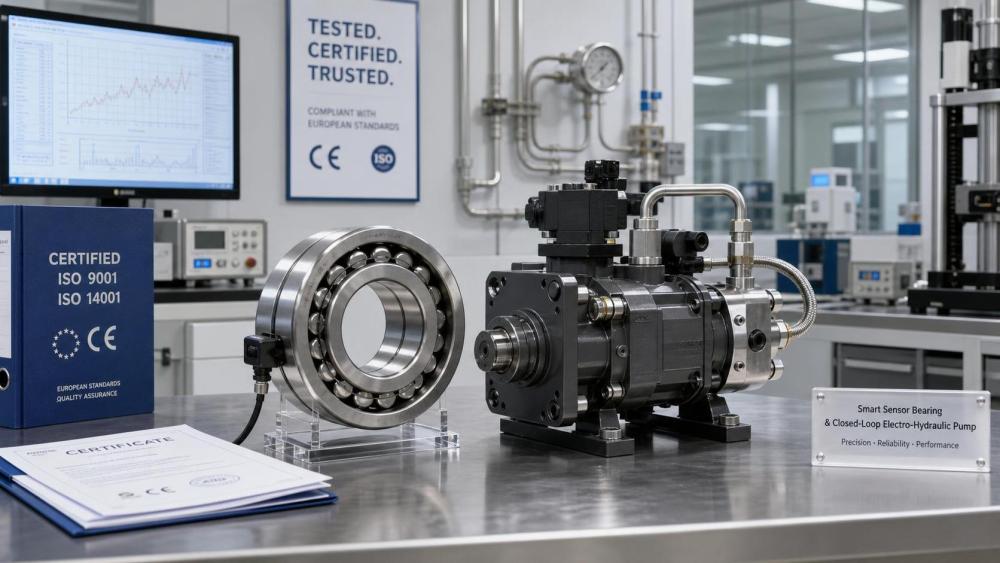
According to the information provided, EN ISO 12100:2026 was published in the OJEU on July 24, 2026 and will become mandatory on January 1, 2027. The revised rule explicitly classifies bearings with integrated intelligent sensing functions, such as Smart Sensor Bearings, and electro-hydraulic pumps with closed-loop control capability as part of a “high-risk programmable control system” category.
For the affected products, the rule requires functional safety verification documentation at either IEC 62061 SIL2 level or ISO 13849-1 PLd level. The information provided also indicates that this change will directly affect the CE certification route, testing cycle, and compliance cost structure for Chinese exporters.
Where the pressure points may appear across the supply chain
Export-oriented component suppliers may face a different CE workflow
From an industry perspective, suppliers shipping smart sensor bearings or electro-hydraulic pumps to the EU may be affected first because the new requirement is tied to the compliance path itself. The likely impact is concentrated in technical documentation preparation, conformity assessment coordination, and customer-side approval timing. What deserves closer attention is whether existing product files already support the required functional safety verification level or whether additional validation work will be needed.
Manufacturers integrating these parts into machinery may need earlier design checks
Machinery manufacturers that incorporate these components into larger systems may also feel the effect at the system integration stage. The reason is straightforward: once a component falls under a higher-risk programmable control framework, its treatment in the overall machine safety file can become more demanding. The practical concern is less about the component alone and more about how it is specified, documented, and presented during certification-related reviews.
Testing, certification, and compliance service providers may see longer coordination cycles
Service providers involved in CE-related testing and certification may be affected through workload and scheduling changes. Analysis shows that when functional safety evidence becomes a formal requirement, the key business impact often appears in document review, test sequencing, and technical communication between exporters and assessment bodies. Even without adding assumptions beyond the provided facts, it is reasonable to note that timing management may become more sensitive for projects targeting early 2027 delivery windows.
EU-facing buyers and procurement teams may tighten document expectations
Procurement teams and downstream buyers in the EU market may pay closer attention to supporting compliance documents for the affected categories. Observably, this matters in supplier onboarding, bid qualification, and shipment release decisions, because documentation gaps can turn into delivery risks. For companies on the selling side, customer communication may become more document-driven than before.
What companies should watch now
Separate confirmed requirements from internal interpretation
The confirmed requirement in the provided information is the need for IEC 62061 SIL2 or ISO 13849-1 PLd functional safety verification reports for the specified product types. Companies should be careful not to treat internal assumptions about scope, implementation detail, or review practice as settled fact before checking the latest official wording available to them.
Review affected product lines and technical files first
For businesses exporting to the EU, a practical priority is to identify whether current products include intelligent sensing functions in bearings or closed-loop control capability in electro-hydraulic pumps. The next issue is whether existing technical files, validation records, and supporting certification materials are aligned with the newly stated verification threshold.
Reassess delivery schedules and customer commitments
Because the provided information explicitly points to effects on testing cycles and compliance costs, exporters and project teams should pay close attention to schedule exposure. The business issue is not only the direct testing task, but also how document completion, certification routing, and customer acceptance milestones may interact.
Prepare for supplier and customer communication around evidence
Another near-term focus is communication discipline. Suppliers may need to clarify what evidence can be provided, while buyers may start asking more detailed questions about verification reports and certification readiness. From a working-level perspective, this is where procurement, engineering, quality, and sales teams are likely to converge.
Why this looks like more than a short-lived compliance update
Analysis shows that this development is not just a routine wording change for product documentation. By explicitly placing smart sensor bearings and closed-loop electro-hydraulic pumps into a high-risk programmable control context, the revision signals that products with embedded sensing or control intelligence are being viewed through a stricter machinery safety lens. It is more appropriate to understand this as a concrete compliance change with longer-term implications for how “smart” mechanical components are classified and evidenced in the EU market.
At the same time, this should not be overstated beyond the facts provided. The current information confirms the rule change, the implementation date, the affected product categories, and the required verification levels. Questions around practical interpretation, review consistency, and project-level impact still need continued observation.
How the market is likely to read this update for now
In practical terms, this update is best understood as an immediate compliance signal rather than a distant policy discussion. The mandatory date of January 1, 2027 leaves a defined transition window, and the main relevance lies in certification preparation, documentation readiness, and commercial planning for EU-bound business. A measured reading is that the rule already creates a clear action point for affected exporters and manufacturers, while the full operational effect will depend on how companies and assessment stakeholders implement the requirement in real projects.
Basis of this article and what still needs verification
This article is based on the user-provided news title, event date, and event summary. For this type of development, commonly relevant source categories include official government or OJEU notices, standard organization documents, certification-related notices, industry association updates, company disclosures, and reporting from authoritative trade media.
No specific official source link was provided in the input, so the exact source document link still requires follow-up verification. What deserves closer attention in subsequent tracking is any further official wording, implementation clarification, or supporting compliance interpretation related to EN ISO 12100:2026, as well as how the stated SIL2 or PLd verification requirement is reflected in actual certification workflows.
Want to dive deeper into these market dynamics, or need data-driven support for your next business move? Drop a line below and let the analysts at PCTS provide customized insights.
We respect your privacy. Your information is strictly confidential.
Related News
- 00
0000-00
How to check vibration analysis software for sensor compatibility - 00
0000-00
IndexBox Forecasts 3.8% Annual Growth for Global Radial Seals Market Through 2035 - 00
0000-00
How to assess the chemical compatibility of FFKM sealing sheets - 00
0000-00
IndexBox Forecasts 3.6% Annual Growth for Construction Bearings Market - 00
0000-00
When do hydraulic components require an export license?
Weekly Insights
Stay ahead with our curated technology reports delivered every Monday.