





Choosing a condition monitoring systems manufacturer for long-term reliability is rarely a simple sourcing exercise. The decision shapes how accurately assets are assessed, how confidently maintenance is planned, and how much operational risk remains hidden inside rotating, hydraulic, pneumatic, and transmission equipment.
Across industrial environments, small changes in vibration, temperature, lubrication condition, pressure, or acoustic behavior often appear long before visible failure. A capable condition monitoring systems manufacturer helps convert those weak signals into practical maintenance action, rather than more dashboards and more data noise.
That matters even more in sectors where bearings, pumps, motors, chains, belts, couplings, seals, and fluid power systems operate under variable loads and harsh contamination risks. In those settings, reliability depends not only on component quality, but also on how early deterioration is detected and how well decisions are made from that information.
What a manufacturer really contributes
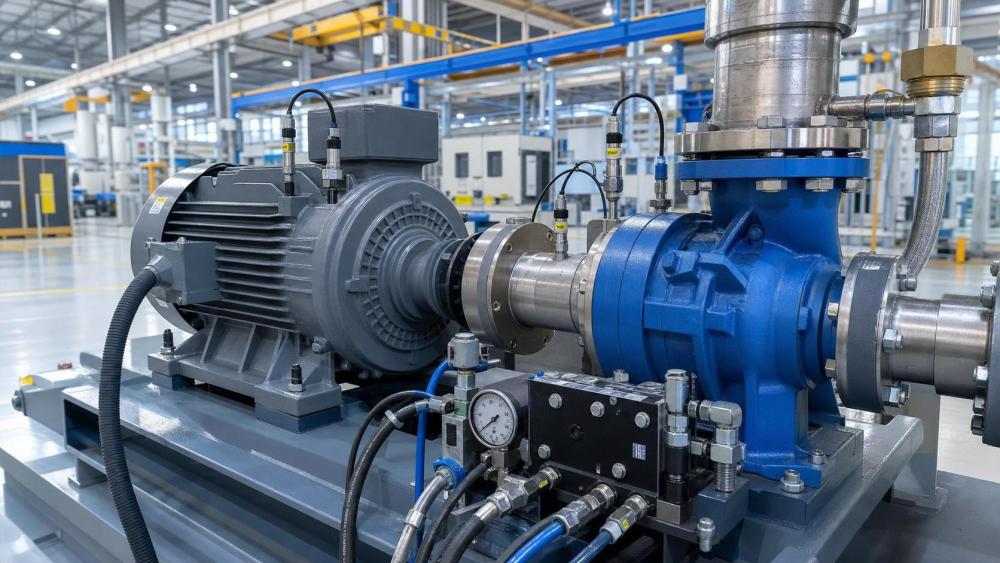
A strong condition monitoring systems manufacturer does more than supply sensors. The real contribution is a complete reliability layer that links sensing hardware, signal quality, analytics, integration, and long-term service support.
In practice, the manufacturer influences where data comes from, how stable it remains over time, and whether alerts reflect real failure modes. If any of those elements are weak, the monitoring program can create false confidence instead of useful visibility.
This is why the evaluation should move beyond catalog features. A monitoring platform that performs well in a lab may behave differently around dust, oil mist, washdown exposure, electrical noise, fluctuating speed, or intermittent loads.
Why the topic is gaining attention
Industrial maintenance has shifted from reactive replacement toward lifecycle control. Downtime now affects output planning, spare parts exposure, safety margins, energy use, and customer delivery performance at the same time.
Condition monitoring sits at the intersection of maintenance economics and engineering judgment. It helps identify bearing fatigue, lubrication loss, pump cavitation, misalignment, belt slip, chain wear, seal degradation, and motor imbalance before those issues become shutdown events.
Platforms such as PCTS reflect this broader shift. Market attention is no longer limited to single components. The focus now covers complete power transmission paths, fluid power systems, sealing performance, edge diagnostics, and total cost of ownership across the asset lifecycle.
That wider perspective changes the buying criteria. The right condition monitoring systems manufacturer must fit into reliability strategy, not just into an instrumentation budget.
Core evaluation areas that shape long-term results
Several factors determine whether a condition monitoring systems manufacturer can support lasting performance rather than short-term deployment success.
Signal quality and sensing discipline
Reliable diagnostics start with clean data. Sensor accuracy, mounting method, sampling stability, environmental protection, and calibration discipline all affect the usefulness of the final diagnosis.
This becomes critical for assets such as spindle bearings, wind turbine bearings, hydraulic pumps, gearboxes, and high-speed couplings, where subtle vibration signatures can indicate early-stage damage.
Application knowledge
A capable manufacturer understands failure behavior in real machines. That includes lubrication breakdown, contamination ingress, resonance, thermal drift, hydraulic pressure instability, pneumatic leakage, and transmission wear patterns.
Without that application knowledge, software may classify symptoms correctly in theory but miss the operational context that determines maintenance timing.
System integration and scalability
Monitoring solutions must connect with existing PLC, SCADA, CMMS, historian, or cloud environments. Good integration reduces manual interpretation and makes asset condition visible inside normal maintenance workflows.
Scalability also matters. A pilot installed on a few critical machines should expand without forcing a complete architecture change.
Support over operating life
Long-term reliability depends on more than commissioning. Firmware maintenance, remote support, spare sensor availability, training quality, and alarm refinement often determine whether the system remains trusted after two or three years.
Where manufacturer quality shows up in daily operations
The impact of a condition monitoring systems manufacturer becomes visible in ordinary maintenance decisions. It appears when a bearing replacement is delayed safely, when a lubrication issue is corrected before shaft damage, or when a pump problem is traced to process conditions rather than hardware alone.
For rotating assets, vibration and temperature monitoring often provide the earliest warning. For hydraulic and pneumatic systems, pressure signatures, leakage patterns, and fluid condition may be just as important. For transmission assemblies, chain elongation, belt tracking, coupling alignment, and motor loading can reveal developing instability.
That is why the best supplier fit is usually application-specific. A manufacturer suited to semiconductor sealing environments may not be the strongest option for heavy-duty conveying lines. A supplier focused on high-speed spindle analytics may not be ideal for mixed utility assets across a broad plant footprint.
Questions worth asking before selection
A practical review process should test how the condition monitoring systems manufacturer performs under real operational constraints, not just product demonstrations.
- Which asset classes are already supported in comparable environments?
- How are alarms tuned for variable speed, variable load, and intermittent duty?
- What data remains available for root-cause analysis after an event?
- How easily can the system integrate with maintenance planning tools?
- What is the expected support model for calibration, updates, and field service?
- How does the supplier handle sensor obsolescence and spare availability?
These questions help separate a general instrumentation vendor from a true condition monitoring systems manufacturer with long-horizon reliability capability.
Using market intelligence to reduce selection risk
Supplier evaluation becomes stronger when technical review is paired with broader market intelligence. This is where platforms such as PCTS add value by connecting component behavior, application interpretation, maintenance concerns, and supplier visibility in one industrial context.
When monitoring systems are assessed alongside bearings, seals, transmission parts, hydraulic assemblies, and MRO strategy, the decision becomes more realistic. Reliability problems rarely stay inside one discipline. They move across lubrication, alignment, contamination control, load distribution, sealing integrity, and maintenance execution.
A condition monitoring systems manufacturer should therefore be judged by how well it supports this cross-functional reality. The stronger the connection between sensed data and mechanical context, the higher the practical value of the system.
A useful next step
Before comparing suppliers, define the failure modes that matter most across critical assets. Then map those risks to sensing needs, diagnostic depth, integration requirements, and support expectations.
That approach makes it easier to evaluate each condition monitoring systems manufacturer against real operating priorities, not generic feature lists. It also creates a more durable basis for pilot selection, budget justification, and long-term maintenance planning.
When the objective is long-term reliability, the best choice is usually the manufacturer that understands both the data and the machinery behind it.
Related News
- 00
0000-00
Where are axial piston pumps used in mining equipment? - 00
0000-00
Embodied AI Robotics and Drive Control Forum Held in Shanghai - 00
0000-00
How does seal service life affect the total cost of ownership? - 00
0000-00
Schaeffler to Cut 3,460 Jobs and Close Five European Plants - 00
0000-00
How does system size affect the price of a belt drive system?
Weekly Insights
Stay ahead with our curated technology reports delivered every Monday.