





On June 3, 2026, attention in the machinery sector turned to a new policy signal after six Chinese government departments jointly issued the Mechanical Industry Stabilization and Growth Work Plan (2025–2026). The document matters not only because it names bearings as a foundational and strategic industry linked to the economy, defense-related manufacturing, and public welfare, but also because it puts high-end bearing technology bottlenecks into a formal policy task list. For manufacturers, OEM sourcing teams, supply-chain service providers, testing and certification-related businesses, and export-oriented suppliers, the key issue is not simply the announcement itself, but how this policy framing may influence sourcing priorities, technical documentation, qualification review, and delivery expectations in the next stage.
A clearer policy signal for high-end bearing development
According to the information provided, in early June 2026, six Chinese ministries and departments jointly released the Mechanical Industry Stabilization and Growth Work Plan (2025–2026). In that plan, bearings were explicitly identified for the first time as a foundational and strategic industry supporting the national economy, defense-related industry, and public welfare.
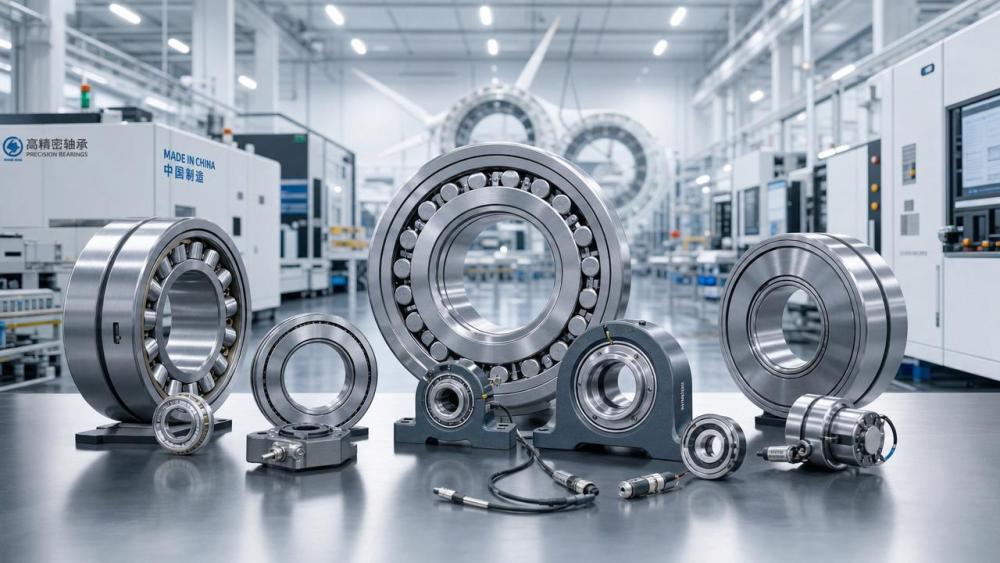
The same policy document also set out a dedicated task to break through key technical bottlenecks in high-end bearings. The areas highlighted in the provided summary include P4-grade and above precision bearings, wind power main shaft bearings, and intelligent sensor-integrated bearings.
The provided event summary further indicates that domestic substitution capacity may accelerate in the second half of 2026, creating a more reliable and faster-responding secondary supply-chain option for overseas OEMs. This point reflects the policy direction described in the input and frames why the market is watching the next phase closely.
Where the pressure points may shift across the supply chain
Sourcing teams may revisit supplier screening criteria
From an industry perspective, procurement functions are likely to pay closer attention to whether bearing suppliers can align with the policy focus on higher-precision and more technically complex product categories. The practical impact may appear in supplier qualification reviews, technical specification alignment, and requests for supporting documents tied to precision level, product testing, and application suitability. What deserves closer attention is whether purchasing teams begin to treat local high-end bearing capability as a more active sourcing option rather than a fallback choice.
Manufacturers may face tighter demands on technical consistency
For processing and manufacturing enterprises, the policy emphasis may translate into stronger expectations around process control, technical files, traceability materials, and delivery consistency, especially for P4-grade and above precision products, wind power main shaft bearings, and sensor-integrated bearing solutions. Analysis shows that even before any detailed execution rules are disclosed, customers may start asking for clearer evidence that a supplier’s product documentation and testing basis can support higher-end applications.
Overseas OEMs may gain an additional secondary supply option
For overseas OEM buyers, the significance is less about an immediate rule change in foreign markets and more about a possible adjustment in procurement structure. Observably, if domestic substitution capacity in China strengthens in the second half of 2026 as indicated in the event summary, overseas OEMs could evaluate Chinese suppliers as a more responsive secondary source for selected bearing categories. In business terms, this may affect lead-time planning, supplier diversification, and risk balancing between primary and secondary sourcing channels.
Testing, certification, and supply-chain service firms may see new review demands
Businesses involved in testing support, certification-related services, logistics coordination, and after-sales tracking may also need to monitor the shift. If procurement and tender documents begin to reflect the policy focus, supporting service providers may face greater demand for test reports, technical records, product traceability documents, and delivery coordination materials. At this stage, however, it is more appropriate to understand this as a likely compliance and documentation trend to watch, not as a confirmed new mandatory procedure.
What companies should watch in the next stage
Track how official wording is carried into execution documents
Analysis shows that the most important near-term task is to watch whether the policy language on high-end bearing breakthroughs is later echoed in more specific implementation notices, technical procurement texts, or industry-facing guidance. The current information confirms the policy direction, but it does not yet define a complete execution standard.
Review technical and compliance files before customer requests tighten
Companies involved in affected product lines should pay attention to the completeness and consistency of technical data packs, testing materials, quality traceability records, and product specification documents. This is particularly relevant where buyers may begin to compare supplier readiness for higher-precision or application-specific bearing categories.
Prepare for changes in tender and supplier qualification language
What deserves closer attention is whether future bidding documents, sourcing questionnaires, or approved-vendor processes begin to reflect the policy focus areas more directly. If that happens, the practical effect may appear first in qualification wording, document submission requirements, and technical bid alignment rather than in a single visible regulatory action.
Watch delivery and after-sales expectations alongside localization trends
For exporters, channel partners, and after-sales service providers, the issue is not only where products are sourced but how delivery response, replacement planning, and quality follow-up may change if domestic alternatives are adopted more actively. The input does not provide execution details, so this remains a monitoring point rather than an established market outcome.
Why this looks more like an execution signal than a finished rule set
Observably, this development is best read as a strong policy signal that high-end bearings are moving into a more explicit strategic category within machinery policy. That matters because policy classification often shapes market attention, procurement attitudes, and the direction of follow-on implementation language.
At the same time, Analysis shows that the market should avoid treating the announcement as proof that all downstream rules, certification pathways, or tender standards have already changed. The current stage still requires continued observation of how official language is interpreted in practice, how buyers revise technical requirements, and whether industry feedback confirms a measurable shift in qualification and delivery expectations.
How to read the announcement at this stage
The industry significance of this event lies in the clearer policy positioning of bearings, especially in high-end segments linked to precision, wind power applications, and intelligent integration. It signals that localization in these categories is receiving more explicit support within the machinery growth agenda.
For now, it is more appropriate to understand this development as a meaningful execution signal with likely downstream effects on sourcing, technical review, and supply-chain planning, while recognizing that the detailed pace of implementation still needs to be verified through subsequent documents, market behavior, and industry response.
Basis of this article and what still needs verification
This article is generated based on the user-provided news title, event date, and event summary. It does not rely on any additional unverified data, company examples, policy numbers, market figures, or external links.
For events of this kind, commonly relevant source types may include official government announcements, regulator releases, trade or customs authority information, industry association updates, standard-setting documents, and reporting by authoritative media. No specific official source link was provided in the input, so the exact official publication link still needs to be verified on an ongoing basis.
What still requires continued observation includes any detailed implementation measures, certification or testing interpretation, changes in tender wording, shifts in supplier qualification criteria, industry feedback, and the actual execution status among companies across the bearing and machinery supply chain.
Want to dive deeper into these market dynamics, or need data-driven support for your next business move? Drop a line below and let the analysts at PCTS provide customized insights.
We respect your privacy. Your information is strictly confidential.
Related News
- 00
0000-00
How to check vibration analysis software for sensor compatibility - 00
0000-00
IndexBox Forecasts 3.8% Annual Growth for Global Radial Seals Market Through 2035 - 00
0000-00
How to assess the chemical compatibility of FFKM sealing sheets - 00
0000-00
IndexBox Forecasts 3.6% Annual Growth for Construction Bearings Market - 00
0000-00
When do hydraulic components require an export license?
Weekly Insights
Stay ahead with our curated technology reports delivered every Monday.