





Tribology Applications in Bearings: What Extends Service Life
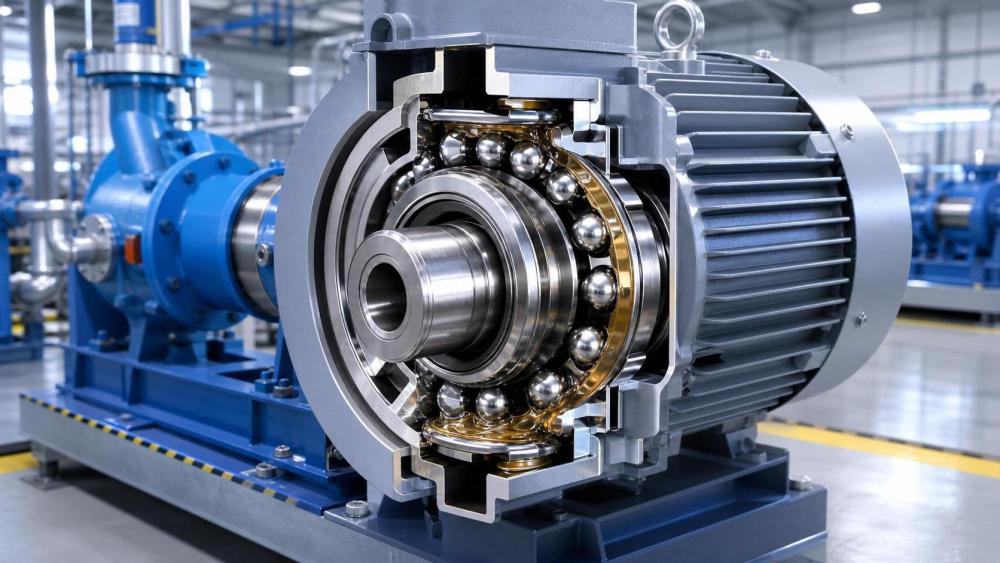
Tribology applications in bearings decide how long rotating equipment stays stable under pressure, speed, heat, and contamination.
That sounds technical, but the daily impact is simple: lower friction, less wear, fewer failures, and better uptime.
In real plants, service life rarely depends on one factor alone.
It comes from how surfaces touch, how lubricant behaves, and how operating conditions change over time.
This is why tribology applications in bearings matter across motors, pumps, conveyors, gearboxes, fans, compressors, and precision spindles.
When tribological conditions are controlled, bearings can exceed expected life.
When they are ignored, even premium bearings can fail early.
Why Tribology Applications in Bearings Matter So Much
Tribology is the study of friction, wear, and lubrication between moving surfaces.
In bearings, those three factors shape temperature rise, noise, vibration, energy loss, and fatigue behavior.
The contact zone inside a bearing is small, but stress is extremely high.
Because of that, slight changes in lubricant film thickness can alter wear rates quickly.
This also explains why tribology applications in bearings are tied to both engineering design and maintenance practice.
A bearing may have the right load rating on paper.
Still, poor lubrication, dirt ingress, or shaft misalignment can shorten life far below the catalog value.
The Main Life-Limiting Mechanisms
- Adhesive wear from metal-to-metal contact
- Abrasive wear caused by hard particles
- Surface fatigue from repeated rolling contact stress
- Corrosion wear linked to water or aggressive media
- Smearing and scuffing under poor film formation
- False brinelling during vibration at standstill
Each failure mode reflects a tribological imbalance.
So extending service life starts with identifying which imbalance is active in the application.
Lubrication: The Most Direct Lever for Longer Life
Among all tribology applications in bearings, lubrication has the strongest day-to-day influence.
Its job is not just reducing friction.
It also separates surfaces, removes heat, blocks contamination, and protects against corrosion.
Choose the Right Lubrication Regime
Bearing contacts may run in boundary, mixed, or full-film lubrication.
Full-film conditions give the best protection, but they are not always achievable.
Low speed, shock loading, start-stop duty, and heavy loads often push contacts into mixed lubrication.
That is where additives, viscosity control, and clean relubrication become critical.
Viscosity Must Match Speed and Temperature
Oil that is too thin cannot maintain film thickness.
Oil that is too thick increases drag, heat, and energy consumption.
This is one of the most common errors in tribology applications in bearings.
A lubricant should be selected for actual operating temperature, not room temperature.
In high-speed service, stable viscosity and oxidation resistance become more important than general-purpose grease convenience.
Grease Quantity Also Matters
Too little grease leaves contact areas exposed.
Too much grease causes churning, higher temperature, and seal stress.
In practice, overgreasing damages many bearings that otherwise had acceptable design margins.
Good tribology applications in bearings depend on correct amount, interval, and delivery method.
Surface Condition, Material, and Contact Geometry
Lubricant performance is only half the story.
Tribology applications in bearings also depend on surface finish, hardness, internal geometry, and material cleanliness.
A smoother raceway can help film formation, but surface texture cannot be judged in isolation.
If it becomes too smooth for the lubricant system, retention may suffer.
Material Upgrades That Improve Wear Resistance
- Cleaner bearing steel reduces fatigue initiation points
- Case-hardened designs resist shock and contamination better
- Ceramic rolling elements lower friction and electrical damage risk
- Special coatings reduce scuffing in marginal lubrication
These options are not always necessary.
But in demanding duty cycles, they can strengthen the whole tribological system.
Why Alignment and Fit Influence Wear
Misalignment changes contact patterns and concentrates stress at local points.
Incorrect fits can create creep, looseness, preload problems, or heat generation.
That means tribology applications in bearings are closely linked with mounting quality.
Even the best lubricant cannot fully compensate for poor installation practice.
Contamination Control Is Often the Real Life Multiplier
From recent field trends, contamination is a stronger failure driver than many teams first assume.
Fine dust, wear debris, water, and process chemicals can destroy the lubricant film quickly.
Once particles enter the contact zone, they create abrasive wear and denting.
Those dents then become fatigue starting points.
Practical Ways to Reduce Contamination Risk
- Use seal designs matched to speed, pressure, and environment.
- Keep relubrication tools clean and dedicated.
- Store bearings and grease in dry, closed conditions.
- Inspect breathers, housings, and labyrinth paths routinely.
- Address water ingress immediately after washdown or weather exposure.
This is where tribology applications in bearings overlap with sealing technology and MRO discipline.
Longer life often comes from cleaner systems rather than more expensive bearings.
Load, Speed, and Duty Cycle Must Be Read Together
A bearing does not experience load, speed, or temperature separately.
It experiences them as one combined operating condition.
That is why tribology applications in bearings must be evaluated under the real duty cycle.
Steady operation may be manageable, while startup peaks or reversing motion create the actual damage.
Common High-Risk Operating Patterns
- Frequent starts and stops
- Heavy shock or impact loads
- Very low speed with high torque
- High-speed operation with poor heat dissipation
- Vibration while equipment is idle
Each pattern changes the lubrication regime and wear mode.
That means service-life improvement should start with operating history, not just part replacement.
How to Apply Tribology in Bearings More Effectively
The most effective tribology applications in bearings are practical and repeatable.
They translate surface science into daily decisions around lubrication, inspection, and operating control.
A Simple Action Framework
- Identify the bearing type, speed, load, temperature range, and duty cycle.
- Verify lubricant type, viscosity, additive package, and relubrication interval.
- Check alignment, fits, housing condition, and mounting method.
- Review seals, contamination paths, and moisture exposure.
- Track vibration, temperature, and grease condition for early warning.
- Link failure evidence back to tribological causes before replacing parts.
This approach improves reliability and supports better maintenance economics.
It also reduces unnecessary bearing swaps that never address the root cause.
Quick Reference Table
Final Takeaway for Longer Bearing Service Life
Tribology applications in bearings are not abstract theory.
They directly shape friction control, wear resistance, failure timing, and total operating cost.
The strongest service-life gains usually come from four areas: correct lubrication, clean operating conditions, proper alignment, and duty-cycle awareness.
In actual industrial work, small corrections in those areas often outperform major component changes.
A useful next step is to review one critical bearing position, compare failure evidence with tribological risk, and adjust maintenance standards from there.
That is how tribology applications in bearings move from theory into measurable service-life extension.
Want to dive deeper into these market dynamics, or need data-driven support for your next business move? Drop a line below and let the analysts at PCTS provide customized insights.
We respect your privacy. Your information is strictly confidential.
Related News
- 00
0000-00
How sealing technology reduces contamination in semiconductor manufacturing - 00
0000-00
Where to install vibration sensors on rotating machinery - 00
0000-00
NTSB Probe Finds Boeing Warned of MD-11 Engine Bearing Risk Years Earlier - 00
0000-00
How to size pneumatic grippers for packaging system integration - 00
0000-00
How to size alloy steel power transmission chains for heavy loads
Weekly Insights
Stay ahead with our curated technology reports delivered every Monday.