





On August 13, 2026, the U.S. International Trade Commission issued a partial final determination in investigation 337-TA-1490, ending review of certain claims under one patent while keeping scrutiny focused on other patent claims tied to off-road vehicle steering and suspension technologies. For exporters, component manufacturers, procurement teams, and compliance functions connected to high-precision bearings, hydraulic pumps, and sealing products, the development is notable because it sharpens the practical patent-risk focus around U.S. market access rather than simply expanding the scope of the case.
What the Partial Final Determination Confirmed
According to the provided case summary, the ITC terminated its investigation into claims 7-8 of U.S. Patent 7,819,220 in investigation 337-TA-1490. At the same time, the case continues to concentrate on claim 31 of U.S. Patent 7,950,486 and claims 9-15 and 22 of U.S. Patent 12,187,127.
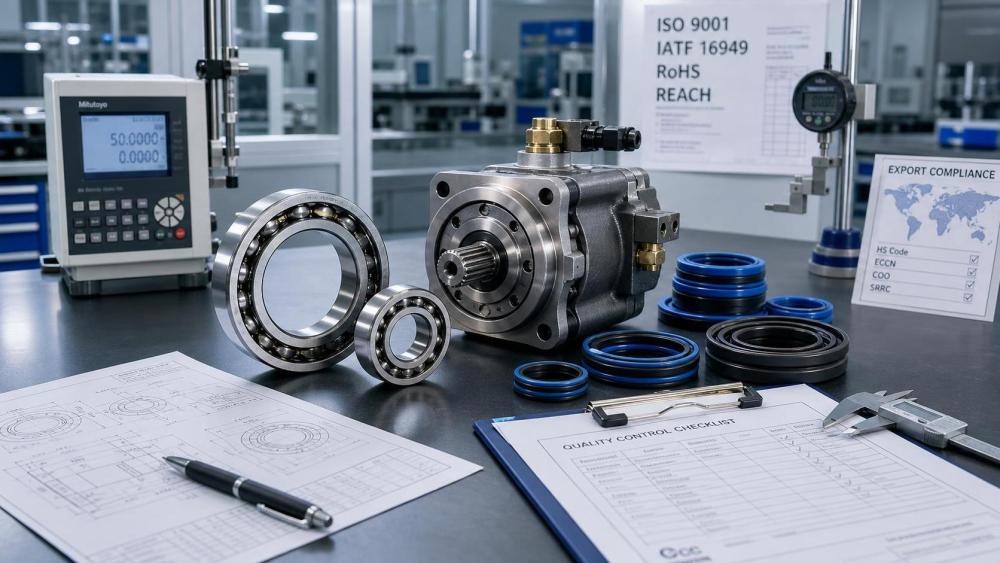
The remaining patent issues identified in the summary involve high-precision angular contact bearing arrangements used in off-road vehicle steering or suspension systems, integrated electro-hydraulic pump control logic, and sealing structure design. The same summary states that the case is directly linked to U.S. compliance access and patent-risk response for export product categories including Wind Turbine Bearings, Axial Piston Pumps, and PU Hydraulic Seals.
Where the Compliance Pressure May Shift Across the Supply Chain
Export-facing parts suppliers may need a narrower but deeper claim review
From an industry perspective, suppliers shipping into the U.S. market may be affected less by the discontinued patent claims and more by the claims that remain under review. The likely pressure point is not only product classification, but whether design features in bearing layouts, hydraulic control logic, or sealing structures map onto the patent claims still being examined. This suggests a more targeted compliance review of drawings, bills of materials, and technical descriptions used in export documentation and customer submissions.
Manufacturing and engineering teams may face closer design-traceability demands
Analysis suggests that manufacturers involved in precision bearings, axial piston pumps, or hydraulic sealing products may need to pay closer attention to how design choices are recorded and validated. Where steering, suspension, pump integration, or seal geometry is relevant, the business impact could appear in engineering change control, supplier qualification, and internal sign-off for U.S.-bound products. This is an analytical observation rather than a confirmed procedural change, but it follows directly from the technical focus of the surviving patent claims.
Procurement and sourcing functions may need more support from technical and legal files
For procurement teams and buyers, the practical effect may be a higher need to confirm whether sourced components involve the technical structures named in the case summary. That could affect supplier declarations, part substitution decisions, and review of technical attachments in tenders or supply contracts. Where replacement sourcing is considered, companies may need to verify that alternative components do not create a new patent exposure in the same product area.
Logistics, after-sales, and integration roles may need clearer product scope checks
For supply-chain service providers, equipment integrators, and after-sales operations, the immediate issue is likely product scope management. If affected parts or assemblies are tied to U.S. deliveries, teams may need to check whether product descriptions, spare-parts lists, and service components overlap with the technologies still under scrutiny. At this stage, that should be understood as a risk-screening need rather than a confirmed trade restriction beyond the information provided.
What Companies Should Review Now
Recheck technical files against the claims still in focus
Companies connected to the listed export categories should consider rechecking technical drawings, control logic descriptions, seal structure specifications, and related product documentation against the patent claims that remain in the investigation. The key point is not to assume that a narrowed investigation removes risk across the full product line.
Track how U.S.-bound product documents describe functional design
What deserves closer attention is how products are described in specification sheets, testing records, customer submissions, and bidding materials. If those materials describe bearing arrangement, electro-hydraulic integration, or sealing structure in a way that aligns closely with the claims under review, companies may need a more careful internal consistency check between engineering, sales, and compliance teams.
Review sourcing and delivery plans for the named export categories
For businesses shipping Wind Turbine Bearings, Axial Piston Pumps, or PU Hydraulic Seals, it may be prudent to assess whether procurement schedules, supplier approvals, and delivery commitments rely on designs that require further internal legal or technical review. The provided information does not confirm a final trade outcome, so the practical response at this stage is review and verification rather than assuming an immediate operational prohibition.
Prepare for follow-up questions on traceability and product differentiation
Analysis suggests that companies may benefit from organizing evidence that distinguishes one product configuration from another, especially where only certain design features are relevant. In practice, this could involve version control for drawings, test reports, component-level records, and technical correspondence used to support compliance and customer assurance.
How This Development Is Best Understood at This Stage
From an editorial analysis standpoint, this development looks less like a broad new rule and more like an execution signal about where patent-based compliance attention is concentrating within the 337 process. The termination of some claims does not eliminate commercial concern; instead, it clarifies which technical issues remain central to review.
It is also more appropriate to understand this as a live compliance and market-access signal rather than a fully settled operating rule for all affected products. Later interpretations, official wording, trade enforcement steps, or market-side responses could still influence how companies assess exposure. That is why continued monitoring matters even after a partial determination has been issued.
Why the Case Matters for Current Business Decisions
The significance of this update lies in its selective narrowing of patent issues tied to U.S. access for specific component categories. For industry participants, the immediate takeaway is not that all uncertainty has been resolved, but that the remaining review has become more technically concentrated. A measured response is to tighten document review, product mapping, and supplier communication around the claims still in focus, while avoiding assumptions beyond the confirmed facts provided here.
Basis of This Article and What Still Needs Verification
This article is based on the user-provided news title, event date, and event summary. For developments of this type, relevant source categories typically include official notices, releases from regulatory authorities, trade or customs information, industry association updates, standards-related documents, and reporting by established business or legal media.
No specific official source link was provided in the input, so the precise source record should be verified on an ongoing basis. What still requires continued attention includes later policy detail, enforcement interpretation, certification or compliance wording, changes in bidding or technical documentation, trade execution practice, industry feedback, and how companies adjust their own implementation in response to the case.
Want to dive deeper into these market dynamics, or need data-driven support for your next business move? Drop a line below and let the analysts at PCTS provide customized insights.
We respect your privacy. Your information is strictly confidential.
Related News
- 00
0000-00
How to check vibration analysis software for sensor compatibility - 00
0000-00
IndexBox Forecasts 3.8% Annual Growth for Global Radial Seals Market Through 2035 - 00
0000-00
How to assess the chemical compatibility of FFKM sealing sheets - 00
0000-00
IndexBox Forecasts 3.6% Annual Growth for Construction Bearings Market - 00
0000-00
When do hydraulic components require an export license?
Weekly Insights
Stay ahead with our curated technology reports delivered every Monday.