





On May 27, 2026, Argentina’s Ministry of Economy announced the repeal of all anti-dumping measures on China-made non-RST radial ball bearings with outer diameters of 30–120 mm, ending duties previously set at USD 6.45–15.62 per kilogram. The move deserves close attention from bearing exporters, South American importers, procurement teams, and downstream users in wind power, industrial motors, and automation equipment, because it directly changes the cost and compliance conditions around a core supply category tied to high-precision bearing chains.
What the official change covers
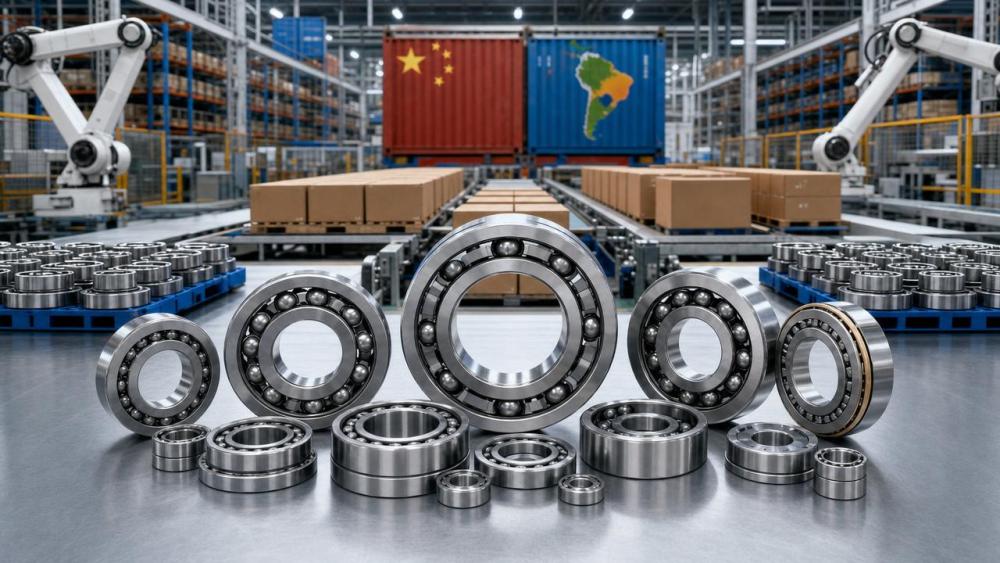
The announced change applies to non-RST radial ball bearings from China with outer diameters between 30 mm and 120 mm. According to the provided information, Argentina has formally abolished all anti-dumping measures on these products and has ended the collection of anti-dumping duties that had ranged from USD 6.45 to USD 15.62 per kilogram.
The affected product category is described as a basic upstream segment within high-precision bearing supply chains, including those linked to Wind Turbine Bearings and Angular Contact Bearings. The same product group is also widely used in wind turbine gearboxes, industrial motors, and automated actuator units.
Where the market impact is likely to be felt first
Import decisions may become easier for South American buyers
From an industry perspective, importers are likely to feel the immediate effect through lower compliance costs and a reduced purchasing threshold. This matters most at the sourcing and quotation stage, where duty-related cost uncertainty can directly affect supplier comparison, landed cost calculations, and order timing.
Chinese exporters gain a clearer pricing position
Analysis shows that Chinese bearing suppliers may see stronger price competitiveness in the Mercosur market because the removed duties were a direct cost factor. The practical effect is not only about nominal pricing, but also about improving delivery certainty in negotiations where buyers need clearer expectations on final import costs.
Downstream equipment makers may revisit sourcing options
For companies tied to wind power transmission systems, industrial motor assemblies, and automation execution units, the change may influence procurement review cycles. Observably, when a base bearing category faces fewer import barriers, downstream purchasers and component integrators may reassess supplier mix, order planning, and replacement schedules for relevant bearing inputs.
Supply chain service providers need to watch execution details
Logistics, documentation, and trade service teams may also be affected because the policy change alters the compliance framework around these shipments. What deserves closer attention is whether customers quickly move from policy awareness to actual purchase execution, which can affect documentation checks, lead-time communication, and contract handling.
What companies should monitor now
Separate the policy headline from shipment practice
Analysis shows that the repeal of anti-dumping measures is a confirmed policy change, but companies still need to align internal execution with the exact product scope stated in the notice, especially the 30–120 mm outer diameter range and the non-RST classification. This is important for avoiding mismatches between commercial understanding and shipment documentation.
Review category exposure in wind, motor, and automation lines
Businesses connected to Wind Turbine Bearings, Angular Contact Bearings, industrial motors, and automated actuator applications should identify whether their current sourcing or sales plans rely on the affected radial ball bearing range. The key issue is not broad market optimism, but whether this specific product definition changes active quotations, replenishment timing, or customer discussions.
Prepare documents and customer communication carefully
Exporters, importers, and service providers should pay close attention to product descriptions, specification consistency, and supporting trade documents. Observably, a policy easing can improve transaction conditions, but order execution still depends on whether both sides share the same understanding of covered products and delivery terms.
Keep tracking official wording and any follow-up clarification
What deserves closer attention is whether there are subsequent official explanations, implementation notices, or market-side interpretations that affect how the repeal is applied in practice. For companies working on recurring shipments, this distinction between headline policy change and operational rollout is especially relevant.
How this development is best understood at this stage
As an editorial observation, this development is best understood as a concrete short-term policy change with broader trade signaling value, rather than as a fully settled long-term market outcome. The confirmed fact is the removal of the anti-dumping measures and duties; the broader commercial result still depends on how quickly buyers, suppliers, and service providers convert that change into actual orders and sourcing adjustments.
From an industry perspective, the strongest current signal is that procurement barriers for this bearing category have been reduced and that China-origin supply may now enter related South American transactions with improved cost transparency and delivery confidence. At the same time, it remains appropriate to continue watching how market participants respond in practice.
Why the update matters beyond the headline
This is not just a tariff-related adjustment for a narrow product description. It touches a basic bearing category that sits inside higher-precision industrial supply chains and is used across wind power, motor, and automation applications. For that reason, the development is more appropriate to understand as an actionable market access change with potential effects across sourcing, pricing, and delivery coordination.
A neutral reading at this stage is that the policy shift improves conditions for trade, especially for importers and Chinese exporters, but the scale of its business impact still requires continued observation. Companies should treat it as a meaningful operating signal, while staying disciplined on product scope, documentation, and follow-up verification.
Basis of this article
This article is based on the user-provided news title, event date, and event summary concerning Argentina’s repeal of anti-dumping duties on certain China-made radial ball bearings. For this type of development, commonly relevant source categories may include official government notices, company disclosures, industry association updates, authoritative media reporting, and standards-related documentation.
No specific official source link was provided in the input, so the exact official publication path still requires ongoing verification. If follow-up coverage is needed, the main areas to watch are any further official wording, implementation clarification, and market-side responses in procurement and shipment execution.
Want to dive deeper into these market dynamics, or need data-driven support for your next business move? Drop a line below and let the analysts at PCTS provide customized insights.
We respect your privacy. Your information is strictly confidential.
Related News
- 00
0000-00
How sealing technology reduces contamination in semiconductor manufacturing - 00
0000-00
Where to install vibration sensors on rotating machinery - 00
0000-00
NTSB Probe Finds Boeing Warned of MD-11 Engine Bearing Risk Years Earlier - 00
0000-00
How to size pneumatic grippers for packaging system integration - 00
0000-00
How to size alloy steel power transmission chains for heavy loads
Weekly Insights
Stay ahead with our curated technology reports delivered every Monday.