





Power Transmission Reliability: What Causes Unplanned Belt Failure
Unplanned belt failure can stop production faster than many teams expect.
In most cases, the belt is not the only problem.
The real issue is usually a wider gap in power transmission reliability.
Misalignment, overload, heat, contamination, and poor tension control often build up quietly.
Then a sudden shutdown exposes what routine checks failed to catch.
For technical evaluation, the goal is not only replacing belts faster.
It is building a more stable system with better uptime, safer loads, and lower lifecycle cost.
Why belt failure matters in power transmission reliability
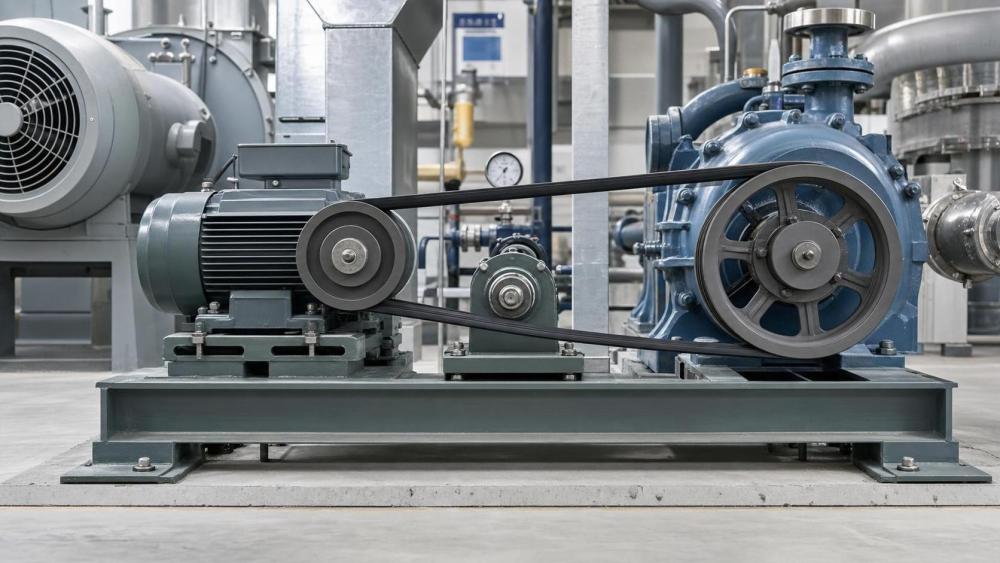
Belts sit at a critical point in mechanical power transfer.
When they fail, torque delivery becomes unstable or disappears completely.
That affects motors, pulleys, bearings, shafts, and driven equipment at the same time.
This is why power transmission reliability cannot be judged by belt condition alone.
A belt may crack, fray, glaze, slip, or lose teeth.
Each pattern points to a different root cause in the transmission system.
From a technical and standards viewpoint, the best approach is evidence-based evaluation.
That means checking geometry, loading, operating environment, and maintenance practice together.
The most common causes of unplanned belt failure
Several issues appear again and again across conveyors, fans, pumps, compressors, and machine tools.
The list below covers the main failure drivers behind weak power transmission reliability.
1. Misalignment
Pulley misalignment is one of the fastest ways to shorten belt life.
Angular, parallel, or axial offset creates uneven load across the belt width.
That leads to edge wear, noise, tracking problems, and rising vibration.
In practical terms, even a good belt cannot sustain poor pulley geometry for long.
2. Incorrect tension
Overtension increases shaft load and accelerates bearing wear.
Undertension causes slip, heat buildup, and poor torque transfer.
Both conditions damage power transmission reliability, even before visible belt damage appears.
This is why tension should be measured, not guessed during installation.
3. Overload and shock loading
Some drives operate near their rated limit for extended periods.
Others see repeated starts, jams, or sudden torque spikes.
These load patterns stretch the belt beyond normal design assumptions.
The result may be cord fatigue, tooth shear, or sudden belt breakage.
4. Heat and poor ventilation
High ambient temperature changes rubber behavior and speeds material aging.
Heat from slip or nearby equipment makes the problem worse.
Glazing, hardening, cracking, and reduced flexibility often follow.
Where heat is persistent, power transmission reliability depends heavily on material selection.
5. Contamination
Oil, grease, dust, abrasive fines, and chemicals all affect belt performance.
Contamination can reduce friction, attack compounds, or clog pulley grooves.
In harsh environments, belt failure is often part of a broader sealing and housekeeping problem.
This is especially relevant in mining, food processing, chemicals, and heavy MRO settings.
Failure signs that should not be ignored
Early signs are usually present before a complete stop occurs.
The issue is that these signals are often treated as minor service noise.
A stronger reliability program turns those signs into decision points.
- Squealing during startup or load change
- Black dust around guards or pulley areas
- Sidewall polishing, cracks, frayed edges, or chunking
- Temperature rise near the belt path
- Vibration increase after recent replacement
- Different wear patterns across belts in the same set
These signs point back to power transmission reliability, not only belt quality.
That distinction matters when selecting suppliers, setting inspections, and planning spare parts.
How to evaluate root cause with more precision
A reliable diagnosis should move from symptom to mechanism.
That means reviewing the whole drive, not only the failed component.
- Confirm load profile, startup frequency, and actual duty cycle.
- Check pulley wear, groove condition, and alignment accuracy.
- Measure belt tension with the recommended method.
- Inspect guards, airflow, and nearby heat sources.
- Look for contamination from lubrication leaks or process materials.
- Review replacement history and time to failure pattern.
From recent industry practice, the clearest gains come from combining simple measurements with pattern tracking.
This makes power transmission reliability easier to compare across lines, plants, or supplier options.
It also supports more defensible decisions during technical approval and procurement review.
Selection factors that improve belt system reliability
Choosing the right belt type is still important.
But selection should reflect the operating system, not only catalog ratings.
In real operations, supplier documentation should support these factors with traceable technical data.
That includes dimensional consistency, material capability, testing basis, and installation guidance.
Practical steps to reduce unplanned belt failure
Improving power transmission reliability usually comes from disciplined basics.
The following actions are simple, but they change outcomes quickly.
- Use alignment tools during every installation, not only after failure.
- Set and record belt tension after run-in, then recheck at interval.
- Replace worn pulleys together with damaged belts where needed.
- Control oil leaks, dust entry, and process contamination near drives.
- Match belt construction to real duty, temperature, and exposure conditions.
- Keep failure records with wear photos and operating notes.
- Review bearing condition, shaft runout, and vibration when failures repeat.
A more obvious signal is repeat replacement without improved runtime.
That usually means the root cause still sits elsewhere in the drive system.
So the right response is structured review, not faster ordering.
Power transmission reliability improves when component choice, installation quality, and operating control stay connected.
That also supports better MRO planning and lower downtime risk.
In the end, unplanned belt failure is rarely random.
It is usually a readable warning that power transmission reliability needs tighter technical control.
Want to dive deeper into these market dynamics, or need data-driven support for your next business move? Drop a line below and let the analysts at PCTS provide customized insights.
We respect your privacy. Your information is strictly confidential.
Related News
- 00
0000-00
How to check vibration analysis software for sensor compatibility - 00
0000-00
IndexBox Forecasts 3.8% Annual Growth for Global Radial Seals Market Through 2035 - 00
0000-00
How to assess the chemical compatibility of FFKM sealing sheets - 00
0000-00
IndexBox Forecasts 3.6% Annual Growth for Construction Bearings Market - 00
0000-00
When do hydraulic components require an export license?
Weekly Insights
Stay ahead with our curated technology reports delivered every Monday.