





Where power transmission efficiency improvement delivers value fastest
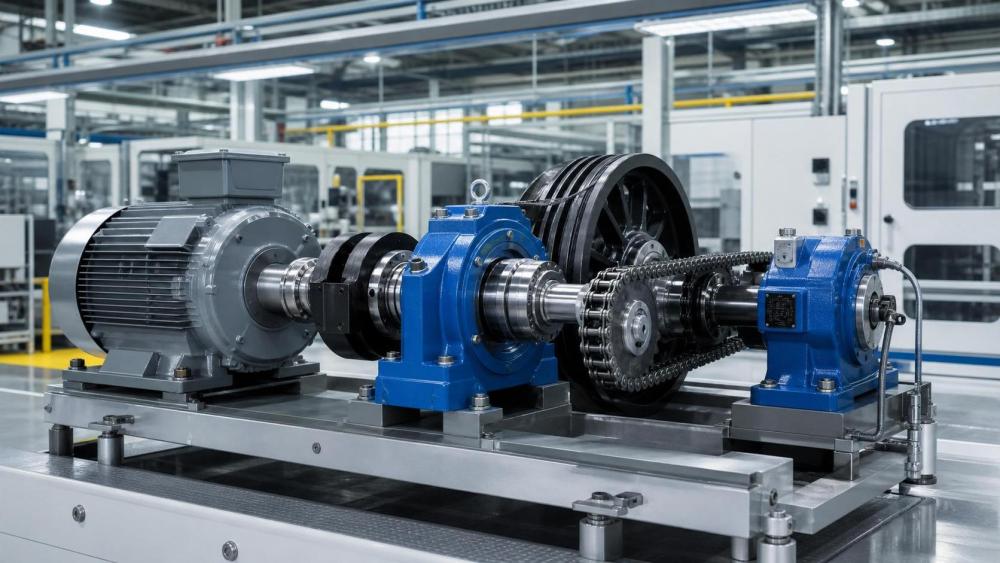
Power transmission efficiency improvement usually starts with losses that hide in plain sight.
A drive may still run, hit output targets, and pass routine checks, yet consume more energy every week.
That gap often comes from friction, slip, misalignment, poor lubrication, and oversized transmission elements.
In practical operations, the fastest gains rarely require full replacement of motors or major process redesign.
The better route is targeted upgrading around couplings, belts, chains, bearings, sealing points, and condition tracking.
This is why power transmission efficiency improvement matters across conveyors, packaging lines, mixers, pumps, fans, and material handling systems.
The logic is straightforward.
When energy loss falls, temperature drops, component life improves, and maintenance windows become easier to predict.
Within the broader PCTS industrial framework, transmission efficiency is not an isolated topic.
It connects bearings, chains, belts, couplings, seals, hydraulic stability, and MRO planning into one operating decision.
The important point is that different sites lose energy for different reasons.
A dusty aggregate conveyor and a high-speed packaging line may both report inefficiency, but the upgrade priority is not the same.
Different operating scenes change the diagnosis
In actual use, the first question is not which upgrade looks advanced.
The first question is where the energy is disappearing.
High-speed systems usually punish imbalance, bearing friction, and coupling offset more severely.
Heavy-load systems more often suffer from chain elongation, belt slip, shock loading, and lubrication breakdown.
Wet or chemically exposed areas introduce another layer.
Here, sealing failure and contamination can erase the gains of an otherwise efficient mechanical setup.
That is why power transmission efficiency improvement should be treated as a site-specific exercise.
The transmission path, environment, duty cycle, and maintenance rhythm all affect the best upgrade choice.
A useful assessment compares actual duty against installed hardware, not only against catalog ratings.
When alignment errors quietly consume output
One of the quickest upgrades is coupling and shaft alignment correction.
This is common in pumps, fans, compressors, reducers, and connected motor-drive assemblies.
Minor offset increases bearing load, raises seal wear, and turns useful power into vibration and heat.
The problem becomes more expensive when speed rises or when the system runs continuously.
Power transmission efficiency improvement here comes from laser alignment, base correction, and coupling review.
Rigid couplings may suit stable frames.
Flexible couplings perform better where thermal growth, shock, or minor movement cannot be avoided.
A frequent misjudgment is to replace bearings repeatedly without checking the alignment condition that caused the wear.
Another is to align at installation and ignore soft foot, pipe strain, or foundation settlement later on.
In those cases, the apparent component issue is really a system geometry issue.
Belt and chain drives need different upgrade logic
Belt optimization is often the fastest path when slip and over-tension are both present.
This shows up in HVAC fans, light conveyors, packaging lines, and auxiliary machine drives.
A worn pulley profile or poor tension setting can waste more energy than expected.
Synchronous belts, cogged profiles, and better tension verification often improve transfer efficiency quickly.
Chains are different.
In slow, high-torque environments, the bigger concern is articulation friction, contamination, and elongation under load.
Power transmission efficiency improvement in chain drives usually depends on lubrication access, sprocket condition, and wear tracking.
That distinction matters because the wrong upgrade can backfire.
Installing a premium belt without correcting pulley alignment may deliver little benefit.
Upgrading a chain grade without managing dirt ingress may simply shift the failure mode downstream.
- Use belt upgrades where speed stability and lower vibration matter more than extreme torque capacity.
- Use chain-focused upgrades where shock loads, dirty service, and compact torque transfer dominate.
- Check pulley or sprocket wear before judging the transmission element alone.
- Set inspection intervals by duty cycle, not by calendar only.
Lubrication and bearing upgrades matter most under continuous duty
Continuous production lines often lose efficiency gradually rather than suddenly.
A bearing may not fail, yet friction rises as grease degrades, contamination enters, or preload no longer fits the duty.
This is where power transmission efficiency improvement becomes closely tied to tribology.
Low-friction bearing designs, correct internal clearance, and controlled lubrication intervals can produce measurable savings.
For high-speed spindles or precision rollers, the judgment is more sensitive.
Too much lubricant can be as harmful as too little.
For slower, heavier machinery, film strength and contamination resistance usually matter more than ultra-low drag.
This is one reason PCTS-style analysis links bearing design, lubrication practice, and lifecycle cost instead of treating them separately.
A common oversight is selecting grease only by temperature range.
Base oil viscosity, washout resistance, relubrication method, and compatibility with seals often matter just as much.
Seals and contamination control can decide the result
Some efficiency projects stall because the team focuses only on rotating parts.
In wet processing, chemical handling, or dusty bulk transfer, seals can determine whether an upgrade holds its gains.
Poor sealing allows lubricant loss and particle ingress.
Both conditions increase drag, accelerate wear, and shorten replacement cycles.
Power transmission efficiency improvement in these settings depends on balancing seal protection against excess friction.
A tighter seal is not always the better seal.
Material selection, lip design, media compatibility, and shaft condition all change the right answer.
Harsh washdown lines may need chemical-resistant sealing compounds.
Dust-heavy lines may benefit more from exclusion design and disciplined inspection routines.
The mistake here is assuming similar environments create identical sealing needs.
Fine abrasive dust behaves differently from sticky slurry, even when both are called contamination risks.
The fifth upgrade is better visibility, not just better hardware
Many sites have already replaced parts, but still struggle to sustain power transmission efficiency improvement.
That usually means the missing upgrade is condition visibility.
Simple monitoring of vibration, temperature, tension, lubrication status, and energy draw changes maintenance from reactive to timed action.
This is especially useful where duty cycles change often or loads vary by product mix.
Instead of treating all assets equally, monitoring shows which transmission path is actually degrading.
That helps avoid a familiar mistake.
Too many upgrades are chosen by purchase price alone, while hidden downtime, repeat alignment work, and lost production remain uncounted.
When viewed through total cost of ownership, the case for monitoring becomes stronger.
What to confirm before choosing the next step
- Map the full transmission path from driver to load.
- Record where heat, slip, noise, or leakage actually appear.
- Compare peak load, average load, and start-stop behavior.
- Check environmental effects on lubrication and seals.
- Estimate maintenance access difficulty before selecting upgrades.
- Measure savings against energy, downtime, and replacement frequency together.
The fastest power transmission efficiency improvement usually comes from combining small, correct upgrades rather than chasing one dramatic fix.
Alignment, belt or chain optimization, lubrication control, sealing review, and condition monitoring each solve different loss mechanisms.
The practical next move is to sort assets by operating scene, then match each scene with its dominant energy-loss pattern.
That approach makes upgrade decisions clearer, improves maintenance planning, and turns efficiency gains into repeatable operating results.
Want to dive deeper into these market dynamics, or need data-driven support for your next business move? Drop a line below and let the analysts at PCTS provide customized insights.
We respect your privacy. Your information is strictly confidential.
Related News
- 00
0000-00
How sealing technology reduces contamination in semiconductor manufacturing - 00
0000-00
Where to install vibration sensors on rotating machinery - 00
0000-00
NTSB Probe Finds Boeing Warned of MD-11 Engine Bearing Risk Years Earlier - 00
0000-00
How to size pneumatic grippers for packaging system integration - 00
0000-00
How to size alloy steel power transmission chains for heavy loads
Weekly Insights
Stay ahead with our curated technology reports delivered every Monday.