





PU Timing Belts for Conveyors: Selection Tips for Load, Speed, and Wear
Choosing the right PU timing belts for conveyors affects uptime, handling accuracy, and long-term cost.
The real decision is rarely about price alone.
It is about matching belt construction to load, speed, wear conditions, and replacement risk.
In practical sourcing, one weak assumption can lead to tracking issues, tooth shear, dust buildup, or unplanned shutdowns.
That is why a structured selection process matters.
This guide breaks down how to evaluate PU timing belts for conveyors with a focus on load, speed stability, wear resistance, and supplier consistency.
Why PU Timing Belts for Conveyors Need Careful Selection
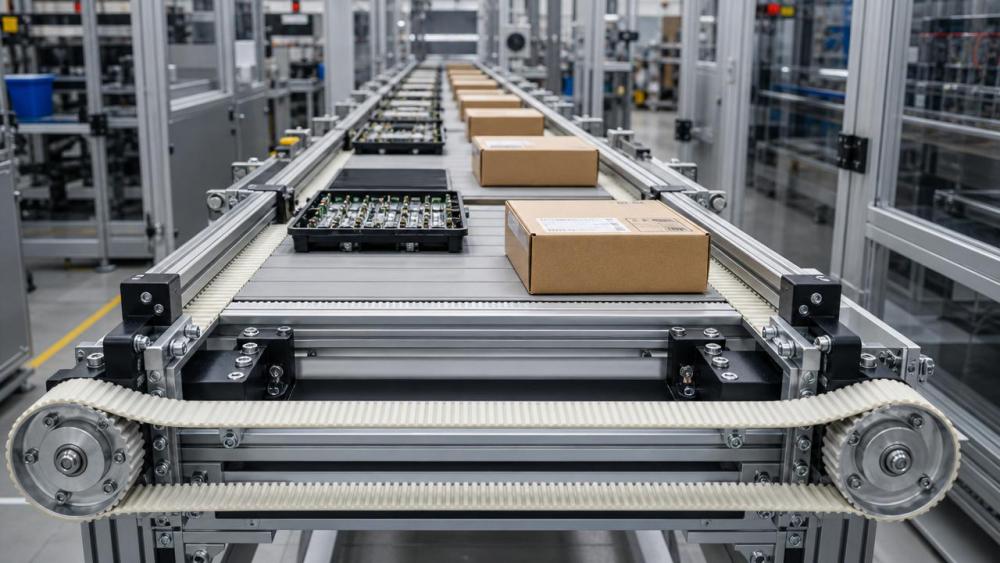
PU timing belts for conveyors are often chosen for clean running, precise positioning, and stable motion transfer.
Compared with friction-driven belts, they reduce slip and support synchronized movement.
That matters in packaging, food handling, electronics, logistics, and automated assembly.
Still, not all PU timing belts for conveyors behave the same way.
Differences in tooth profile, tensile member, polyurethane hardness, surface cover, and fabrication quality change performance significantly.
A belt that works well in a light indexing line may fail quickly in a heavy, abrasive conveyor.
From a decision standpoint, the goal is not to buy the strongest belt available.
The goal is to buy the right belt for the actual duty cycle.
Start with Load: The First Filter in Belt Selection
Load is the first screening factor when comparing PU timing belts for conveyors.
If the load estimate is wrong, every later decision becomes less reliable.
Start by separating three values:
- Product load carried on the conveyor
- Belt pull needed during steady operation
- Peak load during start, stop, accumulation, or jam events
Peak load is often the hidden problem.
In many lines, acceleration torque and shock loading damage belts faster than normal running tension.
Check the allowable effective tension, tooth shear capacity, and tensile cord material.
Steel cords offer high strength and low elongation.
Aramid cords can help where flexibility and lower weight matter.
Also review pulley diameter limits.
A strong belt wrapped around an undersized pulley may fatigue early.
Load Questions Worth Asking Suppliers
- What is the rated working tension for this belt width and pitch?
- What service factor is recommended for intermittent shock loading?
- Which tensile cord suits long conveyor spans?
- How does the belt perform under repeated start-stop cycles?
- Is there application data for similar product weight and layout?
Speed Stability: More Than a Simple RPM Number
Speed is the second major filter when choosing PU timing belts for conveyors.
Many buyers compare only line speed, but that is not enough.
What matters is speed combined with acceleration, duty hours, pulley geometry, and required positioning accuracy.
At higher speeds, poor belt selection can create vibration, tooth meshing noise, heat buildup, and tracking instability.
This is more visible in automated handling lines with frequent indexing.
Tooth profile matters here.
Profiles such as AT, T, HTD, or specialty designs affect load sharing and engagement behavior.
The best option depends on whether the conveyor prioritizes smooth transport, precise indexing, or higher torque transfer.
For high-speed use, ask for recommended maximum belt speed under real operating conditions, not just catalog values.
Catalog numbers often assume ideal alignment and controlled temperature.
Practical Speed Checks
- Confirm conveyor speed and acceleration profile.
- Match belt pitch to pulley size and tooth engagement.
- Review noise and vibration limits in the application.
- Check thermal behavior during long operating hours.
- Validate tracking stability at full production speed.
Wear Resistance: The Area That Changes Total Cost Most
Wear is where the long-term value of PU timing belts for conveyors becomes clear.
Two belts may look similar at purchase, yet have very different replacement cycles.
The main wear drivers usually include abrasion, product contact, side guiding friction, contaminants, and cleaning chemicals.
Polyurethane quality matters because it affects cut resistance, surface durability, and dimensional stability.
If the conveyor handles sharp-edged cartons, metal parts, or abrasive material, surface wear should be reviewed early.
If the line uses cleats, coatings, or special covers, the bond quality is equally important.
In washdown or chemically exposed areas, standard PU timing belts for conveyors may not last as expected.
This is where application-specific material guidance becomes essential.
Common Wear Signals to Watch
- Tooth root cracking
- Surface glazing or polishing
- Edge fraying or side wear
- Cover separation on fabricated belts
- Dust generation near pulleys
- Unexpected elongation or tracking drift
These signs often appear before complete belt failure.
That also means they can be used in supplier evaluation and maintenance planning.
Key Specifications to Compare Before Buying
When comparing PU timing belts for conveyors, a short specification sheet is rarely enough.
A better approach is to compare technical and sourcing factors together.
This comparison helps separate a technically suitable belt from one that only looks competitive on quotation.
How to Reduce Procurement Risk with Better Supplier Checks
Supplier capability can be as important as belt design.
For PU timing belts for conveyors, small production differences can affect tracking, pitch accuracy, and wear consistency.
A good buying process should examine more than lead time and unit price.
- Ask for dimensional tolerances and inspection methods.
- Review traceability for raw materials and tensile cords.
- Confirm experience with conveyor-specific fabrication.
- Request performance references in similar industries.
- Check response speed for urgent replacement orders.
- Verify support for installation guidance and failure analysis.
In actual operations, replacement speed often matters as much as original quality.
If a supplier cannot maintain consistent specifications across batches, standardization becomes difficult.
That can increase spare parts complexity and downtime exposure.
A Simple Decision Framework for PU Timing Belts for Conveyors
A practical decision framework keeps evaluation focused and faster.
- Define product load, peak tension, and duty cycle.
- Map conveyor speed, indexing behavior, and pulley sizes.
- Identify wear risks such as abrasion, chemicals, or washdown.
- Compare at least two PU timing belts for conveyors by full specification.
- Evaluate supplier consistency, support, and replacement responsiveness.
- Estimate lifecycle cost, not only purchase price.
This approach usually leads to better sourcing decisions than choosing the lowest quoted belt.
It also improves communication between engineering, maintenance, and purchasing teams.
Final Takeaway
Selecting PU timing belts for conveyors is really about fit, not guesswork.
Load tells you how much strength is needed.
Speed shows whether the belt can stay stable and accurate.
Wear resistance reveals the real ownership cost over time.
When these three factors are checked together, PU timing belts for conveyors become easier to compare and safer to source.
The most reliable next step is to collect operating data, align it with supplier specifications, and validate performance before volume purchase.
That simple discipline can reduce replacement risk, improve conveyor reliability, and support better long-term buying decisions.
Want to dive deeper into these market dynamics, or need data-driven support for your next business move? Drop a line below and let the analysts at PCTS provide customized insights.
We respect your privacy. Your information is strictly confidential.
Related News
- 00
0000-00
How sealing technology reduces contamination in semiconductor manufacturing - 00
0000-00
Where to install vibration sensors on rotating machinery - 00
0000-00
NTSB Probe Finds Boeing Warned of MD-11 Engine Bearing Risk Years Earlier - 00
0000-00
How to size pneumatic grippers for packaging system integration - 00
0000-00
How to size alloy steel power transmission chains for heavy loads
Weekly Insights
Stay ahead with our curated technology reports delivered every Monday.