





Selecting low noise belt drive systems is rarely a narrow noise-control decision. In industrial settings, sound level often reflects deeper issues such as belt tracking, pulley accuracy, tension stability, vibration, and component fit.
That is why the final selection matters beyond operator comfort. A quieter drive can support cleaner motion, fewer corrective stops, lower wear, and more predictable maintenance planning across packaging lines, HVAC equipment, conveyors, machine tools, and automated handling systems.
Within the broader transmission landscape covered by PCTS, low noise belt drive systems sit at the intersection of mechanical transmission, bearing behavior, alignment practice, and lifecycle cost control. A practical review should therefore focus on the whole drive system, not the belt alone.
Why low-noise performance deserves closer attention
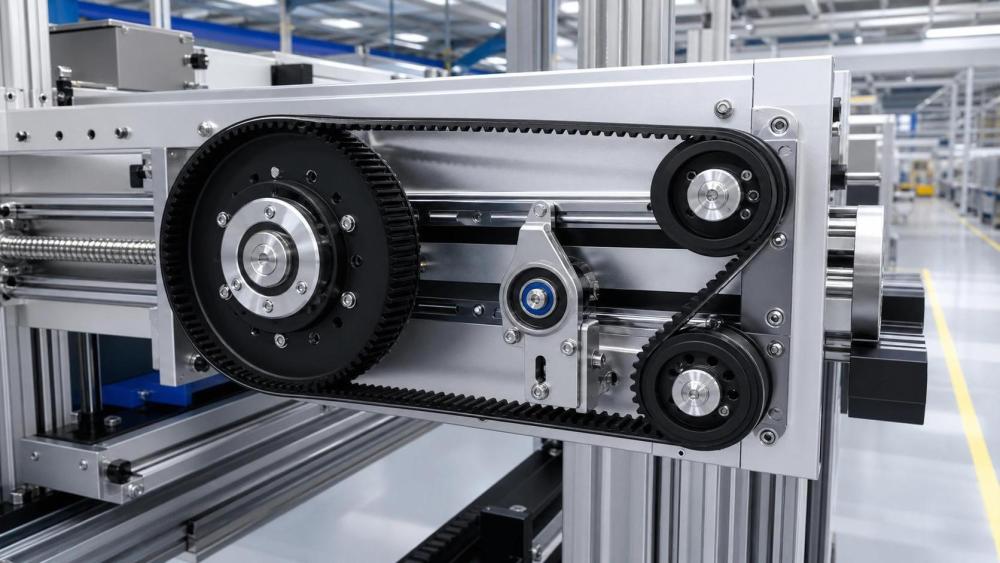
In many facilities, noise is treated as a secondary symptom. In reality, unusual belt sound may signal slip, tooth impact, resonance, pulley runout, or uneven load transfer.
Low noise belt drive systems are therefore relevant wherever uptime and repeatability matter. They are increasingly specified in food processing, warehouse automation, medical support equipment, printing, light manufacturing, and enclosed machinery where operator exposure is closely monitored.
There is also a cost angle. If a belt system runs noisily because of poor matching, the result may be faster bearing wear, dust generation, re-tensioning labor, or premature replacement of belts and pulleys.
From a sourcing perspective, quieter operation is useful because it forces a more disciplined review of geometry, materials, tolerances, and supplier process consistency.
What makes a belt drive sound quieter in practice
The term low noise belt drive systems usually refers to belt-driven power transmission assemblies designed to reduce airborne sound and structure-borne vibration during operation.
That outcome depends on several linked factors. Belt construction, pulley finish, tooth profile, tension control, shaft alignment, bearing condition, and operating speed all shape the final acoustic result.
A common mistake is assuming that a premium belt grade alone will solve noise problems. If pulley concentricity is poor or the drive is misaligned, even a high-quality belt may become noisy within a short service window.
It helps to separate two situations. One involves inherently quiet designs chosen from the start. The other involves noise reduction attempts after a drive layout has already introduced vibration sources.
Main noise sources in belt transmission
- Belt slip caused by inadequate tension or contamination
- Tooth meshing impact in synchronous belts at high speed
- Pulley eccentricity, imbalance, or groove inaccuracy
- Misalignment between driver and driven shafts
- Resonance from frame stiffness or mounting conditions
- Adjacent bearing noise transferred into the drive path
Checks that should happen before final selection
The best purchasing decisions are usually made before samples are approved. At this stage, low noise belt drive systems should be checked against real operating conditions rather than catalog claims alone.
1. Belt type and material behavior
Different belt families generate different acoustic patterns. Timing belts may offer positioning accuracy, while V-belts and ribbed belts can behave differently under variable load and speed.
Material formulation also matters. Rubber compounds, polyurethane structures, tensile cords, backing layers, and fabric covers influence damping, friction behavior, and resistance to noise growth over time.
Where washdown, oil mist, fine dust, or heat are present, the belt should be judged by retained performance, not by new-condition sound only.
2. Pulley quality and machining control
Pulley accuracy often decides whether low noise belt drive systems stay quiet after installation. Groove geometry, pitch accuracy, surface finish, concentricity, and balance directly affect belt engagement.
If the pulley is treated as a commodity item, the belt may end up carrying correction loads that increase vibration and edge wear. The result is usually noise first, failure later.
3. Load profile, speed, and start-stop pattern
A steady fan drive and an indexing conveyor do not stress belts the same way. Noise behavior changes with peak torque, acceleration, reversal frequency, duty cycle, and shock loading.
This is where many hidden costs begin. A belt selected on nominal power alone may perform poorly when real startup loads create tension spikes and tooth impact.
4. Installation tolerance and maintainability
Some low noise belt drive systems are tolerant of field variation. Others need tighter installation discipline. Ease of alignment, tension setting method, replacement access, and retension interval should be reviewed early.
If the system requires precision tools or unusual setup steps, the real operating result may differ from the supplier’s test data.
Comparing options with a system-level view
A useful comparison does not stop at belt price or stated decibel reduction. It should connect acoustic performance to reliability, maintenance burden, and supply consistency.
This broader view is increasingly important across PCTS-covered sectors, where transmission parts, bearings, seals, and monitoring components are expected to work as one reliability package.
Where application context changes the answer
Not all low noise belt drive systems are optimized for the same environment. A quiet laboratory unit, a compact servo axis, and a dusty bulk-handling conveyor can require very different trade-offs.
Enclosed and operator-adjacent equipment
Here, acoustic comfort and tonal quality matter more. Buyers often prioritize smoother meshing, lower vibration transfer, and stable performance at moderate loads.
High-cycle automation
In indexing or pick-and-place systems, repeated acceleration may drive noise through dynamic tension change. Belt stiffness and pulley pitch accuracy become more important than headline sound claims.
Harsh industrial service
Dust, oil, humidity, and temperature variation can shift friction behavior and alignment stability. Under these conditions, low noise belt drive systems should be screened for retained quietness, not clean-room performance.
Questions worth asking suppliers before approval
Useful supplier discussions usually move past brochures quickly. The goal is to understand whether test conditions resemble actual use and whether repeat production can hold the same performance.
- What sound testing method was used, and at what speed, load, and mounting condition?
- Which pulley tolerances are required to maintain the claimed low-noise result?
- How sensitive is the design to over-tension, misalignment, or frequent starts?
- What production controls keep belt geometry and compound quality consistent across batches?
- Is there field data showing service life, retension intervals, or failure modes in similar applications?
- Are matching components, including pulleys and bearings, recommended as part of one validated set?
These questions reduce the chance of approving low noise belt drive systems that perform well in a sample cabinet but become unstable in plant operation.
A practical way to move toward final selection
A sound final decision usually begins with a short requirement sheet. That sheet should record torque range, peak load, speed, ambient conditions, space limits, pulley constraints, expected service interval, and acceptable noise behavior.
After that, compare low noise belt drive systems as complete transmission packages. Review belt and pulley fit, installation demands, replacement availability, and compatibility with bearings, guards, and monitoring practices already used on site.
If uncertainty remains, a controlled trial with measured alignment, defined load cycles, and post-test wear inspection usually reveals more than a catalog comparison. That approach aligns well with the PCTS focus on reliability, maintenance economics, and total cost of ownership.
In the end, quieter transmission is valuable not because it sounds better alone, but because it often signals a more balanced mechanical system. That is the right place to continue evaluation before final approval.
Want to dive deeper into these market dynamics, or need data-driven support for your next business move? Drop a line below and let the analysts at PCTS provide customized insights.
We respect your privacy. Your information is strictly confidential.
Related News
- 00
0000-00
How sealing technology reduces contamination in semiconductor manufacturing - 00
0000-00
Where to install vibration sensors on rotating machinery - 00
0000-00
NTSB Probe Finds Boeing Warned of MD-11 Engine Bearing Risk Years Earlier - 00
0000-00
How to size pneumatic grippers for packaging system integration - 00
0000-00
How to size alloy steel power transmission chains for heavy loads
Weekly Insights
Stay ahead with our curated technology reports delivered every Monday.