





Industrial Belts Selection Guide for Speed, Load, and Downtime Risk
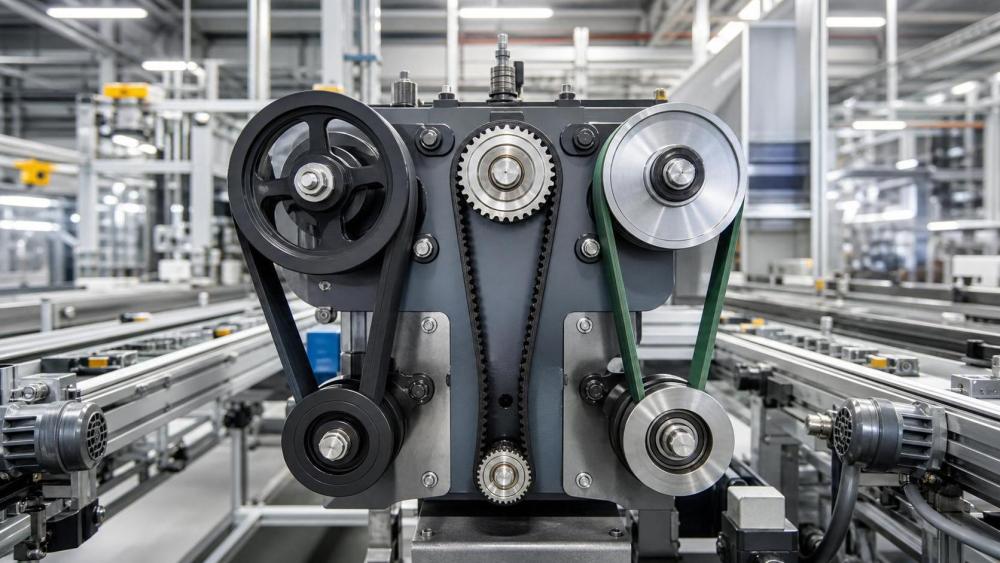
Choosing the right industrial belts is not just a technical decision. It shapes speed stability, load handling, maintenance intervals, and overall production reliability.
In real operations, the wrong belt often looks acceptable at startup. Problems usually appear later as slip, heat, noise, uneven wear, or unexpected stops.
That is why industrial belts should be evaluated against actual duty conditions, not only catalog ratings. Speed, torque, shock load, contamination, and service access all matter.
For transmission systems under pressure, belt selection is really a risk management task. A better match reduces downtime exposure and improves lifecycle cost control.
This guide breaks the decision into practical checkpoints. It helps compare industrial belts for speed, load, environment, maintenance needs, and replacement planning.
Start with the Operating Profile
Before comparing belt types, define the machine profile clearly. Most industrial belts fail early because the application data was incomplete from the beginning.
The first question is speed. Look at both steady-state speed and acceleration behavior. Frequent starts and stops create a different stress pattern than continuous running.
The second question is load. Separate normal operating load from peak load, shock load, and overload events. A belt sized only for nominal load is often underspecified.
The third question is uptime expectation. If the line runs around the clock, downtime risk carries a much higher cost than belt price alone.
A practical operating profile should include these inputs:
- Drive speed range and pulley diameters
- Continuous load, peak load, and shock events
- Duty cycle, start-stop frequency, and shift pattern
- Ambient temperature, dust, oil, humidity, and chemicals
- Available installation space and tensioning method
- Acceptable maintenance window and spare stock policy
Once this profile is clear, industrial belts can be assessed on performance fit instead of assumptions. That usually leads to fewer surprises after commissioning.
How Belt Type Changes Speed and Load Performance
Not all industrial belts transmit power in the same way. Belt geometry directly affects slip resistance, positioning accuracy, torque transfer, and vibration behavior.
V-Belts
V-belts are common in general industrial drives. They are cost-effective, widely available, and suitable for moderate speed and load conditions.
They handle misalignment better than some alternatives. However, slip can increase under fluctuating loads, especially if tension control is poor.
Timing Belts
Timing belts are preferred where synchronized motion matters. They deliver positive engagement, low slip, and better speed accuracy in indexing or automation tasks.
These industrial belts work well in packaging, conveyors, and controlled positioning systems. They usually require better pulley condition and alignment discipline.
Flat Belts
Flat belts can support high-speed operation with smooth running characteristics. They are often used when efficiency and low vibration are priorities.
Their drawback is lower grip under some load conditions. Surface quality, tracking control, and tension setup become more important.
Ribbed and Specialty Belts
Ribbed belts combine flexibility with good contact area. Specialty industrial belts may add heat resistance, antistatic properties, food-grade materials, or chemical resistance.
These options matter when standard products cannot manage environmental stress or compliance requirements.
Match Belt Material to Real Plant Conditions
Material choice is often underestimated during industrial belts selection. Yet temperature, contamination, and flex fatigue can change belt life more than rated load alone.
Rubber compounds are widely used because they balance cost and durability. Polyurethane belts often offer better wear resistance and cleaner operation in precision environments.
Cord material also matters. Polyester, aramid, fiberglass, and steel each influence elongation, tensile strength, and shock resistance differently.
In hot environments, heat aging can harden the belt body and accelerate cracking. In oily areas, swelling and traction loss can become the real failure mode.
From a risk standpoint, choose industrial belts by failure mechanism, not just by catalog description. Ask what is most likely to degrade first in your application.
- Heat exposure may require temperature-resistant compounds
- Oil mist may require resistant belt materials and covers
- Dust may increase pulley wear and tracking issues
- High humidity may affect storage and tension stability
- Clean production may require low-particle belt surfaces
Evaluate Downtime Risk, Not Just Purchase Cost
A low-cost belt is not always an economical choice. In many industrial systems, one unplanned stop costs more than several premium replacement belts.
This is where industrial belts selection becomes a business decision. Maintenance labor, spare inventory, lost throughput, and restart delays all belong in the evaluation.
Look beyond rated service life. What matters more is life predictability. A belt that lasts slightly less but fails predictably may be easier to manage than one with random breakdowns.
A simple comparison table helps keep the decision practical:
This kind of review supports stronger procurement decisions. It also aligns technical choice with production risk and service planning.
Common Selection Mistakes with Industrial Belts
Several mistakes appear again and again across industrial belt applications. Most are avoidable with better cross-checking between engineering, maintenance, and purchasing.
- Using nominal load only and ignoring transient overloads.
- Selecting industrial belts without checking temperature or chemical exposure.
- Copying a legacy belt specification from older equipment without review.
- Treating belt replacement as a standalone item, separate from pulley condition.
- Choosing rare sizes that create future spare parts risk.
- Ignoring alignment and tensioning method during design selection.
A belt problem is often a system problem. If the pulley, bearing, guard layout, or drive control is wrong, even premium industrial belts will underperform.
A Practical Selection Workflow
The most reliable method is to use a short, repeatable evaluation process. This keeps industrial belts selection consistent across projects and supplier comparisons.
- Capture speed, load, duty cycle, and environment data.
- Shortlist belt types based on transmission behavior.
- Review material compatibility with heat, oil, dust, and cleaning conditions.
- Check pulley fit, alignment tolerance, and installation space.
- Estimate replacement frequency and downtime impact.
- Confirm supplier support, lead time, and dimensional consistency.
- Validate with pilot operation or monitored field trial where possible.
This workflow is especially useful when comparing multiple industrial belts across OEM builds, retrofit upgrades, or MRO replacement programs.
Final Decision: Choose for Stability Over Time
The best industrial belts are not simply the strongest or the cheapest. They are the ones that keep speed stable, absorb real load conditions, and reduce downtime uncertainty.
A disciplined selection process improves reliability from the start. It also creates better alignment between engineering performance, maintenance execution, and procurement control.
For teams managing industrial transmission systems, the practical question is straightforward. Which belt choice delivers predictable operation under real production stress?
When industrial belts are selected with that question in mind, the result is usually better uptime, cleaner planning, and lower total operating risk.
Related News
- 00
0000-00
Where are axial piston pumps used in mining equipment? - 00
0000-00
Embodied AI Robotics and Drive Control Forum Held in Shanghai - 00
0000-00
How does seal service life affect the total cost of ownership? - 00
0000-00
Schaeffler to Cut 3,460 Jobs and Close Five European Plants - 00
0000-00
How does system size affect the price of a belt drive system?
Weekly Insights
Stay ahead with our curated technology reports delivered every Monday.