





In robotics, transmission accuracy is never a secondary detail. It shapes repeatability, path stability, cycle consistency, and maintenance rhythm. That is why PU timing belts for robotics deserve close attention. Their material behavior, tooth engagement, tensile reinforcement, and wear profile directly influence how a robot moves today and how reliably it keeps moving after months of service.
Why belt selection matters more in robotic motion
Robotic systems operate in tighter tolerance windows than many conventional conveyors or general drives.
A small transmission deviation can appear as positioning drift, uneven acceleration, backlash-like response, or unstable synchronization between axes.
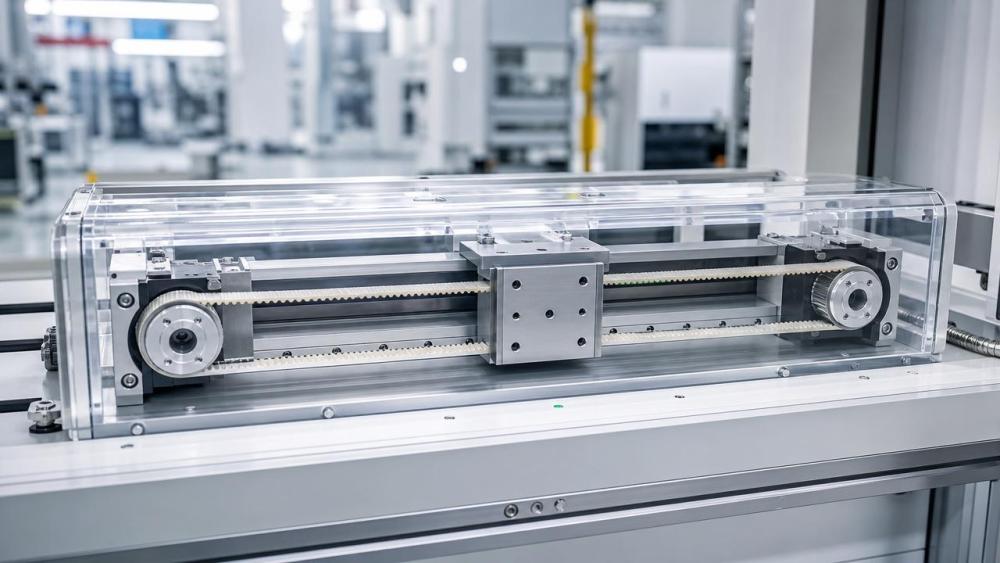
This is where PU timing belts for robotics stand out.
Polyurethane belts are valued for dimensional stability, abrasion resistance, and clean transmission characteristics.
Compared with less specialized belt options, they are often better suited to pick-and-place units, gantry modules, compact actuators, and collaborative automation cells.
Within the broader industrial component landscape covered by PCTS, belts are not isolated parts.
They interact with bearings, pulleys, shafts, guides, couplings, seals, and monitoring strategies.
That wider system view matters because robotic precision is rarely determined by one component alone.
How PU timing belts for robotics influence precision
Precision in robotic transmission is mainly affected by elastic behavior, meshing quality, and load response.
For PU timing belts for robotics, four factors usually deserve the closest review.
Material stiffness and deformation
Polyurethane offers a useful balance between flexibility and rigidity.
If stiffness is too low, the belt stretches more under dynamic load.
That stretch reduces positional accuracy during fast starts, stops, and reversals.
If stiffness is properly matched, motion remains more predictable across the stroke.
Tooth profile and meshing consistency
Tooth geometry affects engagement smoothness, noise, load distribution, and tracking precision.
A refined tooth profile helps reduce micro-slip and uneven force concentration.
That becomes important in indexing tasks or synchronized multi-axis movement.
Tensile member selection
The tensile cord often determines long-term length stability.
Steel, aramid, or other reinforcements behave differently under temperature change and repeated cycling.
For precision robotics, low elongation is usually a primary requirement.
Surface wear and contamination control
Belt wear does not only shorten life.
It can also change tooth engagement behavior over time.
In cleaner automation environments, low particle generation may be just as important as mechanical durability.
What determines service life in real operation
Service life is often misunderstood as a material-only issue.
In practice, PU timing belts for robotics fail early more often because of system mismatch than basic material weakness.
Several operating conditions shape belt longevity.
Temperature also deserves attention.
Even durable PU timing belts for robotics can change behavior when exposed to sustained heat, coolant mist, cleaning chemicals, or dry-running friction conditions.
This is why lifecycle evaluation should include the actual installation environment, not only catalogue values.
Where these belts create the most value
The value of PU timing belts for robotics becomes clearer when linked to specific motion tasks.
They are especially useful in applications where light weight, repeatability, and quiet operation need to coexist.
- Linear robot axes that require stable positioning over repeated cycles.
- Pick-and-place systems where acceleration is high and downtime is costly.
- Packaging and electronics automation where clean running matters.
- Collaborative robotic modules where compact transmission packaging is needed.
- Inspection or handling systems that depend on smooth synchronized movement.
From an industrial intelligence perspective, this also links to total cost of ownership.
A belt that preserves accuracy longer reduces recalibration frequency, emergency replacement risk, and hidden production losses.
That fits well with the PCTS focus on component reliability, maintenance economics, and transmission system performance.
How to evaluate PU timing belts for robotics beyond catalogue claims
Specification sheets provide a starting point, not a full decision basis.
A stronger review usually compares mechanical data with actual motion demands.
Look at the full transmission chain
Belt precision depends on pulley quality, bearing support, shaft concentricity, and frame stiffness.
A high-grade belt cannot compensate for poor alignment or unstable structure.
Check dynamic load rather than static load alone
Robots rarely move at steady torque.
Acceleration peaks, reversing cycles, and stop-start sequences place different stress on PU timing belts for robotics than constant-speed drives.
Assess wear patterns early
Initial wear signals often reveal installation or matching problems.
Edge fraying, unusual tooth polish, dust generation, or rising noise should not be treated as normal bedding-in without evidence.
Consider maintenance access
A belt with strong theoretical life may still be a weak choice if retensioning or replacement requires major system disassembly.
Practical maintainability influences real value.
Common trade-offs in selection
No timing belt solution optimizes every variable at once.
Choosing PU timing belts for robotics usually means balancing competing priorities.
- Higher stiffness may improve positioning but increase sensitivity to shock and installation error.
- Softer running behavior may lower noise but reduce motion sharpness in fast cycles.
- Compact pulley layouts save space but can reduce belt fatigue life.
- Lower upfront cost may lead to shorter maintenance intervals and more drift over time.
This is why belt selection should align with the dominant performance target.
For some systems, the key metric is repeatability.
For others, it is uptime, cleanliness, compactness, or replacement predictability.
A practical framework for the next decision
A useful next step is to define belt evaluation around application evidence rather than generic preference.
Start with motion profile, positioning tolerance, pulley geometry, environmental exposure, and expected maintenance window.
Then compare candidate PU timing belts for robotics against those conditions, including cord type, tooth form, wear resistance, and installation limits.
In many cases, the best choice is the one that keeps precision stable over time, not simply the one with the highest headline rating.
For deeper assessment, it also helps to review the belt together with related bearings, pulleys, sealing conditions, and monitoring strategy.
That broader approach reflects how transmission systems are actually judged in advanced automation: by reliability in use, not by isolated specifications.
Want to dive deeper into these market dynamics, or need data-driven support for your next business move? Drop a line below and let the analysts at PCTS provide customized insights.
We respect your privacy. Your information is strictly confidential.
Related News
- 00
0000-00
IndexBox Forecasts 3.8% Annual Growth for Global Radial Seals Market Through 2035 - 00
0000-00
How to assess the chemical compatibility of FFKM sealing sheets - 00
0000-00
IndexBox Forecasts 3.6% Annual Growth for Construction Bearings Market - 00
0000-00
When do hydraulic components require an export license? - 00
0000-00
How to size modular pneumatic valve systems for adequate airflow
Weekly Insights
Stay ahead with our curated technology reports delivered every Monday.