





Belt Slip Prevention Supplier Checklist for Stable Conveyor Performance
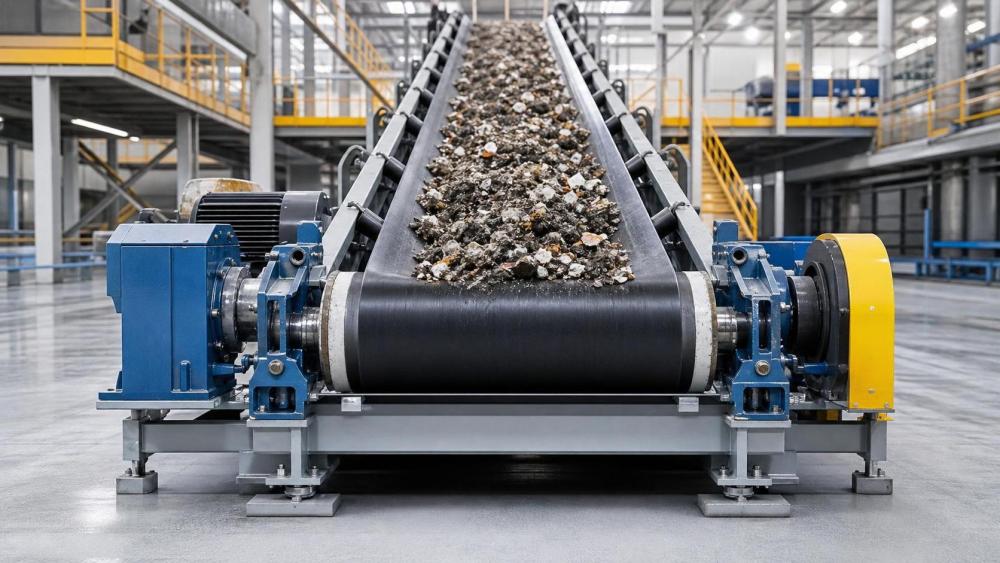
Choosing a belt slip prevention supplier is not a small sourcing task.
It directly affects conveyor uptime, product flow, and maintenance planning.
When belts slip, output becomes unstable and wear rises fast.
That usually means more stoppages, safety concerns, and harder cost control.
A strong belt slip prevention supplier helps reduce those risks early.
The best suppliers do more than sell belts or lagging materials.
They assess load, pulley condition, tension behavior, environment, and maintenance limits.
That matters even more in mixed-material plants and high-duty conveyor lines.
From a sourcing view, the real question is simple.
Can this belt slip prevention supplier support stable performance over time?
Why belt slip prevention matters in supplier selection
Belt slip is often treated as a maintenance issue.
In practice, it is also a supplier quality issue.
Poor friction design, weak cover compounds, or wrong belt selection cause recurring problems.
A reliable belt slip prevention supplier should understand root causes, not just symptoms.
These causes usually include contamination, overload, pulley wear, low tension, and startup shock.
In wet, dusty, or oily conditions, the risk becomes more obvious.
This is why supplier evaluation must go beyond catalog claims.
You need evidence of application fit and field reliability.
That also aligns with how platforms like PCTS frame industrial decision-making.
Mechanical transmission performance is rarely isolated from total ownership cost.
Core checklist for a belt slip prevention supplier
A useful checklist should separate marketing language from real capability.
Here are the points worth checking before shortlisting any belt slip prevention supplier.
1. Application diagnosis capability
A capable supplier asks detailed questions before quoting.
They should review load profile, conveyor angle, speed, pulley diameter, and duty cycle.
They should also ask about humidity, dust, oil, and cleaning procedures.
If they skip this step, risk rises immediately.
2. Material and friction performance
Material quality is central to slip control.
Check rubber compounds, surface texture, lagging options, and wear resistance data.
A strong belt slip prevention supplier should explain friction stability over time.
They should not rely only on initial grip performance.
3. Design support and system matching
Slip prevention depends on the whole conveyor system.
That includes belt type, drive layout, tensioning, pulley lagging, and take-up design.
A good belt slip prevention supplier can recommend matched solutions.
A weak one sells components in isolation.
4. Manufacturing consistency and quality control
Ask how product consistency is controlled across batches.
Look for traceability, inspection records, hardness control, bonding quality, and tolerance management.
This becomes critical for export supply and multi-site procurement programs.
5. Service response and field support
Response speed matters when conveyors stop.
A dependable belt slip prevention supplier offers troubleshooting, replacement guidance, and training support.
That support should be clearly defined before purchase.
Questions to ask before approval
Shortlists improve when questions are specific.
General brochures rarely reveal operational risk.
- What conveyor applications has this belt slip prevention supplier served successfully?
- Can they provide friction, wear, and temperature performance data?
- How do they handle dusty, wet, or oil-contaminated environments?
- Do they offer site diagnosis or remote technical review?
- What is their warranty scope for slip-related failure?
- How fast can they supply replacements across regions?
- Can they support installation standards and operator training?
The answers show whether a supplier understands operations, not just products.
A simple comparison table for faster decisions
A side-by-side view makes supplier gaps easier to spot.
Red flags that deserve extra caution
Some warning signs appear early if you look closely.
- The belt slip prevention supplier recommends one product for every condition.
- Technical staff cannot explain friction behavior under moisture or dust.
- Performance claims have no test references or case evidence.
- Delivery promises are strong, but replacement planning is vague.
- There is no clear process for complaint analysis or failure review.
In actual business, these gaps often lead to repeated emergency purchases.
That usually costs far more than a better initial sourcing decision.
How PCTS-style evaluation improves supplier decisions
Industrial sourcing works best when component choices are linked to operating reality.
That is where a PCTS-style evaluation approach becomes useful.
Instead of viewing belt slip as a single product issue, it connects transmission design, wear, monitoring, and lifecycle cost.
This broader view helps compare each belt slip prevention supplier more fairly.
It also supports cross-functional reviews between maintenance, purchasing, and equipment teams.
More importantly, it reduces the chance of buying only on unit price.
For conveyor systems, the lowest quote is rarely the lowest total cost.
Practical final checklist before placing an order
Before approval, confirm these points in writing.
- Application conditions are documented and reviewed by the supplier.
- Recommended materials match the contamination and temperature profile.
- The belt slip prevention supplier provides measurable performance data.
- Installation, tensioning, and inspection guidance are included.
- Spare supply lead time and emergency response are clearly defined.
- Warranty terms cover likely failure scenarios, not only factory defects.
- A review plan exists for post-installation performance.
A dependable belt slip prevention supplier should welcome this level of scrutiny.
That is usually a strong signal by itself.
When supplier selection follows a disciplined checklist, conveyor stability improves and sourcing risk drops.
Start with technical fit, verify service depth, and choose long-term reliability over short-term price comfort.
Want to dive deeper into these market dynamics, or need data-driven support for your next business move? Drop a line below and let the analysts at PCTS provide customized insights.
We respect your privacy. Your information is strictly confidential.
Related News
- 00
0000-00
How to check vibration analysis software for sensor compatibility - 00
0000-00
IndexBox Forecasts 3.8% Annual Growth for Global Radial Seals Market Through 2035 - 00
0000-00
How to assess the chemical compatibility of FFKM sealing sheets - 00
0000-00
IndexBox Forecasts 3.6% Annual Growth for Construction Bearings Market - 00
0000-00
When do hydraulic components require an export license?
Weekly Insights
Stay ahead with our curated technology reports delivered every Monday.