





Corrosion rarely starts as a dramatic failure. It usually appears as stiff links, red dust, surface pitting, noisy engagement, and frequent lubrication loss. In wet, chemical, or washdown-heavy operations, those early signs can turn a standard chain into a recurring maintenance problem.
That is why corrosion resistant heavy-duty chains deserve closer attention. They are built for conditions where load, contamination, moisture, and cleaning cycles act together. When chain performance affects uptime, safety, and total operating cost, material choice becomes a practical reliability decision rather than a simple replacement choice.
Across industrial transmission systems, PCTS often frames chain selection in the same way it approaches bearings, seals, and fluid power components: not as isolated parts, but as wear-critical elements inside a larger maintenance and performance system. That perspective matters when chain failure creates downstream losses.
What makes these chains different in real service
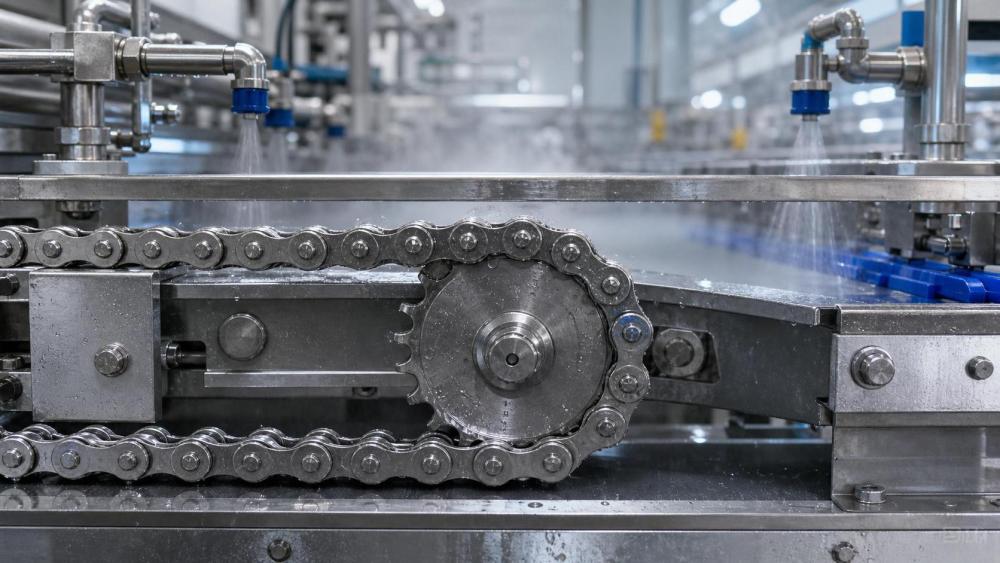
The visual difference may seem minor, but the service difference can be significant.
Corrosion resistant heavy-duty chains combine higher load capacity with materials, coatings, or surface treatments that slow chemical attack and moisture-related deterioration. Depending on the application, that may include stainless steel grades, plated carbon steel, nickel-based finishes, or specialty protective layers.
The point is not only to prevent rust on the outside. The better designs protect pin-bushing articulation, preserve flexibility, reduce abrasive buildup, and maintain more stable operation between lubrication intervals. In harsh environments, those details often decide whether a chain remains usable or becomes a source of drag and misalignment.
Standard chain options still perform well in many dry and controlled settings. They become less effective when corrosion and load interact. Once corrosion roughens contact surfaces, friction rises, elongation accelerates, and sprocket wear usually follows.
Why the topic matters more now
Many operations now face harsher combined stresses than before. Equipment runs longer, downtime is more expensive, sanitation standards are stricter, and maintenance teams are under pressure to extend service intervals without increasing failure risk.
At the same time, corrosion exposure is not limited to obvious chemical plants. It also appears in food processing, beverage filling, packaging lines, marine handling, wastewater systems, fertilizer equipment, cold storage conveyors, and outdoor bulk material systems.
In these environments, chain performance connects directly with broader component reliability. A poorly matched chain can disrupt shafts, bearings, sprockets, guards, motors, and tensioning devices. That wider effect explains why industrial intelligence platforms such as PCTS increasingly connect chain wear with lubrication strategy, contamination control, spare parts planning, and lifecycle cost analysis.
When corrosion resistant heavy-duty chains clearly outperform standard chain options
The performance gap becomes clear in specific operating conditions rather than in theory alone.
Frequent washdown and sanitation cycles
Repeated cleaning removes lubricant, drives moisture into chain joints, and exposes metal to detergents or sanitizers. Standard chains often corrode first at the pins and bushings. Corrosion resistant heavy-duty chains usually retain smoother articulation for longer.
Outdoor or coastal exposure
Rain, salt, condensation, and temperature cycling create a persistent corrosion pattern. In port equipment, agricultural machinery, and outdoor conveyors, coated or stainless heavy-duty chains can prevent the rapid degradation common with ordinary carbon steel chain.
Chemical splash or vapor environments
Even mild chemical exposure can shorten chain life if it is continuous. Cleaning agents, acidic residues, alkaline compounds, or process vapors may attack surfaces and lubrication films. Material compatibility matters as much as tensile strength in these cases.
Heavy loads with slow, continuous movement
Slow-speed applications often hide corrosion damage until stiffness becomes severe. Because the chain carries high load while moving slowly, boundary friction becomes critical. Heavy-duty corrosion resistant designs reduce the risk of seized joints and uneven load transfer.
Hard-to-access maintenance points
If chain replacement requires shutdown, guarding removal, elevated access, or coordinated labor, a cheaper standard chain may not be the economical choice. Longer service life often outweighs the higher initial price.
A practical comparison beyond purchase price
A side-by-side evaluation helps clarify where corrosion resistant heavy-duty chains create measurable value.
The table does not mean premium chain is always necessary. It shows where total cost of ownership can shift quickly. Once emergency stops, lost production, cleanup, and secondary component wear are included, the cost equation often changes.
Typical industries and machine sections where the upgrade pays back
Some environments repeatedly justify corrosion resistant heavy-duty chains because the exposure pattern is predictable and severe.
- Food and beverage conveyors exposed to washdowns, brine, sugar residue, and sanitation chemicals.
- Packaging systems near fillers, rinsers, and wet product zones.
- Marine and port machinery exposed to salt spray and outdoor humidity.
- Wastewater and recycling systems where sludge, moisture, and corrosive residues combine.
- Agricultural and fertilizer equipment handling damp, chemically active materials.
- Chemical processing lines where splash, vapor, or aggressive cleaning routines are common.
Within the machine itself, vulnerable areas often include transfer conveyors, overhead drives, elevator sections, indexing units, and low-speed high-torque transmission points. These are the areas where chain seizure or elongation can quickly become an operational issue.
What to check before selecting a chain
Selection should start with exposure mapping, not catalog browsing. Corrosion resistant heavy-duty chains vary widely in material, pin design, coating performance, and lubrication needs.
Look at the real corrosive agent
Water alone is different from saltwater, alkaline foam, acidic residue, or solvent vapor. A chain that performs well in humidity may fail in caustic washdown service.
Match load with corrosion resistance
Some stainless options resist corrosion well but may not match the fatigue strength of alloy-based heavy-duty chains. The best choice balances mechanical demand with environmental resistance.
Review sprocket and alignment conditions
A better chain cannot compensate for worn sprockets, poor alignment, or incorrect tension. If those issues remain, service life gains may be smaller than expected.
Confirm lubrication strategy
Even corrosion resistant heavy-duty chains need suitable lubrication unless the design or environment clearly supports dry operation. Lubricant compatibility with chemicals and cleaning methods should be checked early.
How to judge performance after installation
The upgrade should be measured with practical indicators rather than assumptions.
- Track chain elongation over time.
- Check for stiff joints after cleaning cycles.
- Record lubrication interval stability.
- Inspect sprocket tooth wear patterns.
- Compare unplanned stoppages before and after changeout.
- Review replacement labor and access time.
Those data points fit well within the broader reliability mindset promoted across PCTS content. Chain choice should be judged the same way bearings, seals, and hydraulic components are judged: by performance under actual duty, not by specification sheets alone.
A useful next step for better chain decisions
When corrosion is visible, the issue is often already affecting efficiency. A more useful next step is to identify where moisture, chemicals, cleaning frequency, and load overlap in the drive system. That usually reveals whether standard chain options are simply wearing out, or whether the environment itself calls for corrosion resistant heavy-duty chains.
From there, compare material compatibility, load rating, lubrication method, and replacement effort as one decision set. In many harsh-duty applications, the best result does not come from the cheapest chain. It comes from choosing the chain that keeps motion stable, maintenance predictable, and the rest of the transmission system protected for longer.
Want to dive deeper into these market dynamics, or need data-driven support for your next business move? Drop a line below and let the analysts at PCTS provide customized insights.
We respect your privacy. Your information is strictly confidential.
Related News
- 00
0000-00
How sealing technology reduces contamination in semiconductor manufacturing - 00
0000-00
Where to install vibration sensors on rotating machinery - 00
0000-00
NTSB Probe Finds Boeing Warned of MD-11 Engine Bearing Risk Years Earlier - 00
0000-00
How to size pneumatic grippers for packaging system integration - 00
0000-00
How to size alloy steel power transmission chains for heavy loads
Weekly Insights
Stay ahead with our curated technology reports delivered every Monday.