





On July 1, 2026, Vietnam’s Ministry of Industry and Trade formally put in place a new compliance requirement for imported Heavy Roller Chains and PU Timing Belts: shipments must be accompanied by a type inspection report recognized by TCVN. This is drawing attention across export, customs, procurement, and delivery functions because non-compliant goods may be refused at the border or sent back, turning documentation readiness into an immediate trade execution issue.
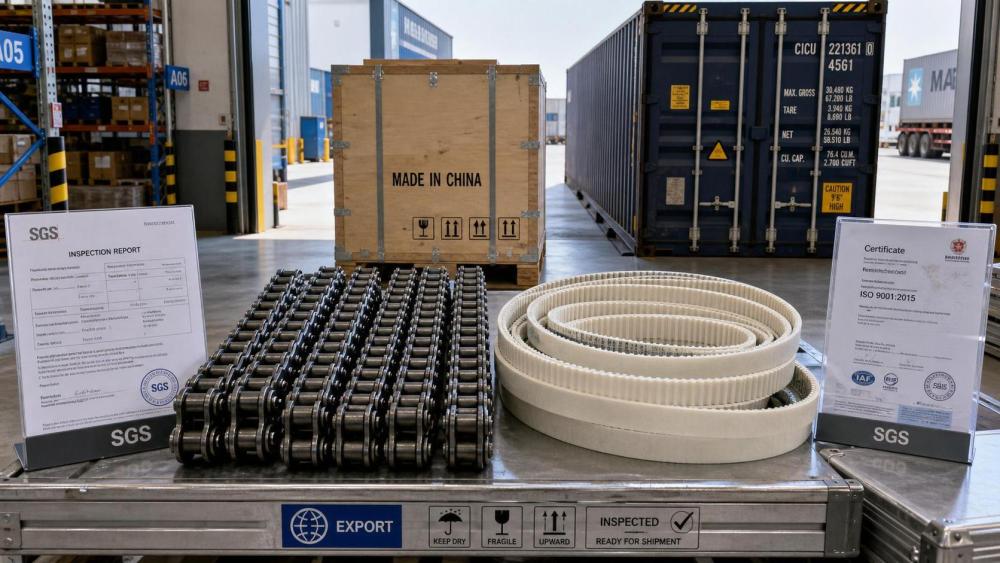
What the New Requirement Clearly Covers
Based on the confirmed information provided, the rule applies to all Heavy Roller Chains and PU Timing Belts imported into Vietnam from July 1, 2026. For these products, a TCVN-recognized type inspection report must accompany the shipment. If the requirement is not met, the products may be rejected at the port of entry or returned. The information provided also confirms that the change directly affects export procedures for Chinese suppliers shipping these products to Vietnam.
Where the Immediate Pressure Is Likely to Appear
Exporters face a documentation-to-shipment risk
From an industry perspective, direct trading companies shipping these product categories to Vietnam are likely to be the first to feel the impact. The main pressure point is not only product preparation, but whether certification or authorized laboratory testing is completed before shipment, since missing documents may lead directly to customs disruption.
Manufacturers may see lead times become more sensitive
For processing and manufacturing businesses supplying Heavy Roller Chains or PU Timing Belts, the rule may affect production scheduling and dispatch timing. Analysis shows that even if manufacturing is completed on time, delivery may still be delayed if inspection documentation is not aligned with the export timetable.
Supply chain and logistics service providers may need tighter coordination
For freight, customs, and broader supply chain service roles, the likely impact lies in document review, shipment release timing, and contingency handling. What deserves closer attention is whether supporting paperwork is complete before cargo reaches the border, as non-compliance can turn into detention, return shipment, or contract performance pressure.
Buyers and downstream customers may need to reassess delivery certainty
Purchasing parties and downstream users connected to the Vietnam market may not be the direct subject of the rule, but they may still be affected through delayed customs clearance or failed delivery. Observably, contract timing, goods acceptance, and supplier communication could become more sensitive in affected transactions.
Practical Priorities for Companies Now
Check whether affected product lines are already covered
Companies involved in exporting these goods to Vietnam should first confirm whether their shipments fall within the stated categories of Heavy Roller Chains and PU Timing Belts, and whether current documentation workflows already meet the new requirement.
Verify certification and testing paths before shipment
The confirmed information indicates that companies need to complete TCVN certification in advance or arrange testing through an authorized laboratory. In practical terms, this makes pre-shipment verification a key point of control rather than a document task to leave until customs filing.
Review contract timing and customer communication
Because the stated risk includes customs delay and possible contract breach, exporters and suppliers should closely review lead times, delivery commitments, and communication with Vietnam-bound customers. Analysis shows that the commercial risk may arise as much from timing gaps as from the rule itself.
Keep watching for how the rule is applied in practice
What deserves closer attention is the difference between the published requirement and on-the-ground execution. Businesses should continue monitoring whether there are further official clarifications, implementation details, or procedural updates that affect document acceptance and shipment handling.
How This News May Be Best Understood
Analysis shows that this is more than a routine paperwork update for the affected products, because the consequence of non-compliance is clearly tied to border acceptance. At the same time, it is more appropriate to understand this as a concrete compliance change for specific product categories rather than a basis for broad conclusions about all industrial imports into Vietnam. The development is already actionable for companies in scope, while its wider policy meaning still warrants continued observation.
A Compliance Signal With Immediate Trade Relevance
In practical terms, the significance of this update lies in how directly it connects certification readiness with shipment execution. For businesses dealing in Heavy Roller Chains and PU Timing Belts for the Vietnam market, the issue is not simply regulatory awareness, but whether internal export, testing, and customer-delivery processes are synchronized in time. At this stage, it is most reasonable to view the development as an immediate operational compliance requirement with broader industry implications still to be watched.
Basis of This Article and What Still Needs Verification
This article is generated from the user-provided news title, event date, and event summary. For developments of this kind, commonly relevant source types may include official government notices, company announcements, industry association updates, authoritative media coverage, and standards-related documents. A specific official source link was not provided in the input, so the exact underlying publication should continue to be verified. Further follow-up should focus on any additional official wording, implementation details, and practical customs enforcement signals related to this requirement.
Want to dive deeper into these market dynamics, or need data-driven support for your next business move? Drop a line below and let the analysts at PCTS provide customized insights.
We respect your privacy. Your information is strictly confidential.
Related News
- 00
0000-00
How to check vibration analysis software for sensor compatibility - 00
0000-00
IndexBox Forecasts 3.8% Annual Growth for Global Radial Seals Market Through 2035 - 00
0000-00
How to assess the chemical compatibility of FFKM sealing sheets - 00
0000-00
IndexBox Forecasts 3.6% Annual Growth for Construction Bearings Market - 00
0000-00
When do hydraulic components require an export license?
Weekly Insights
Stay ahead with our curated technology reports delivered every Monday.