





On June 24, 2026, the 16th Shanghai Fastener Professional Exhibition is scheduled to open at the National Exhibition and Convention Center (Shanghai), running through June 26. Beyond the product focus on Heavy Roller Chains, Stainless Steel Cylinders, and Smart Sensor Bearings, the event stands out because it places export compliance, low-carbon documentation, and localized after-sales expectations closer to the center of buyer-seller discussions. For manufacturers, traders, sourcing teams, and supply-chain service providers, this makes the exhibition relevant not only as a product showcase but also as a signal of what overseas customers are asking for in actual transactions.
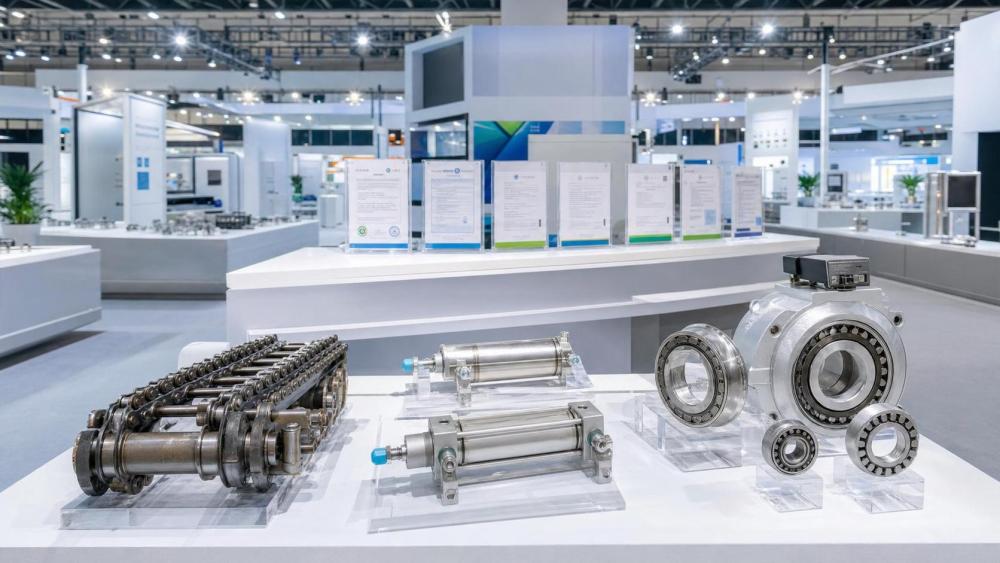
What the exhibition has confirmed
The event will take place from June 24 to June 26, 2026, at the National Exhibition and Convention Center (Shanghai). Confirmed product coverage includes Heavy Roller Chains, Stainless Steel Cylinders, and Smart Sensor Bearings. According to the event summary provided, the exhibition will, for the first time, set up a joint certification service station covering EU CE, UKCA, and North American UL, alongside an intelligent terminal for RCEP certificate-of-origin applications.
The same event summary states that these arrangements are aimed at addressing core concerns raised by overseas buyers, especially around compliance, low-carbon certification in the form of EPD, and localized after-sales support. These are the confirmed facts available from the input and form the basis for interpreting the event’s industry relevance.
Why this matters across the supply chain
For export-oriented manufacturers, compliance is moving closer to the sales front end
Analysis shows that manufacturers in the covered categories may feel the impact first in quotation, documentation, and pre-shipment preparation rather than only in production. When certification and origin-related tools are brought directly into the exhibition setting, buyer conversations can shift earlier toward market-entry readiness. What deserves closer attention is whether product presentation, technical files, and customer communication are already aligned with CE, UKCA, UL, and EPD-related expectations referenced in the event summary.
For trading companies and sourcing teams, transaction risk may be judged more strictly
From an industry perspective, trading firms and procurement teams are likely to read this development as a practical reminder that overseas demand is not limited to price and lead time. The influence may appear in supplier screening, document completeness, and the ability to respond quickly to buyer questions on compliance and origin status. In this context, the exhibition’s service setup suggests that documentary readiness is becoming a more visible part of commercial competitiveness.
For service providers, support capability becomes part of export execution
Observably, supply-chain and business-service providers may also be affected because the event summary highlights localized after-sales support alongside certification and low-carbon requirements. This means the service side of export business may receive more scrutiny, especially where customers expect not only a compliant product but also a clearer support path after delivery. The business impact may therefore extend beyond factory operations into certification support, trade documentation, and customer response mechanisms.
Practical issues companies should watch now
Separate confirmed requirements from evolving buyer expectations
Companies should distinguish between what the event has explicitly introduced and what still needs verification in specific transactions. The confirmed element is the presence of a joint certification service station and an RCEP origin application terminal at the exhibition. The open question, which requires ongoing attention, is how individual overseas buyers will translate compliance, EPD, and after-sales expectations into supplier selection and order conditions.
Review documentation readiness for priority product lines
For businesses involved in Heavy Roller Chains, Stainless Steel Cylinders, or Smart Sensor Bearings, the immediate operational focus is likely to be document readiness. That includes checking whether product-related certification materials, origin documentation, and customer-facing explanatory materials are organized well enough for faster discussion and follow-up during or after the exhibition.
Pay attention to low-carbon communication, not only technical compliance
The event summary specifically mentions EPD, which suggests that some overseas conversations may involve environmental documentation in addition to market-access compliance. Companies should therefore watch whether customers are asking only for mandatory conformity materials or also for low-carbon evidence as part of procurement evaluation. The distinction matters because the commercial response, internal coordination, and document workflow may differ.
Prepare for after-sales questions earlier in the export cycle
Because localized after-sales support is explicitly identified as a buyer concern, firms may need to prepare clearer responses before orders are finalized rather than after shipment. This does not confirm any new rule by itself, but it does indicate that service capability may become part of earlier buyer assessment in relevant export discussions.
How this signal should be read at this stage
Analysis shows that this development is better understood as a market signal than as a completed industry shift. The confirmed facts do not prove that all export transactions in these categories are already being reshaped in the same way. However, the exhibition’s decision to introduce certification and origin-service tools on site suggests that compliance, EPD, and after-sales support are becoming more central topics in commercial engagement, especially where overseas buyers are involved.
It is more appropriate to understand this as a directional indicator with practical relevance: the discussion around export readiness is moving closer to the point where products are displayed, evaluated, and shortlisted. That does not automatically change every company’s immediate business outcome, but it does raise the importance of preparation in the product, documentation, and service layers of export work.
A development worth watching beyond the exhibition floor
In summary, the June 24 opening of the 2026 Shanghai Fastener Professional Exhibition matters because it combines product coverage with visible support for certification, origin processing, and low-carbon communication. For the industry, the more useful reading is not that a final result has been reached, but that buyer expectations around export execution are being articulated more clearly in a trade-show setting.
At the current stage, this is best viewed as an actionable industry signal that deserves continued observation. The near-term significance lies in how companies prepare documentation, communicate compliance status, and position after-sales support around export-facing product lines, rather than in assuming a uniform market outcome.
Basis of this article and what still needs verification
This article is generated based on the user-provided news title, event date, and event summary. The specific official source link was not provided in the input, so the details should continue to be verified against official event announcements, company disclosures, industry association updates, authoritative media reporting, and relevant standards or certification documents where applicable.
For follow-up observation, the most relevant points are whether later official statements add operational details on the certification service station, the RCEP application terminal, and how compliance, EPD, and localized after-sales support are further described in relation to participating businesses and overseas buyer needs.
Want to dive deeper into these market dynamics, or need data-driven support for your next business move? Drop a line below and let the analysts at PCTS provide customized insights.
We respect your privacy. Your information is strictly confidential.
Related News
- 00
0000-00
How sealing technology reduces contamination in semiconductor manufacturing - 00
0000-00
Where to install vibration sensors on rotating machinery - 00
0000-00
NTSB Probe Finds Boeing Warned of MD-11 Engine Bearing Risk Years Earlier - 00
0000-00
How to size pneumatic grippers for packaging system integration - 00
0000-00
How to size alloy steel power transmission chains for heavy loads
Weekly Insights
Stay ahead with our curated technology reports delivered every Monday.