





Industrial Chain Drive Systems: Key Checks Before Selection
Selecting industrial chain drive systems requires more than matching load and speed.
A chain drive that looks acceptable on paper can still fail early in service.
The real decision depends on torque variation, shock loading, lubrication limits, alignment quality, and maintenance conditions.
That is why industrial chain drive systems should be evaluated as operating systems, not isolated parts.
In practical terms, good selection reduces downtime, stabilizes power transmission, and lowers lifetime replacement cost.
The checks below help turn a basic sizing exercise into a more reliable selection process.
Start With the Real Duty Profile
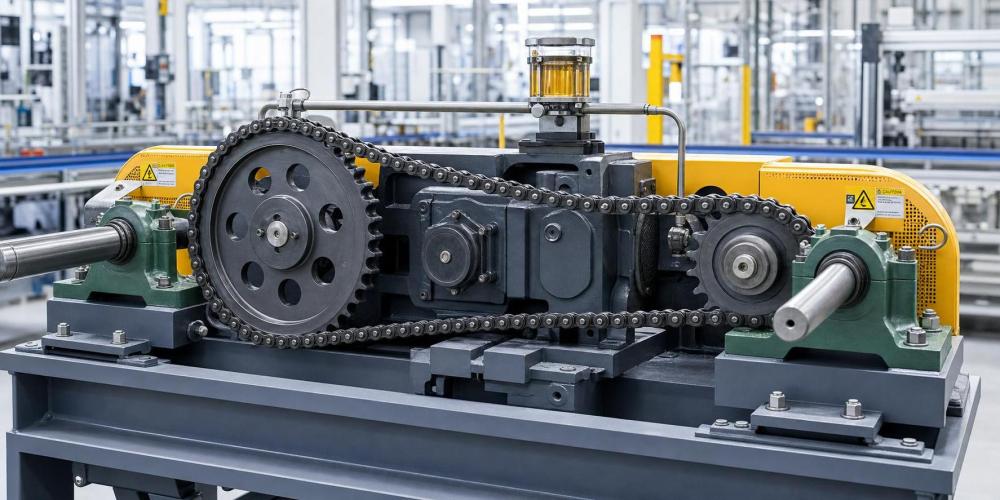
Many selection mistakes begin with incomplete operating data.
Industrial chain drive systems must be checked against the real duty profile, not just rated motor power.
That profile should include starting torque, stopping frequency, daily running hours, speed changes, and load peaks.
A conveyor with frequent restarts behaves very differently from a steady rotating shaft.
The same applies to lifting systems, packaging machines, kilns, and agricultural equipment.
Before comparing chain types, confirm these basic inputs:
- Nominal power and peak transmitted power
- Input speed and required output speed
- Load cycle pattern across one shift or one batch
- Start-stop frequency and reversal demand
- Ambient temperature, dust, moisture, and chemicals
This first check sets the direction for every later decision on pitch, strand count, material grade, and lubrication method.
Verify Torque, Shock, and Service Factor
Torque demand is often treated too simply during early evaluation.
For industrial chain drive systems, average torque is only one part of the picture.
Shock loads from jams, uneven feed, impact transfer, or sudden acceleration can dominate failure risk.
This is where service factor matters.
If the application has heavy shock, the selected chain should carry that reality with a suitable safety margin.
Ignoring that margin may produce fast elongation, roller damage, or premature sprocket wear.
A practical review should answer three questions.
- What is the maximum torque during startup, upset, or blockage?
- How often do these events happen in normal production?
- Can the chain and sprocket set absorb those peaks without unstable wear?
When industrial chain drive systems are used in crushers, pallet lines, mixers, or heavy handling, this check becomes even more important.
Check Center Distance and Wrap Geometry
Geometry has a direct effect on chain life and transmission stability.
Industrial chain drive systems should never be selected by chain size alone.
Center distance, sprocket tooth count, shaft layout, and chain wrap all influence smooth engagement.
Too few teeth on a small sprocket can increase polygonal action and vibration.
Excessive center distance can add sag, unstable tracking, and tension problems.
Insufficient wrap can reduce load sharing between engaged teeth.
A better selection review includes these geometry checks:
- Minimum sprocket tooth count for smoother articulation
- Adequate chain wrap on the smaller sprocket
- Center distance range that supports adjustment and tension control
- Space for guards, lubrication access, and inspection
This also helps avoid last-minute layout conflicts during machine integration.
Match Chain Type to Environment and Wear Mode
Not all industrial chain drive systems fail for the same reason.
In one plant, wear comes from abrasive dust.
In another, corrosion, washdown exposure, or poor lubrication is the main problem.
That means chain type should match the dominant wear mode.
For dusty bulk handling, hardened pins and bushings may matter more than cosmetic corrosion resistance.
For food or chemical areas, stainless options or protected coatings may become necessary.
For hot zones, heat stability and lubricant survival should be checked together.
Typical evaluation points include:
This step brings industrial chain drive systems closer to the real production environment, which is where value is actually created or lost.
Review Lubrication Before You Finalize the Selection
Lubrication is one of the most underestimated selection filters.
Many industrial chain drive systems are chosen first, then lubrication is treated as an afterthought.
That sequence usually creates reliability problems.
Chain wear mainly develops at the pin and bushing interface.
If lubricant cannot reach that zone consistently, wear rate rises quickly.
A proper review should consider lubricant type, application method, contamination control, and available maintenance intervals.
Ask these practical questions before approval:
- Can manual lubrication be applied at the right frequency?
- Would drip, bath, or automatic lubrication be more reliable?
- Will dust, water, or heat quickly break down the lubricant?
- Is there enough guarding access for inspection and reapplication?
If lubrication is difficult, the selected industrial chain drive systems may need a different chain grade or a revised layout.
Confirm Alignment Tolerance and Shaft Support Quality
Even a correctly sized chain can perform poorly when alignment is weak.
Industrial chain drive systems rely on stable shaft support and accurate sprocket positioning.
Misalignment increases side loading, accelerates tooth wear, and can produce uneven elongation.
In severe cases, the chain may climb teeth or derail.
This is more common when frames lack stiffness or bearings are underspecified.
During evaluation, check the entire power path.
That includes bearings, shaft deflection, mounting tolerances, and adjustment methods.
When industrial chain drive systems are part of larger transmission assemblies, alignment discipline becomes a system-level issue.
Evaluate Maintenance Access and Replacement Economics
Selection should support maintenance reality, not ideal workshop conditions.
Some industrial chain drive systems are technically suitable but impractical to service in the installed position.
That usually leads to skipped inspection, delayed tension correction, and unplanned outages.
A useful evaluation goes beyond purchase price.
It should estimate installation effort, lubrication labor, spare chain availability, and sprocket replacement timing.
In actual operations, total cost of ownership is driven by stoppage risk more than unit part cost.
Useful checkpoints include:
- Can tension be adjusted without major disassembly?
- Is visual wear inspection possible during routine shutdowns?
- Are replacement chains and matching sprockets globally available?
- Will maintenance crews need special tools or unusual training?
These questions often separate a workable solution from a costly one.
Use a Short Pre-Selection Checklist
Before final approval, a short checklist helps validate industrial chain drive systems in a structured way.
It also reduces the chance of missing a hidden risk.
- Confirm real torque peaks, not only nominal power.
- Check shock severity and assign a realistic service factor.
- Review center distance, wrap angle, and sprocket tooth count.
- Match chain material and design to the main wear mechanism.
- Verify lubrication method under actual site constraints.
- Inspect alignment tolerance, shaft stiffness, and bearing support.
- Estimate maintenance access and lifecycle replacement cost.
When this checklist is completed early, industrial chain drive systems can be selected with stronger confidence and fewer downstream corrections.
Final Decision Comes From System Fit
The best industrial chain drive systems are not simply the strongest or the cheapest.
They are the ones that fit the machine, the environment, and the maintenance model.
From a decision standpoint, that fit matters more than catalog claims alone.
A disciplined review of torque, geometry, wear mode, lubrication, alignment, and service access can prevent expensive failure patterns.
For industrial applications under demanding duty, this approach leads to better reliability and smarter component selection.
Use these checks as a practical decision framework before locking in the final specification.
Want to dive deeper into these market dynamics, or need data-driven support for your next business move? Drop a line below and let the analysts at PCTS provide customized insights.
We respect your privacy. Your information is strictly confidential.
Related News
- 00
0000-00
How to check vibration analysis software for sensor compatibility - 00
0000-00
IndexBox Forecasts 3.8% Annual Growth for Global Radial Seals Market Through 2035 - 00
0000-00
How to assess the chemical compatibility of FFKM sealing sheets - 00
0000-00
IndexBox Forecasts 3.6% Annual Growth for Construction Bearings Market - 00
0000-00
When do hydraulic components require an export license?
Weekly Insights
Stay ahead with our curated technology reports delivered every Monday.