





How to Improve Torque Transmission Reliability in High-Load Drives
In high-load drives, even small losses in alignment, lubrication, or fit can weaken torque transmission reliability and trigger costly downtime.
Stable power transfer depends on how couplings, belts, chains, bearings, shafts, and seals perform together under load, shock, heat, and contamination.
That is why torque transmission reliability is never about one part alone.
It comes from system design, installation control, material choice, lubrication strategy, and condition monitoring working in the same direction.
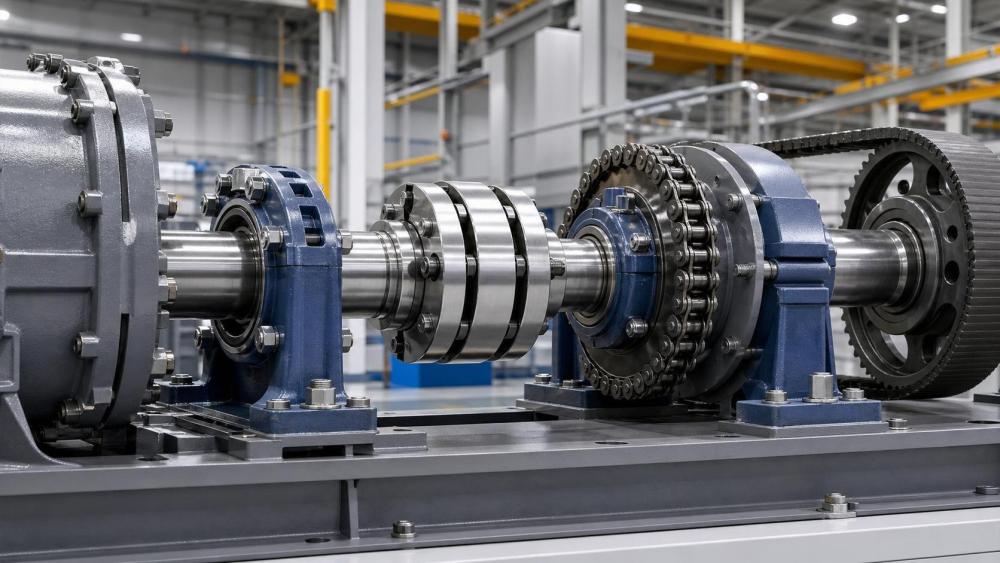
In practical engineering reviews, the main question is simple: will the drive maintain predictable torque transfer through peak load cycles without fast wear or unstable motion?
The answer usually sits in a few critical decisions, and each one affects efficiency, service life, and maintenance risk.
Start with the Real Load Profile
Improving torque transmission reliability starts with understanding the true load, not only the rated load on paper.
Many drive failures happen because systems are selected for average torque while actual operation includes shock peaks, reversing cycles, and overload events.
A high-load drive may look stable in steady duty, yet behave very differently during startup, emergency stops, or jam release conditions.
This is where technical evaluation needs more than nominal power data.
- Check continuous torque, peak torque, and torque fluctuation range.
- Review speed variation, start-stop frequency, and reversing duty.
- Identify impact loads from crushers, mixers, conveyors, or heavy indexing equipment.
- Assess ambient heat, dust, washdown exposure, and chemical contact.
A realistic load profile gives a much better foundation for torque transmission reliability because it connects component selection with actual operating stress.
Choose the Right Transmission Element
Different transmission elements manage torque in different ways, so torque transmission reliability depends on matching the element to the application.
Chains are often preferred where high torque, compact layouts, and harsh conditions matter.
Belts can reduce noise and absorb shock, but slip, heat buildup, and tension loss must be controlled carefully.
Gear couplings, disc couplings, and elastomeric couplings each bring different trade-offs in misalignment tolerance, stiffness, and damping.
The best option is not the strongest-looking option.
It is the option that keeps torque transmission reliability stable across load peaks, service intervals, and environmental exposure.
Control Alignment, Fit, and Shaft Support
Even premium components lose torque transmission reliability if alignment and shaft support are poorly managed.
Misalignment increases vibration, local stress, and edge loading.
Over time, that causes coupling fatigue, chain elongation, belt tracking problems, bearing overheating, and seal wear.
More importantly, poor shaft fit can create micro-movement at interfaces, which reduces transmitted torque and damages keyways or hubs.
- Verify angular, parallel, and axial alignment during installation.
- Confirm shaft and bore tolerances match the torque class.
- Check bearing support stiffness and housing rigidity.
- Review baseplate flatness and soft-foot correction.
In many high-load drives, torque transmission reliability improves quickly when alignment practices move from visual checks to laser-based measurement and documented tolerance control.
Lubrication Is a Reliability Multiplier
Lubrication has a direct effect on torque transmission reliability because it controls friction, wear, temperature, and surface fatigue.
This applies not only to bearings, but also to chains, gear couplings, and other loaded contact surfaces.
In high-load service, the wrong viscosity or a contaminated lubricant can erase the expected safety margin very fast.
A good lubrication plan should cover film strength, oxidation stability, washout resistance, and re-lubrication intervals.
- Match lubricant grade to speed, load, and temperature.
- Prevent particle ingress with proper sealing and handling.
- Avoid over-greasing, which raises heat and churning losses.
- Use oil analysis or grease condition checks where downtime costs are high.
From a total cost perspective, lubrication is one of the lowest-cost ways to protect torque transmission reliability in demanding drive systems.
Do Not Ignore Bearings and Seals
A drive may be chosen for couplings, belts, or chains, but bearings and seals often decide the real torque transmission reliability outcome.
Bearings keep shafts stable under radial and axial loads.
Seals protect lubricant and block contamination.
If either one underperforms, torque transfer becomes less predictable, and wear accelerates across the full drive train.
This is especially true in mining, steel, ports, pulp, marine, and other sectors with heavy shock loads and dirty environments.
- Select bearing internal clearance for thermal and load conditions.
- Use seal materials suited to heat, oil, water, and chemicals.
- Review labyrinth, contact, or cassette sealing based on contamination risk.
- Confirm bearing life calculations reflect real duty factors.
In real-world evaluations, strong bearing support and sealing discipline often separate a durable drive from a frequently repaired one.
Monitor the Early Signals of Torque Loss
Torque transmission reliability usually declines before a full failure appears.
The more useful approach is to catch those signals early and act before damage spreads.
Common warning signs include rising vibration, temperature drift, belt dust, chain stretch, coupling backlash, lubricant discoloration, and seal leakage.
These symptoms often point to friction increase, misalignment growth, or loss of stiffness inside the drive path.
Condition monitoring does not need to be overly complex to improve torque transmission reliability.
- Track vibration trends on bearings and couplings.
- Use temperature checks around housings and lubrication points.
- Inspect wear particles and lubricant condition routinely.
- Document tension, alignment, and backlash measurements over time.
When trend data is linked to maintenance timing, torque transmission reliability becomes easier to manage as a measurable performance target.
Evaluate Reliability Through Lifecycle Cost
A lower purchase price does not always improve torque transmission reliability in high-load drives.
In fact, lower-grade materials, loose tolerances, and weak sealing often increase shutdown frequency and replacement cost.
A better evaluation model includes total operating hours, maintenance labor, lubricant consumption, spare parts turnover, and production loss risk.
This shifts the discussion from unit cost to functional reliability.
For procurement and engineering teams, that also makes supplier comparison more meaningful.
- Ask for fatigue data, material specifications, and surface treatment details.
- Review application cases under similar torque and contamination conditions.
- Check compliance, traceability, and replacement support capacity.
- Compare recommended maintenance intervals, not only product dimensions.
This is where torque transmission reliability becomes a strategic decision, not just a component choice.
A Practical Path to Better Drive Performance
If the goal is better torque transmission reliability, the most effective path is systematic rather than reactive.
Start with real load data.
Then align transmission element selection, shaft support, lubrication, sealing, and monitoring around that reality.
In high-load drives, reliability is built through many small technical decisions that reinforce one another.
When those decisions are made early, torque transmission reliability improves, maintenance becomes more predictable, and long-term operating cost usually falls.
For any new project or retrofit, the smartest next step is to review where torque is most likely to degrade, then address those weak points before failure makes the decision for you.
Want to dive deeper into these market dynamics, or need data-driven support for your next business move? Drop a line below and let the analysts at PCTS provide customized insights.
We respect your privacy. Your information is strictly confidential.
Related News
- 00
0000-00
How sealing technology reduces contamination in semiconductor manufacturing - 00
0000-00
Where to install vibration sensors on rotating machinery - 00
0000-00
NTSB Probe Finds Boeing Warned of MD-11 Engine Bearing Risk Years Earlier - 00
0000-00
How to size pneumatic grippers for packaging system integration - 00
0000-00
How to size alloy steel power transmission chains for heavy loads
Weekly Insights
Stay ahead with our curated technology reports delivered every Monday.