





Choosing a heavy-duty chain transmissions distributor is rarely a routine sourcing task. In industrial environments, chain performance influences uptime, load stability, maintenance intervals, and replacement cost. That is why comparison should go beyond price sheets and focus on technical fit, supply resilience, and lifecycle value.
A strong evaluation framework also reflects a broader system view. Heavy-duty chains work alongside sprockets, bearings, couplings, seals, lubrication practices, and monitoring routines. In that context, the right distributor supports not only product delivery, but also better decisions across transmission reliability and MRO planning.
What a heavy-duty chain transmissions distributor really provides
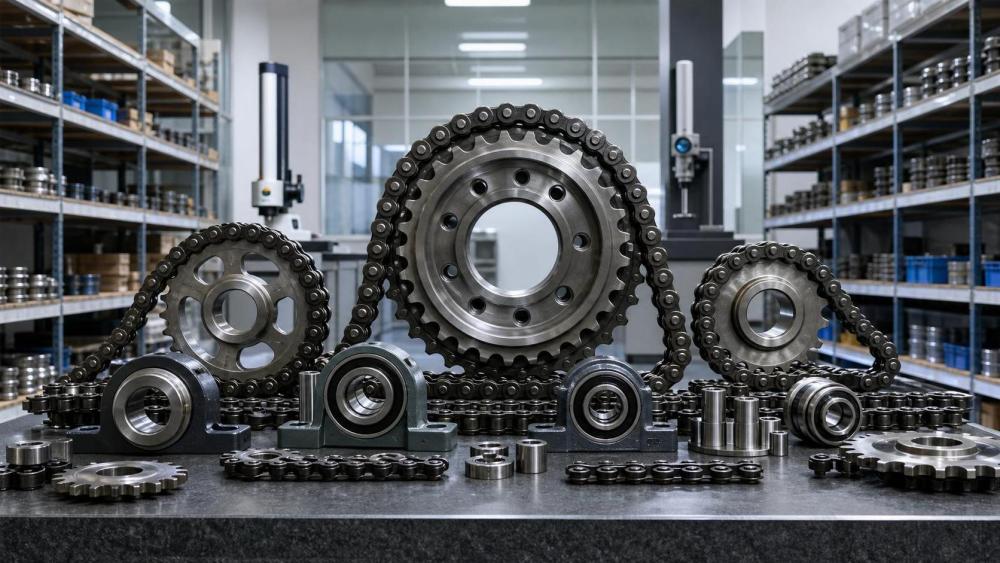
The term heavy-duty chain transmissions distributor should not be understood as a simple trading role. In practice, the distributor often acts as the connection point between manufacturers, application requirements, inventory availability, and post-sale support.
For demanding operations, chain selection depends on load profile, shock conditions, speed, contamination exposure, lubrication access, and maintenance discipline. A capable distributor helps interpret those variables and align them with suitable chain types, materials, heat treatment, and matching sprocket recommendations.
This matters across many sectors. Bulk handling, mining, agriculture, food processing, packaging, wood products, wastewater equipment, and heavy machinery all rely on chain transmission systems, but they do not fail for the same reasons.
Some applications struggle with abrasive wear. Others face washdown, corrosion, high impact loading, or alignment problems. Comparing distributors effectively means understanding whether they recognize those differences or only sell by catalog number.
Why distributor comparison has become more important
Industrial buying has changed. Price pressure remains constant, yet downtime costs are now easier to measure and harder to excuse. A lower chain price can become expensive when lead times slip, wear accelerates, or technical mismatches cause repeated replacement.
There is also more emphasis on traceability, compliance, and cross-border sourcing risk. When supply networks tighten, a heavy-duty chain transmissions distributor with weak stock visibility or unclear origin control can create hidden exposure.
At the same time, maintenance teams increasingly connect component decisions to total cost of ownership. Platforms such as PCTS highlight this broader industrial logic by linking chains with bearings, seals, lubrication, monitoring, and spare parts strategy rather than treating them as isolated items.
That wider perspective helps explain why distributor selection deserves structured review. A chain may be one line item, but its effect often spreads across service intervals, conveyor availability, and downstream equipment reliability.
The most useful comparison criteria
The strongest comparisons combine technical, commercial, and operational factors. Looking at only one dimension tends to hide risk.
Product depth and application match
A credible heavy-duty chain transmissions distributor should offer more than standard roller chain references. Product depth may include engineered chains, attachment chains, corrosion-resistant variants, high-strength options, matched sprockets, and wear-resistant solutions.
More important than range is fit. Ask whether the distributor can explain why one chain design suits shock loading while another performs better under continuous contamination or long center distances.
Technical support quality
Support quality becomes visible in the questions a distributor asks. Useful discussions include tensile strength, working load, articulation wear, lubrication regime, sprocket condition, alignment tolerance, and expected maintenance intervals.
If the conversation stays at unit price and delivery date, the evaluation is incomplete. A strong distributor helps reduce failure causes before the first order is placed.
Supply continuity and lead-time realism
Supply stability is one of the most practical decision factors. This includes inventory depth, reorder discipline, factory relationships, alternate sourcing paths, and communication accuracy during shortages.
Reliable distributors give realistic lead-time commitments. They also clarify which items are stocked, which are assembled to order, and which depend on upstream production scheduling.
Documentation and quality assurance
Industrial buyers often need more than a data sheet. Depending on the use case, evaluation may include material certificates, inspection records, dimensional consistency, heat treatment control, and traceability procedures.
A heavy-duty chain transmissions distributor that can document quality clearly usually creates fewer approval delays and fewer disputes when failures are investigated.
Commercial transparency
Commercial terms should be easy to compare. That means clear quotations, packaging standards, warranty scope, Incoterms where relevant, and straightforward policies for returns or nonconforming goods.
Ambiguity often signals future friction. Transparent distributors make total landed cost easier to estimate and procurement risk easier to control.
How application context changes the ranking
Not every buying case should score distributors the same way. In a low-volume replacement environment, immediate availability may outweigh customization. In a production line redesign, technical collaboration may be the deciding factor.
For corrosive settings, material and coating guidance deserve more attention. In dirty conveying systems, wear resistance and lubrication advice become more valuable. For high-load intermittent equipment, fatigue resistance and shock-load understanding matter more.
This is where broader industrial intelligence becomes useful. PCTS often frames transmission components within a larger reliability model, connecting chain wear with bearing load paths, sealing effectiveness, contamination control, and service planning.
That approach improves distributor comparison because it keeps the discussion tied to operating conditions instead of isolated catalog specifications.
Questions that reveal distributor strength quickly
A short, targeted review often exposes more than a long generic questionnaire. The goal is to test whether the heavy-duty chain transmissions distributor understands performance risk in real service.
- How do you recommend chain selection for shock loading, contamination, or corrosion?
- Which chain and sprocket combinations are normally stocked, and which are special order?
- What documentation supports material quality, dimensional control, and origin traceability?
- How do you handle field failures, wear analysis, and root-cause review?
- Can you support lifecycle planning with replacement intervals or spare stocking suggestions?
The most informative answers are usually specific, conditional, and practical. Generic confidence statements are far less useful than examples tied to load, environment, and service history.
Where comparison mistakes usually happen
One common mistake is comparing chain products without comparing the support structure behind them. Two quotes may look similar while the actual supply risk is very different.
Another mistake is overlooking adjacent components. A chain issue may actually begin with worn sprockets, poor lubrication, seal failure, or misalignment in connected bearings and shafts.
A third mistake is treating all distributors as equally global or equally local. Some offer strong export coordination and documentation control. Others are better in emergency domestic response. The better choice depends on how the equipment is supported.
Finally, many reviews ignore post-purchase responsiveness. A heavy-duty chain transmissions distributor may appear competitive during bidding, yet become difficult when technical clarification or replacement action is needed.
Building a practical next step
A useful comparison process starts with a simple requirement map. List operating load, speed, environment, maintenance conditions, replacement urgency, documentation needs, and preferred stocking model.
Then compare each heavy-duty chain transmissions distributor against that map rather than against a generic supplier checklist. This makes the decision more relevant and easier to defend internally.
It also helps to score short-term and long-term value separately. Immediate price and availability matter, but so do wear life, technical support, traceability, and supply continuity across future orders.
When more context is needed, industry resources like PCTS can support a broader review by connecting chain transmission choices with bearings, seals, fluid power systems, condition monitoring, and total ownership economics. That wider lens often leads to better sourcing judgment.
The next move is not to rush toward the lowest quote. It is to refine the operating requirement, test distributor answers against real application conditions, and compare who can support performance over time, not just delivery on paper.
Related News
- 00
0000-00
How does seal service life affect the total cost of ownership? - 00
0000-00
Schaeffler to Cut 3,460 Jobs and Close Five European Plants - 00
0000-00
How does system size affect the price of a belt drive system? - 00
0000-00
2026 Hannover Shanghai Industrial Fair and PTC ASIA Open in Shanghai - 00
0000-00
Why do roller bearings fail prematurely in wind turbines?
Weekly Insights
Stay ahead with our curated technology reports delivered every Monday.