





How to Choose Heavy Duty Chain Systems for High-Load Conveyor Lines
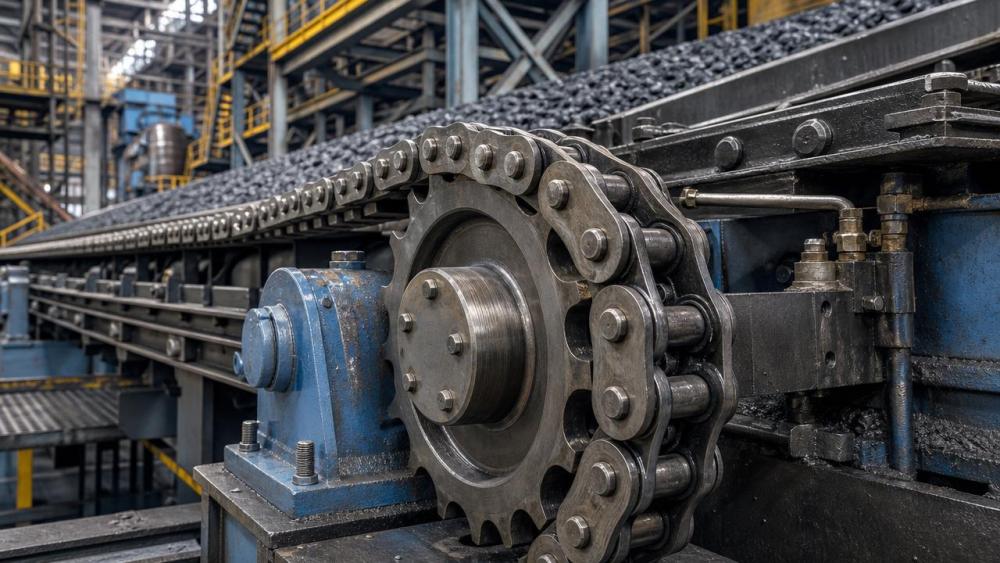
Choosing heavy duty chain systems for high-load conveyor lines starts with the real duty cycle, not a catalog headline.
Load rating matters, but it is only one part of a reliable selection process.
In actual conveyor applications, failures usually come from combined stress, contamination, poor lubrication, or misalignment.
That is why heavy duty chain systems should be evaluated as working systems, not just as isolated chain products.
For high-load conveyor lines, the decision should connect chain design, sprockets, lubrication practice, environment, and expected maintenance windows.
A good choice reduces unplanned downtime, stabilizes throughput, and protects total cost of ownership over the full service life.
This guide explains how to compare heavy duty chain systems in a practical and decision-focused way.
Start with the Real Conveyor Load Profile
The first step is defining what the conveyor really asks the chain to do every hour.
Average load is useful, but peak load often decides whether heavy duty chain systems survive or fail early.
Map the payload, conveyor speed, start-stop frequency, incline angle, product accumulation, and drive arrangement.
Then identify transient events such as jams, reverse motion, emergency stops, and impact loading at transfer points.
These short events can create shock loads far above the nominal chain pull.
In practice, many oversized chains still fail because the application profile was incomplete.
- Record working load and maximum load separately.
- Check startup torque and braking torque.
- Review conveyor length, center distance, and support layout.
- Estimate daily operating hours and annual utilization.
This creates the baseline for comparing heavy duty chain systems with more confidence.
Evaluate Chain Strength Beyond Breaking Load
Breaking load is easy to compare, but it is not the best decision metric.
For heavy duty chain systems, allowable working load and fatigue resistance usually matter more.
A conveyor chain may never approach its ultimate strength, yet still wear out or crack under repeated cycles.
Look closely at plate thickness, pin diameter, bushing quality, heat treatment, and manufacturing consistency.
Material quality is especially important in high-load conveyor lines with frequent starts and torque variation.
Ask suppliers for fatigue data, wear test data, and application references in similar duty conditions.
If that information is vague, selection risk increases quickly.
- Prefer working load data over marketing claims.
- Confirm safety factors for continuous service.
- Check pin and bushing hardness balance.
- Review dimensional tolerances for pitch accuracy.
This is where premium heavy duty chain systems often justify a higher upfront price.
Match Wear Resistance to the Operating Environment
Wear is the most common life-limiting factor in heavy duty chain systems.
The key question is not whether wear happens, but how fast it progresses in your environment.
Dust, abrasive fines, moisture, chemicals, and temperature swings all change the wear pattern.
In cement, mining, steel, and bulk handling lines, abrasive contamination can dominate chain life.
In food, washdown, or corrosive processing lines, corrosion resistance may become the main selection factor.
This also means coating choices, material upgrades, and sealing details should be discussed early.
Recent procurement trends show more buyers asking for application-specific chain performance, not generic industrial chain options.
When comparing heavy duty chain systems, the environment often separates acceptable options from reliable ones.
Review Lubrication Needs and Maintenance Reality
Lubrication is still one of the fastest ways to improve chain life.
At the same time, it is one of the most common reasons heavy duty chain systems underperform in the field.
The problem is usually not lubrication theory.
The problem is whether the maintenance team can actually apply the right lubricant at the right interval.
A chain that needs frequent manual relubrication may look economical on paper but fail in real operations.
That is why lubrication access, automatic systems, and contamination control deserve attention during chain selection.
- Confirm lubricant compatibility with temperature and chemicals.
- Check whether relubrication points are accessible.
- Evaluate automatic lubrication for long conveyors.
- Estimate downtime needed for routine chain care.
A realistic maintenance plan often makes one heavy duty chain system clearly better than another.
Do Not Separate the Chain from the Sprocket System
Heavy duty chain systems perform only as well as their sprocket match.
Even a strong chain will wear quickly if the sprocket profile, tooth count, or alignment is wrong.
Pitch mismatch creates impact at engagement points.
Worn sprockets accelerate chain elongation and can trigger uneven loading across the conveyor width.
For twin-strand or multi-strand arrangements, synchronization becomes even more important.
This is a common issue in high-load conveyor lines carrying pallets, castings, coils, or bulk material.
When reviewing suppliers, ask whether they provide a complete transmission view or only the chain itself.
Integrated support usually lowers installation risk and startup correction costs.
Compare Options Using Total Cost, Not Unit Price
A low purchase price can make heavy duty chain systems look attractive during sourcing.
But high-load conveyor lines punish low-cost decisions when uptime is critical.
The better comparison uses lifecycle cost.
Include chain replacement frequency, relubrication labor, production losses, spare stock, and associated sprocket wear.
This approach is becoming more important as maintenance budgets face tighter scrutiny.
A slightly higher-spec chain may reduce shutdowns enough to create a much lower annual operating cost.
- Compare expected service life under the same duty profile.
- Assign a cost to each hour of conveyor downtime.
- Estimate lubrication labor and consumable usage.
- Include sprocket replacement and alignment correction.
- Score supplier support and delivery reliability.
This gives a more accurate ranking of heavy duty chain systems for decision-making.
Supplier Questions That Reveal Real Capability
Supplier evaluation should go beyond a standard product sheet.
The strongest suppliers of heavy duty chain systems can explain why a design fits a certain conveyor risk profile.
They should also discuss wear mechanisms, lubrication limits, and expected inspection intervals.
Useful questions include the following.
- What similar high-load conveyor lines use this chain?
- What is the recommended working load for continuous duty?
- How does the chain perform under shock loading?
- Which wear components usually limit service life?
- What lubrication interval is realistic in the field?
- Can matching sprockets and technical support be supplied together?
Clear answers usually indicate stronger engineering support and lower procurement risk.
A Practical Selection Framework
A practical decision process keeps selection focused and avoids chasing isolated specifications.
Start by defining load profile, shock events, and operating hours.
Then screen heavy duty chain systems by working load, fatigue strength, and wear resistance.
After that, compare lubrication demands, sprocket compatibility, and maintenance practicality.
Finally, rank options by lifecycle cost and supplier support quality.
For organizations tracking industrial transmission, MRO strategy, and reliability economics, this systems view is increasingly important.
It aligns mechanical performance with uptime goals, spare planning, and procurement control.
If the application is severe, request field references and validate assumptions before final release.
The best heavy duty chain systems are not simply the strongest. They are the ones that stay reliable, maintainable, and cost-effective in your exact conveyor conditions.
Want to dive deeper into these market dynamics, or need data-driven support for your next business move? Drop a line below and let the analysts at PCTS provide customized insights.
We respect your privacy. Your information is strictly confidential.
Related News
- 00
0000-00
How sealing technology reduces contamination in semiconductor manufacturing - 00
0000-00
Where to install vibration sensors on rotating machinery - 00
0000-00
NTSB Probe Finds Boeing Warned of MD-11 Engine Bearing Risk Years Earlier - 00
0000-00
How to size pneumatic grippers for packaging system integration - 00
0000-00
How to size alloy steel power transmission chains for heavy loads
Weekly Insights
Stay ahead with our curated technology reports delivered every Monday.