





How Heavy Equipment Power Transmission Systems Affect Uptime
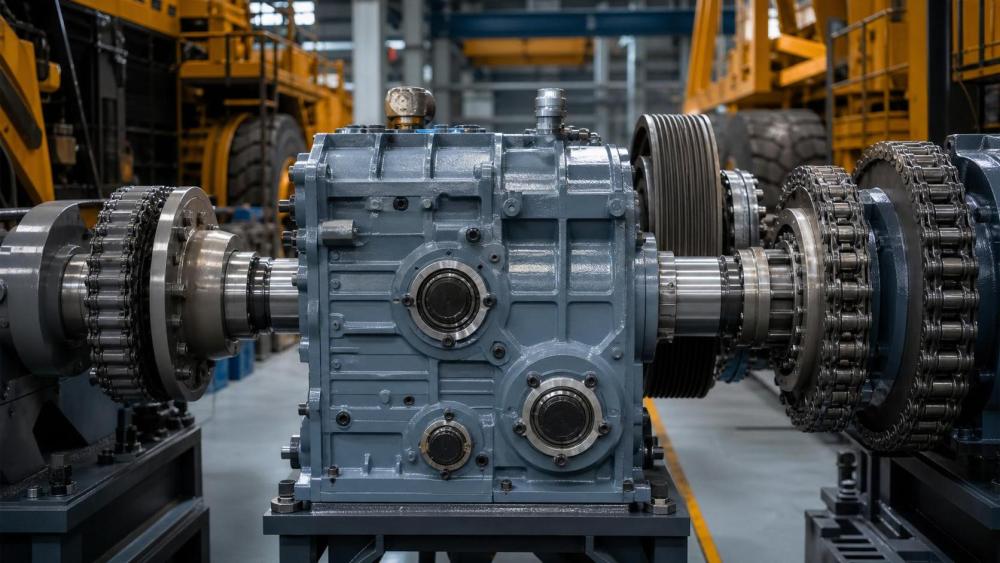
For project managers balancing cost, schedule, and machine reliability, uptime is never an abstract metric. It shapes delivery dates, labor efficiency, repair budgets, and customer confidence.
That is why power transmission systems for heavy equipment deserve closer attention. They directly influence torque flow, shock absorption, wear rate, heat buildup, and maintenance timing.
In real operations, failures rarely start as dramatic breakdowns. More often, they begin with misalignment, lubrication loss, belt slip, chain elongation, coupling fatigue, or bearing overload.
When those issues sit inside poorly matched power transmission systems for heavy equipment, downtime accelerates. Spare parts use rises, production windows shrink, and recovery becomes more expensive.
The good news is practical. Better component selection, maintenance planning, and operating discipline can improve uptime without redesigning an entire fleet.
This article explains where transmission losses begin, what warning signs matter most, and how to improve operational continuity in demanding heavy-duty environments.
Why Transmission Design Has a Direct Impact on Uptime
Power transmission systems for heavy equipment connect the engine or motor to real work. That includes lifting, digging, hauling, crushing, rotating, feeding, and positioning loads.
If torque transfer is unstable, the whole machine feels it. Output drops, stress spikes, vibration spreads, and upstream components begin wearing faster than expected.
A reliable transmission setup does more than move power. It manages speed variation, dampens shock, supports alignment, and protects critical bearings, seals, shafts, and gear interfaces.
This also means transmission quality affects maintenance intervals. A better-matched system often extends service life across connected assemblies, not only within the transmission itself.
From a project perspective, that changes planning assumptions. Fewer unscheduled stops create more predictable labor allocation, material flow, and site utilization.
Core components that influence uptime
- Bearings support rotational accuracy and reduce friction under heavy radial and axial loads.
- Chains and sprockets handle high-load transfer where harsh conditions can damage lighter drive solutions.
- Industrial belts help manage vibration, but incorrect tension quickly reduces efficiency and service life.
- Couplings compensate for misalignment and help isolate shock between connected rotating assemblies.
- Seals and O-rings prevent lubricant loss and contamination that can silently shorten component life.
Where Power Transmission Systems for Heavy Equipment Commonly Fail
Most uptime problems come from a combination of load reality and maintenance gaps. Equipment may be rated correctly on paper, yet perform poorly in the field.
One common issue is underestimating shock load. Heavy starts, sudden stops, uneven material feed, and impact loading can overload transmission parts very quickly.
Misalignment is another frequent cause. Even small shaft deviation increases heat, vibration, and fatigue across bearings, couplings, chains, and seals.
Lubrication breakdown also drives hidden failures. Wrong viscosity, contamination, over-greasing, or extended service intervals reduce film protection where it matters most.
Belt-driven systems face slip, glazing, and tension instability. Chain systems often suffer from elongation, poor lubrication, and sprocket wear in abrasive environments.
In many cases, the root problem is not a bad part. It is a mismatch between application load, duty cycle, environment, and transmission architecture.
Early warning signals to monitor
- Rising vibration near gearboxes, couplings, or driven shafts.
- Repeated seal leakage or unusual lubricant discoloration.
- Unexpected belt dust, chain noise, or visible wear debris.
- Higher motor current, lower output speed, or unstable torque response.
- Frequent retensioning, recurring alignment correction, or shortened bearing life.
How to Choose Better Power Transmission Systems for Heavy Equipment
Selection should begin with the actual duty cycle, not catalog ratings alone. That sounds obvious, but it is still where many uptime losses begin.
Look at peak torque, startup conditions, reversing frequency, operating temperature, contamination risk, and maintenance access. These factors define what the system must survive.
For example, power transmission systems for heavy equipment in mining or aggregate operations usually need stronger resistance to dust, shock, and washdown exposure.
In port machinery or material handling, smoother speed control and lower vibration may matter more because scheduling precision affects the whole loading sequence.
This is where component integration matters. Bearings, seals, couplings, chains, and belts should be evaluated as one uptime system, not isolated purchase items.
Practical selection priorities
- Use service factors that reflect shock load and real starting conditions.
- Prefer sealing solutions suited to dust, moisture, chemicals, or temperature swings.
- Match lubrication strategy to operating hours and site maintenance capability.
- Select coupling designs that tolerate realistic alignment variation.
- Evaluate replacement lead times, not only upfront component price.
Maintenance Strategies That Protect Operational Continuity
Even strong power transmission systems for heavy equipment will not protect uptime without disciplined maintenance. The biggest gains usually come from consistency, not complexity.
Condition monitoring is becoming more useful because it catches changes before failure. Vibration trends, oil analysis, thermal checks, and acoustic data now support better maintenance timing.
Still, predictive tools work best when paired with basic control. Clean lubrication, accurate tensioning, proper alignment, and seal inspection remain essential in the field.
From a planning angle, the goal is simple. Move from reactive replacement to scheduled intervention before secondary damage expands the repair scope.
A practical maintenance framework
Lifecycle Cost, Procurement Risk, and Better Decision-Making
It is tempting to compare transmission parts by unit price. In heavy-duty applications, that approach often hides the real cost driver, which is unplanned downtime.
Power transmission systems for heavy equipment should be evaluated by lifecycle performance. That includes service hours, maintenance labor, spare inventory, failure consequence, and restart time.
A lower-cost chain, belt, bearing, or seal may increase procurement efficiency today, yet create repeated stoppages over the next operating cycle.
More buyers now review supplier capability in a broader way. They ask about material quality, process control, load testing, sealing performance, and replacement support.
That shift is important because transmission reliability depends on consistency. One weak component can interrupt the performance of the full mechanical path.
Questions worth asking suppliers
- What operating loads and environmental conditions were considered in the design?
- How does the product handle contamination, shock, and thermal variation?
- What inspection, testing, and traceability controls are in place?
- What is the expected maintenance interval in similar applications?
- How available are replacement parts across regions and project phases?
Turning Uptime Improvement Into an Action Plan
The biggest uptime gains usually come from a few targeted changes. Start by identifying the most failure-prone transmission points across critical machines.
Next, compare operating reality against design assumptions. Check load spikes, contamination exposure, lubrication practice, alignment quality, and component replacement history.
Then review whether current power transmission systems for heavy equipment are selected for uptime or only for initial budget control. That distinction often reveals the next best move.
In practical terms, stronger uptime comes from better matching, better monitoring, and better supplier decisions. None of that requires guesswork when failure patterns are documented well.
For organizations managing complex assets, transmission reliability is not a narrow technical issue. It is a planning lever that affects output stability, maintenance cost, and project confidence.
If uptime matters, review your power transmission systems for heavy equipment as a complete performance chain. That is often where the most durable improvements begin.
Want to dive deeper into these market dynamics, or need data-driven support for your next business move? Drop a line below and let the analysts at PCTS provide customized insights.
We respect your privacy. Your information is strictly confidential.
Related News
- 00
0000-00
How to check vibration analysis software for sensor compatibility - 00
0000-00
IndexBox Forecasts 3.8% Annual Growth for Global Radial Seals Market Through 2035 - 00
0000-00
How to assess the chemical compatibility of FFKM sealing sheets - 00
0000-00
IndexBox Forecasts 3.6% Annual Growth for Construction Bearings Market - 00
0000-00
When do hydraulic components require an export license?
Weekly Insights
Stay ahead with our curated technology reports delivered every Monday.