





When standard chain data stops matching the real load case
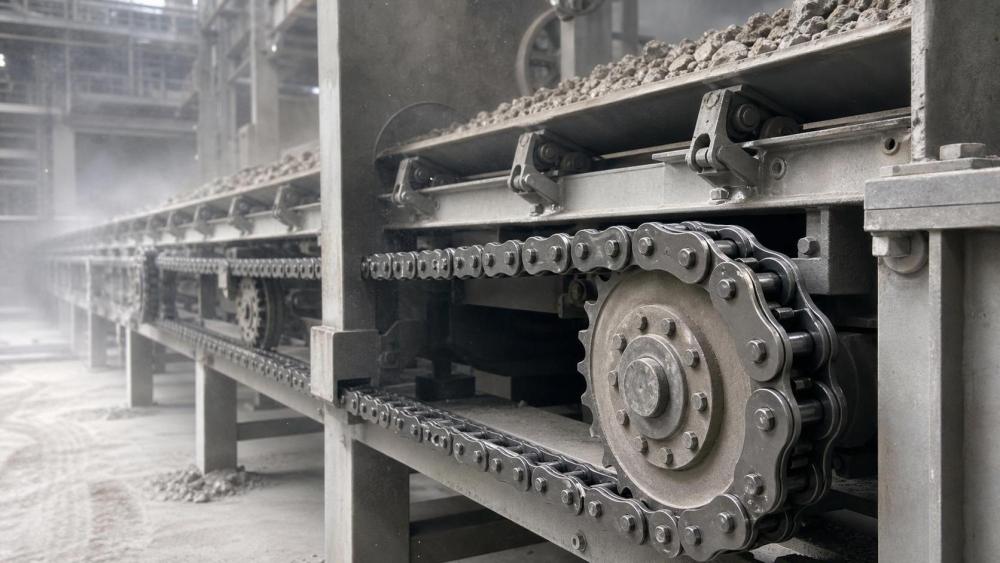
DIN heavy-duty transmission chains are rarely selected because a catalog says “heavy-duty” sounds safer.
They usually enter the discussion after standard chain sets begin showing stretch, cracked rollers, unstable engagement, or frequent replacement.
In practical machinery systems, the issue is not only peak strength.
It is the gap between nominal specification and actual operating behavior.
That gap becomes wider in conveyors, bulk handling lines, mixers, lifting systems, agricultural equipment, and dusty processing plants.
PCTS often frames this topic within a larger transmission context.
Chain performance is shaped by sprocket quality, bearing support, lubrication control, sealing strategy, and maintenance discipline.
That is why DIN heavy-duty transmission chains should be judged as part of a working system, not as an isolated spare part.
The real question is simple: when are standard specs no longer enough?
The answer changes with shock intensity, duty cycle, contamination level, alignment stability, and how expensive unplanned stoppage becomes over time.
Actual operating scenes create very different chain demands
Two machines may use the same pitch and similar speed, yet need very different chain construction.
One runs smoothly indoors with stable loads.
The other starts under load, faces impact, and works beside abrasive dust or moisture.
Both can appear acceptable on paper.
Only one survives long enough to justify its installed cost.
This is where DIN heavy-duty transmission chains matter.
They are typically considered when fatigue resistance, pin and bush durability, plate strength, and wear behavior become more important than simple dimensional compliance.
In heavy industrial applications, selection also depends on how the chain interacts with lubrication intervals, guards, tensioning devices, and replacement planning.
A chain used in a cement conveyor does not fail for the same reason as one used in a timber line or steel processing unit.
So the selection logic should not be identical either.
Where shock load changes the decision first
Impact-driven systems are one of the clearest signals that standard specs may be insufficient.
Typical examples include stone handling, scrap conveyors, start-stop processing lines, and feeders with irregular material inflow.
Here, the average transmitted load may look moderate.
The real damage comes from repeated spikes.
DIN heavy-duty transmission chains are often preferred because reinforced plates and stronger pin-bush interfaces cope better with that repeating impact pattern.
The decision point is not only “Can it pull?”
It is “Can it absorb repeated shock without rapid elongation or crack initiation?”
Continuous torque service creates a different kind of stress
Some systems do not experience violent impact, yet still exceed the comfort zone of standard chain designs.
Mixers, kiln drives, heavy conveying sections, and material dosing lines often run for long hours under sustained torque.
In these cases, wear progression becomes the central concern.
DIN heavy-duty transmission chains help when stable articulation under load matters more than occasional peak strength.
Long service periods also make lubrication retention, roller hardness, and compatibility with sprocket tooth geometry more critical.
A chain that “works” for weeks can still be the wrong choice if elongation forces early shutdowns every quarter.
The environment often decides faster than the load chart
Harsh surroundings frequently turn a standard chain problem into an MRO cost problem.
Dust, slurry, washdown cycles, corrosive residues, or poor lubrication access can shorten useful life even when rated load appears acceptable.
This is one reason PCTS links chain selection with seals, condition monitoring, and maintenance economics.
The chain does not operate alone.
It sits inside a reliability network.
The table shows why identical chain pitch does not mean identical suitability.
DIN heavy-duty transmission chains become valuable when the environment accelerates failure modes that standard ratings barely describe.
Different applications call for different judgment priorities
In bulk handling, sudden loading and contamination usually dominate the decision.
The chain must tolerate irregular feed patterns and limited cleaning opportunities.
Here, DIN heavy-duty transmission chains are often assessed against wear resistance and shock durability together.
In packaging or automated transfer equipment, the picture changes.
Load may be lower, but cycle frequency is high and downtime is expensive.
That makes dimensional stability, noise behavior, and consistent engagement more important than raw breaking force.
In agricultural or outdoor machinery, contamination, lubrication loss, and seasonal overloads often matter more than clean-room precision.
A heavier chain is not always the answer.
Sometimes the better answer is improved lubrication access, better guarding, or a revised sprocket arrangement used with DIN heavy-duty transmission chains.
Why similar machines can justify different upgrades
A mixer in a controlled plant and a mixer in a mineral processing line may share power ratings.
Their chain decisions can still differ because duty reality differs.
One sees stable loading and predictable maintenance access.
The other sees dust ingress, shock starts, and delayed shutdown permission.
This is why a proper review considers operating rhythm, contamination pattern, and maintenance behavior alongside DIN standard dimensions.
Common misjudgments before upgrading chain specification
One frequent mistake is comparing only tensile values.
That can hide the real source of failure, which may be articulation wear, poor alignment, or insufficient lubrication delivery.
Another misjudgment is treating all “heavy-duty” environments as the same.
A wet cleaning line, a dusty quarry, and a slow kiln feed all punish the chain differently.
A third issue is focusing on purchase price while ignoring stoppage cost.
DIN heavy-duty transmission chains usually make sense when replacement labor, production interruption, and collateral sprocket damage cost more than the chain upgrade itself.
It is also easy to miss system compatibility.
If sprockets are worn, shafts misaligned, or bearings unstable, even a stronger chain may underperform.
- Check whether failure is caused by overload, wear, contamination, or poor support conditions.
- Compare current elongation trend against maintenance interval, not only against final failure point.
- Review sprockets, lubrication hardware, nearby seals, and bearing support before changing chain grade.
- Use lifecycle cost logic when deciding if DIN heavy-duty transmission chains are justified.
A practical way to match DIN heavy-duty transmission chains to the job
A useful selection process starts with load pattern rather than product code.
Identify whether the application is dominated by shock, sustained torque, abrasive wear, corrosion, or limited service access.
Then map those conditions to chain construction, lubrication approach, and sprocket condition.
This is where cross-component thinking adds value.
PCTS consistently highlights that transmission reliability depends on interaction between chains, bearings, seals, drives, and maintenance data.
That broader view helps avoid over-specifying the chain while under-fixing the system.
Before final selection, confirm a short list of site-specific conditions.
- Actual startup behavior, including loaded starts and emergency stops.
- Contamination type, from dry fines to sticky residue or chemical washdown.
- Lubrication frequency, access constraints, and realistic maintenance discipline.
- Sprocket wear state, alignment quality, and shaft support condition.
- Acceptable replacement window and cost of unscheduled downtime.
When those points are clear, the case for DIN heavy-duty transmission chains becomes much easier to justify or reject.
That is a better outcome than upgrading by habit.
The next step is building a better application picture
DIN heavy-duty transmission chains are most effective when they solve a specific operating mismatch, not when they are used as a generic safety margin.
The strongest decisions come from comparing actual duty conditions, wear history, lubrication reality, and downtime exposure.
For complex industrial systems, that comparison should also include adjacent components and maintenance constraints.
A practical next move is to document the load pattern, environment, service interval, and current failure mode for each chain-driven section.
Once that picture is clear, it becomes much easier to decide where DIN heavy-duty transmission chains deliver real reliability gains and where other transmission improvements will matter more.
Related News
- 00
0000-00
Where are axial piston pumps used in mining equipment? - 00
0000-00
Embodied AI Robotics and Drive Control Forum Held in Shanghai - 00
0000-00
How does seal service life affect the total cost of ownership? - 00
0000-00
Schaeffler to Cut 3,460 Jobs and Close Five European Plants - 00
0000-00
How does system size affect the price of a belt drive system?
Weekly Insights
Stay ahead with our curated technology reports delivered every Monday.