





Why matching alloy steel sprocket and coupling systems starts with the real drive condition
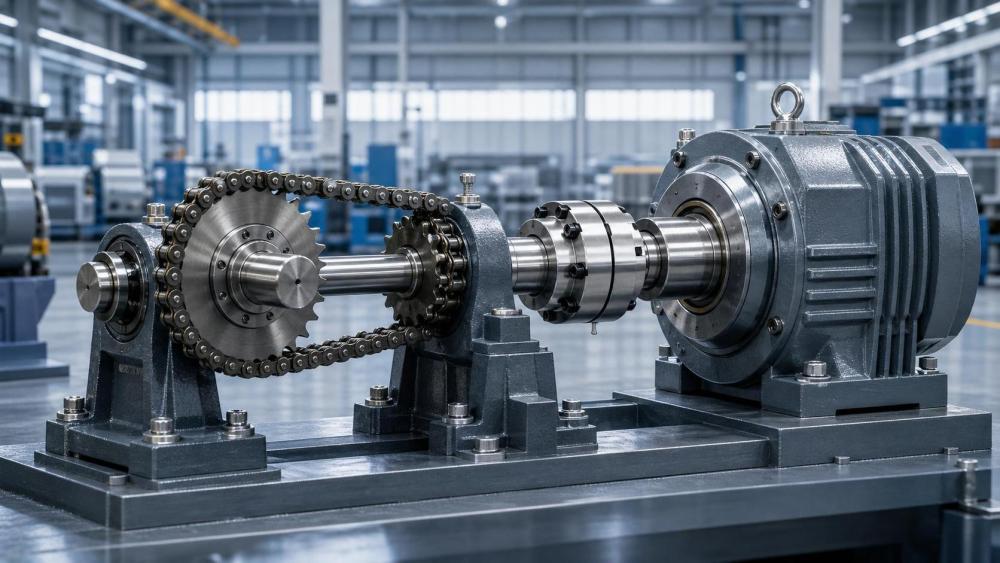
Selecting alloy steel sprocket and coupling systems is rarely a simple catalog exercise. The same torque rating can behave very differently once speed variation, shock load, shaft alignment, lubrication limits, and maintenance access enter the picture.
In actual industrial service, these systems sit inside a wider chain of bearings, shafts, gearboxes, motors, seals, and monitoring points. That is why a matching decision affects not only power transmission, but also vibration, wear rate, spare part frequency, and unplanned stoppage.
For platforms such as PCTS, the value of discussing alloy steel sprocket and coupling systems lies in this cross-component view. The most useful comparison is not product against product alone, but drive train against operating condition.
A slow conveyor with abrasive dust, a packaging line with repeated starts, and a heavy mixer with torque spikes may all use alloy steel sprocket and coupling systems. Their matching logic is not the same.
Different applications change the meaning of torque, speed, and service life
The first practical question is not material grade alone. It is whether the drive sees steady load, cyclic load, impact load, or rapid speed changes. Those conditions redefine what “sufficient strength” really means.
In stable conveying duty, wear progression often matters more than peak torque. In crushing, mixing, or bulk handling, momentary overload and backlash control can dominate selection. In automated equipment, alignment tolerance and response smoothness may decide service life faster than nominal capacity.
This is where alloy steel sprocket and coupling systems need to be judged as working assemblies. Tooth hardness, hub design, coupling flexibility, bore fit, chain engagement, and lubrication path should be reviewed together rather than in isolation.
Where steady-duty conveyors usually focus their attention
Conveyors in mining support, grain handling, material transfer, or warehouse automation often run for long hours with moderate but persistent load. Here, alloy steel sprocket and coupling systems are expected to resist gradual wear and maintain consistent tracking.
The common mistake is to size only for motor output. In practice, chain articulation, contamination, sprocket tooth profile retention, and coupling compensation for small misalignment usually have greater influence on replacement intervals.
A harder sprocket surface may improve durability, but if the coupling is too rigid, bearing loads can rise and offset the gain. In this setting, balanced stiffness is often more valuable than chasing the highest hardness figure.
Why mixers, crushers, and heavy process lines need another approach
Heavy processing equipment sees torque peaks that do not appear clearly in average load data. Startup under load, jam release, reversed motion, and irregular feed create short bursts that challenge alloy steel sprocket and coupling systems differently.
In these conditions, higher safety factors, shock-absorbing coupling behavior, and robust hub connections become more important. A sprocket with strong metallurgy alone cannot protect shafts and bearings if torsional shock is passed downstream without damping.
The better judgment method is to examine peak events, not just average operation. If the drive frequently recovers from overload, service life will depend on fatigue resistance and connection integrity more than simple wear allowance.
High-speed and stop-start lines usually expose hidden matching problems
Packaging, indexing, light assembly, and automated handling lines often look less severe than heavy process equipment. Yet alloy steel sprocket and coupling systems in these lines can fail early when acceleration cycles are ignored.
Repeated starts and stops increase dynamic load, especially when inertia changes between batches. A coupling that is acceptable at constant speed may generate heat, backlash issues, or positioning error during rapid cycling.
For these lines, the selection focus often shifts toward rotational balance, response consistency, backlash control, and alignment retention after maintenance. Surface durability still matters, but motion quality becomes part of service life.
This is also where condition monitoring has value. Vibration trend, temperature rise, and wear debris observations can show whether alloy steel sprocket and coupling systems are undersized, too rigid, or simply mismatched to duty cycles.
Harsh environments change the selection priorities more than many teams expect
Dust, washdown, chemical splash, humidity, and temperature fluctuation can shift failure modes away from pure torque capacity. In these cases, alloy steel sprocket and coupling systems need to be evaluated with sealing, lubrication retention, and corrosion behavior in mind.
A sprocket specified for strength may still wear rapidly if abrasive fines enter the chain interface. A coupling chosen for torque may degrade if elastomer or protective surfaces are incompatible with cleaning chemicals or heat cycles.
Because PCTS covers seals, bearings, transmission parts, and MRO intelligence together, it makes sense to treat the environment as a system-level variable. Harsh duty often requires changes in inspection interval, lubrication plan, and replacement strategy, not only material selection.
A practical comparison of common operating differences
This comparison helps explain why one specification sheet cannot answer every installation. The application decides whether wear, fatigue, motion stability, or environmental resistance is the true limiting factor.
Common misjudgments appear when similar machines are treated as identical
One frequent error is assuming that machines with the same motor power need the same alloy steel sprocket and coupling systems. Duty cycle, shaft spacing, start frequency, and product variability often make that assumption unreliable.
Another mistake is separating transmission parts from the rest of the drive line. If bearing rigidity, shaft support, lubrication cleanliness, or seal performance are weak, even a well-made sprocket and coupling combination may show early distress.
Cost is another source of misjudgment. A lower initial price can look attractive, but frequent chain replacement, alignment correction, or unscheduled shutdown often raises total ownership cost beyond the saving.
- Do not size only by rated torque without checking startup and transient peaks.
- Do not choose maximum rigidity when shaft movement is unavoidable.
- Do not treat dusty, wet, and clean environments as maintenance-equivalent.
- Do not compare alloy steel sprocket and coupling systems without reviewing service intervals.
A more reliable way to match alloy steel sprocket and coupling systems before installation
A practical selection path starts with load pattern, not part number. Record normal torque, startup torque, speed range, stop frequency, alignment condition, contamination level, and allowable downtime before narrowing component options.
Then review how the chosen alloy steel sprocket and coupling systems interact with adjacent components. Bearing loads, shaft finish, lubricant choice, guarding, and seal protection should support the same service target.
When the application is uncertain, a staged validation approach works better than broad assumptions. Compare expected wear points, inspect coupling temperature after startup, and track vibration trends during the first operating cycle.
This kind of structured check aligns with the wider PCTS perspective. Transmission parts perform best when evaluated alongside tribology, condition monitoring, maintenance economics, and the actual constraints of plant operation.
Useful next-step checks before finalizing a match
- Map the application by steady load, peak load, and speed variation.
- Confirm alignment limits and whether flexibility or torsional stiffness matters more.
- Review environmental exposure with lubrication and sealing conditions together.
- Estimate service life using maintenance access and replacement downtime, not material data alone.
- Use early inspection data to refine the final alloy steel sprocket and coupling systems choice.
The strongest matching decisions usually come from comparing real operating conditions across several drive scenarios. Once those differences are clear, torque, speed, and service life stop competing with each other and begin to support a more durable, better-controlled transmission strategy.
Want to dive deeper into these market dynamics, or need data-driven support for your next business move? Drop a line below and let the analysts at PCTS provide customized insights.
We respect your privacy. Your information is strictly confidential.
Related News
- 00
0000-00
How sealing technology reduces contamination in semiconductor manufacturing - 00
0000-00
Where to install vibration sensors on rotating machinery - 00
0000-00
NTSB Probe Finds Boeing Warned of MD-11 Engine Bearing Risk Years Earlier - 00
0000-00
How to size pneumatic grippers for packaging system integration - 00
0000-00
How to size alloy steel power transmission chains for heavy loads
Weekly Insights
Stay ahead with our curated technology reports delivered every Monday.