





Alloy Steel Heavy-Duty Chains: Key Wear Factors in High-Load Conveying
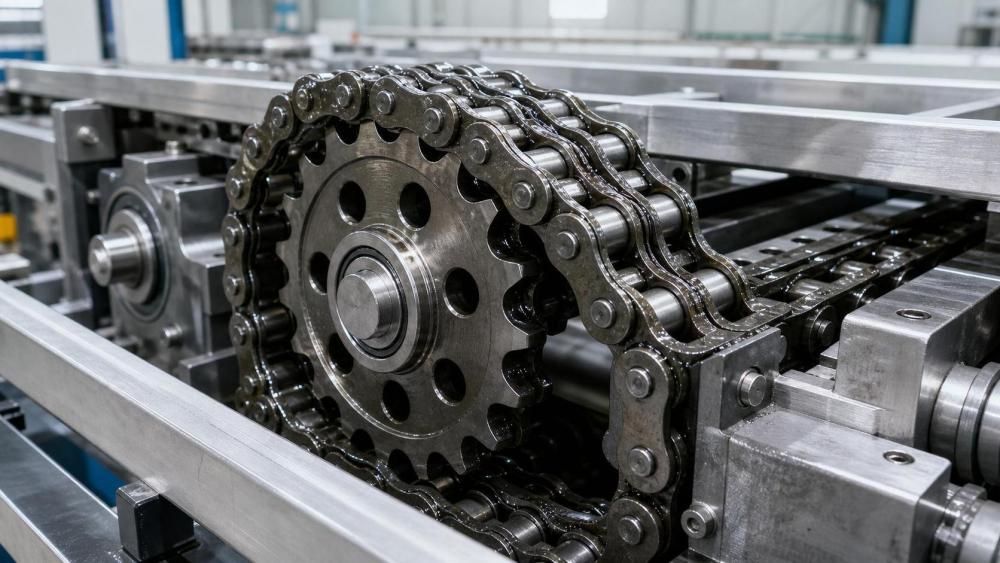
In high-load conveying systems, alloy steel heavy-duty chains carry more than motion. They protect uptime, stabilize torque transfer, and influence maintenance cost.
Even so, strong metallurgy alone does not prevent wear. Service life depends on lubrication quality, alignment accuracy, shock loading, contamination control, and sprocket compatibility.
For technical reviews, the real question is simple. Which wear factors shorten chain life fastest, and which checks reveal risk before failure appears?
This is where alloy steel heavy-duty chains deserve a closer look. Their performance is shaped by both material capability and system discipline.
Why wear starts inside the chain
Most visible wear is only the final symptom. The earlier damage often begins at the pin and bushing interface.
In alloy steel heavy-duty chains, articulation points see repeated sliding under pressure. That creates friction, micro-abrasion, and gradual material loss.
As internal clearances increase, pitch elongation follows. The chain may still run, but load sharing becomes uneven and sprocket engagement worsens.
This also means wear is rarely isolated. Internal joint wear often triggers roller impact, tooth stress, vibration, and accelerated fatigue elsewhere.
Core wear mechanisms to review
- Adhesive wear from insufficient lubricant film.
- Abrasive wear caused by dust, fines, or metal particles.
- Impact wear linked to shock loading and poor engagement.
- Corrosive wear in wet, chemical, or washdown environments.
- Fatigue cracking from repeated cyclic overload.
Lubrication is still the first life extender
If one factor dominates wear, it is lubrication. Many chain failures blamed on material quality actually begin with poor lubricant delivery.
Alloy steel heavy-duty chains need lubricant to reach loaded joints, not just coat outer plates. Surface shine is not proof of internal protection.
Viscosity must match speed, temperature, and contamination level. If oil is too light, the film collapses. If too heavy, penetration becomes limited.
From recent maintenance trends, automatic lubrication is gaining attention. The reason is practical. Consistent application usually beats occasional manual over-lubrication.
What to verify during evaluation
- Lubricant reaches the pin-bushing zone under operating conditions.
- Relubrication frequency matches duty cycle, not calendar assumptions.
- Oil type supports load, temperature, and washout resistance.
- Lubricant cleanliness is controlled during storage and application.
Alignment errors multiply wear faster than expected
Misalignment is often underestimated because the chain may keep running for months. Yet side loading steadily changes how force moves through the drive.
In alloy steel heavy-duty chains, parallel shaft error, sprocket offset, and frame distortion can all create uneven contact.
That uneven contact increases plate stress, roller skew, and tooth edge loading. Over time, wear becomes localized instead of distributed.
A stronger signal appears when one side of the sprocket shows polished edges. That usually points to alignment trouble, not random aging.
Common alignment checkpoints
- Sprocket faces sit in the same plane.
- Shaft center distance remains stable under load.
- Take-up systems do not force excessive tension.
- Support structures resist thermal and mechanical deflection.
Shock loading can defeat a good chain design
Not all loads are steady. Start-stop cycles, jam release, product drop, and reverse motion create spikes far above nominal ratings.
Alloy steel heavy-duty chains handle high working loads well, but repeated shock changes the wear pattern. Pins brinell, bushings deform, and fatigue accumulates faster.
This matters during specification reviews. A chain selected by average load alone may be undersized for dynamic events.
In actual operations, drives with soft-start control, overload protection, and smoother transfer zones usually show better wear performance.
Questions worth asking
- What is the peak transient load during startup or blockage?
- How often does the system index, reverse, or stop suddenly?
- Are shock absorbers, torque limiters, or VFD controls installed?
- Does the application include falling material or abrupt product transfer?
Contamination changes wear from gradual to aggressive
Dust, sand, scale, chips, and moisture turn normal articulation into abrasive grinding. This shift is one of the fastest ways to shorten chain life.
For alloy steel heavy-duty chains, contamination risk depends on enclosure quality, cleaning method, and process environment.
Dry particles cut surfaces. Water strips lubricant and promotes corrosion. Chemical exposure can attack both metal surfaces and lubricant chemistry.
This is why wear analysis should never stop at the chain itself. Surrounding process conditions usually explain the failure pattern.
Practical contamination controls
- Use guards and enclosures where debris is predictable.
- Select lubricants with suitable adhesion and contamination tolerance.
- Avoid washdown practices that drive water into articulating joints.
- Inspect nearby wear sources such as guides, chutes, and product fines.
Sprocket interaction often reveals hidden chain problems
Chains and sprockets wear as a system. Replacing one without reviewing the other often leads to early repeat failure.
When alloy steel heavy-duty chains elongate beyond tolerance, tooth engagement changes. Load concentrates near the tooth flank instead of distributing smoothly.
Poor tooth profile, incorrect hardness balance, and excessive runout add more stress. That can create impact entry, roller damage, and noise.
A useful review point is wear symmetry. If sprocket teeth show hooked profiles, the chain system has likely operated past its healthy replacement window.
Chain and sprocket review table
Material quality matters, but specification discipline matters more
It is tempting to solve every wear problem by demanding harder materials. That can help, but only within the right design balance.
Alloy steel heavy-duty chains perform best when heat treatment, surface hardness, core toughness, and dimensional accuracy work together.
If hardness rises without enough toughness, brittle damage becomes more likely. If fit tolerance drifts, lubrication and load sharing both suffer.
That is why technical comparison should include manufacturing consistency, process control, and wear test evidence, not only nominal breaking load.
Useful technical review criteria
- Pin and bushing hardness profile.
- Core toughness and impact resistance.
- Dimensional tolerance on pitch and fit.
- Traceable heat treatment and quality records.
- Application-specific wear data where available.
A practical evaluation approach for longer service life
The most effective reviews connect chain selection with operating reality. That means checking duty details before discussing catalog ratings.
For alloy steel heavy-duty chains, a solid evaluation usually combines five steps.
- Map real loads, including startup, shock, and upset events.
- Confirm lubrication method, access, and maintenance discipline.
- Measure alignment, tension, and sprocket condition together.
- Rate contamination severity and chemical exposure honestly.
- Compare supplier quality evidence beyond basic rating claims.
When these steps are done well, wear becomes more predictable. Replacement intervals improve, emergency downtime falls, and component decisions become easier to defend.
In the end, alloy steel heavy-duty chains deliver their value when the whole conveying system supports them. Better wear control starts with better evaluation, then continues through disciplined operation.
Want to dive deeper into these market dynamics, or need data-driven support for your next business move? Drop a line below and let the analysts at PCTS provide customized insights.
We respect your privacy. Your information is strictly confidential.
Related News
- 00
0000-00
How to check vibration analysis software for sensor compatibility - 00
0000-00
IndexBox Forecasts 3.8% Annual Growth for Global Radial Seals Market Through 2035 - 00
0000-00
How to assess the chemical compatibility of FFKM sealing sheets - 00
0000-00
IndexBox Forecasts 3.6% Annual Growth for Construction Bearings Market - 00
0000-00
When do hydraulic components require an export license?
Weekly Insights
Stay ahead with our curated technology reports delivered every Monday.