





ANSI Heavy-Duty Roller Chains: Key Checks Before Selection
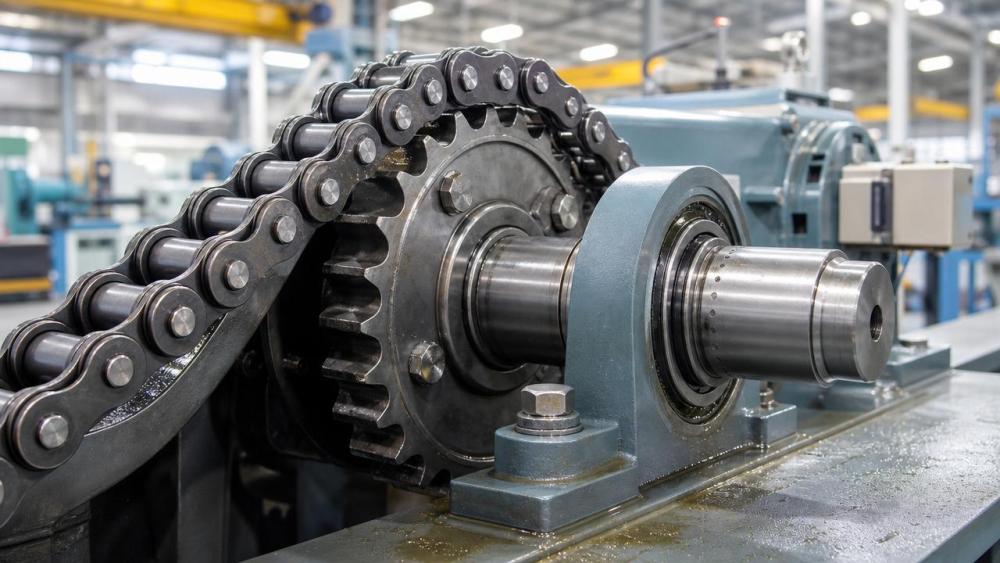
Selecting ANSI heavy-duty roller chains is not just about size or price. It affects uptime, load capacity, wear life, and maintenance cost across the full operating cycle.
Before placing an order, several technical checks deserve close attention. Load pattern, speed, lubrication, material quality, and sprocket fit all shape long-term performance.
In real purchasing work, mistakes usually happen before installation. A chain that looks acceptable on paper may fail early under shock, contamination, or poor alignment.
That is why ANSI heavy-duty roller chains should be reviewed as a system component, not as a stand-alone part. The chain, sprocket, lubrication plan, and duty cycle must match.
This guide walks through the key checks before selection. The goal is simple: reduce sourcing risk and improve equipment reliability after purchase.
Start With Operating Load, Not Catalog Size
The first screening step for ANSI heavy-duty roller chains is the actual working load. Catalog dimensions alone do not confirm suitability for the application.
Check the transmitted power, torque, shaft speed, center distance, and daily operating hours. These values create a more realistic basis for chain selection.
More importantly, separate average load from peak load. Many industrial drives run smoothly most of the time, then hit sudden spikes during startup or jamming.
If the application includes repeated shock, the service factor becomes critical. Heavy-duty roller chain selection should always include a margin for those real-world conditions.
- Confirm rated working load and allowable tensile load.
- Review startup torque and overload frequency.
- Check whether the machine runs continuously or intermittently.
- Ask for service factor guidance from the supplier.
A chain chosen only by pitch may meet installation needs, yet still wear too fast. That usually becomes visible as elongation, vibration, and unplanned replacement.
Check Shock, Speed, and Duty Cycle Together
ANSI heavy-duty roller chains behave differently under low-speed impact than under high-speed continuous motion. Both conditions can shorten life, but for different reasons.
Low-speed conveyors may create strong shock loads. High-speed drives may generate heat, articulation stress, and lubrication breakdown.
This is where selection decisions often become more nuanced. A stronger chain is helpful, but not enough if operating speed exceeds recommended limits.
Duty cycle also matters. Equipment running two shifts per day needs a different reliability threshold than backup machinery with occasional use.
- Classify the drive as smooth, moderate shock, or heavy shock.
- Record actual chain speed, not only motor speed.
- Estimate daily runtime and annual replacement expectation.
- Match these data points against supplier recommendations.
When these checks are skipped, chain performance becomes unpredictable. The result is often a lower purchase price, followed by a higher operating cost.
Review Material Quality and Heat Treatment Details
Not all ANSI heavy-duty roller chains are built to the same quality level. Material and heat treatment strongly influence fatigue strength and wear resistance.
Pins, bushings, rollers, and plates should be evaluated separately. A chain may look robust overall, while one weak component limits total service life.
Ask suppliers about alloy steel grade, hardening method, surface finish, and dimensional consistency. Good vendors should answer these questions clearly.
Heat treatment is especially important for pin and bushing contact surfaces. Poor hardness control often leads to rapid wear and chain elongation.
- Check whether critical parts are through-hardened or case-hardened.
- Request hardness range and inspection method.
- Review tolerance control for pitch accuracy.
- Confirm traceability, batch control, and quality records.
In procurement terms, this step helps separate commodity products from engineered heavy-duty roller chain solutions. That difference often determines maintenance frequency later.
Do Not Overlook Lubrication and Environment
Lubrication has a direct effect on ANSI heavy-duty roller chains. It reduces pin-bushing wear, lowers friction, and helps protect against corrosion and contamination.
Yet lubrication planning is often treated as an afterthought. In harsh service, that is one of the most expensive mistakes.
Start by reviewing the operating environment. Dust, water, chemicals, abrasive particles, and high temperatures all influence chain type and lubricant choice.
For wet or corrosive areas, corrosion-resistant options may be necessary. For dirty environments, sealing strategy and relubrication frequency become more important.
In many cases, chain failure is actually lubrication failure. Looking at environment early makes ANSI heavy-duty roller chains easier to evaluate correctly.
Verify Sprocket Compatibility and Alignment
Even high-quality ANSI heavy-duty roller chains can fail early with the wrong sprocket. Pitch match alone is not enough for a reliable drive system.
Tooth profile, hardness, concentricity, and alignment all affect engagement quality. Poor sprocket condition accelerates chain wear and increases vibration.
This becomes even more important in replacement projects. A new chain installed on worn sprockets rarely delivers its expected service life.
- Confirm ANSI pitch and roller dimensions.
- Inspect sprocket tooth wear before reorder.
- Check shaft parallelism and center distance.
- Review whether chain and sprocket should be replaced together.
A practical sourcing rule is simple: if chain elongation is visible and tooth hooking is obvious, pairing old sprockets with new ANSI heavy-duty roller chains is risky.
Assess Supplier Capability Beyond Unit Price
Price matters, but it should not dominate heavy-duty roller chain selection. Low initial cost can hide larger risks in downtime, warranty disputes, and inconsistent batches.
A stronger evaluation looks at supplier capability, technical support, and documentation quality. These signals often predict whether sourcing will stay stable over time.
Useful questions include production capacity, testing standards, export experience, lead time stability, and response speed for nonstandard requirements.
It also helps to ask for application references. A supplier familiar with mining, conveying, agriculture, or bulk handling usually gives more reliable guidance.
- Request dimensional and material inspection reports.
- Confirm compliance with relevant ANSI chain standards.
- Review sample consistency before large orders.
- Evaluate spare parts and after-sales support.
For industrial buyers, good sourcing decisions usually come from comparing total operating value, not only purchase quotations.
A Practical Pre-Purchase Checklist
Before final approval, use a short checklist to validate ANSI heavy-duty roller chains against the actual application. This avoids rushed decisions during urgent maintenance cycles.
- Is the chain selected by real load and service factor?
- Are shock conditions and operating speed clearly defined?
- Have material, hardness, and manufacturing quality been verified?
- Is lubrication suitable for the environment and duty cycle?
- Are sprockets compatible, aligned, and in acceptable condition?
- Can the supplier provide stable quality and technical support?
When all six points are checked, heavy-duty roller chain selection becomes much more controlled. That reduces emergency replacements and improves asset planning.
In today’s market, the better choice is rarely the cheapest line item. It is the ANSI heavy-duty roller chain that keeps the system running with fewer surprises.
A careful review before purchase saves time after installation. If the application data is complete, selecting ANSI heavy-duty roller chains becomes faster, safer, and easier to justify internally.
Want to dive deeper into these market dynamics, or need data-driven support for your next business move? Drop a line below and let the analysts at PCTS provide customized insights.
We respect your privacy. Your information is strictly confidential.
Related News
- 00
0000-00
IndexBox Forecasts 3.8% Annual Growth for Global Radial Seals Market Through 2035 - 00
0000-00
How to assess the chemical compatibility of FFKM sealing sheets - 00
0000-00
IndexBox Forecasts 3.6% Annual Growth for Construction Bearings Market - 00
0000-00
When do hydraulic components require an export license? - 00
0000-00
How to size modular pneumatic valve systems for adequate airflow
Weekly Insights
Stay ahead with our curated technology reports delivered every Monday.