





Why does a fluid power efficiency consultant matter before costs become visible?
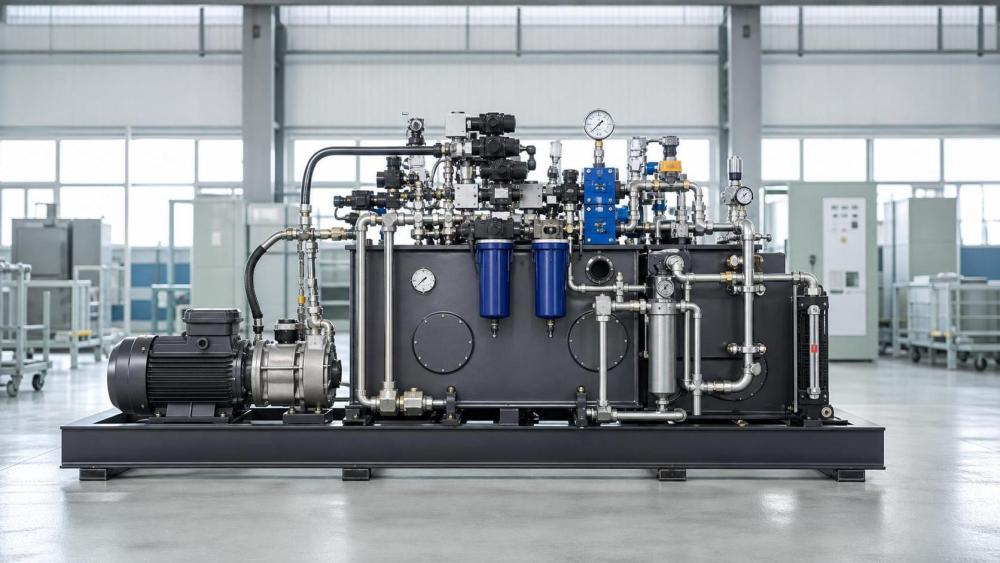
Energy waste in hydraulic systems rarely appears as a single dramatic failure.
More often, it shows up as heat, pressure loss, seal wear, unstable cycle times, and repeated service calls.
That is why a fluid power efficiency consultant becomes relevant earlier than many companies expect.
The role is not limited to technical troubleshooting.
A good consultant translates hydraulic inefficiency into operating cost, downtime exposure, and capital planning priorities.
In practical terms, the work often starts with pumps, motors, cylinders, valves, filters, seals, and monitoring points.
Then it expands into lifecycle cost questions that affect maintenance budgets and replacement timing.
This matters across broad industrial settings, from mobile equipment and factory automation to heavy machinery and MRO-intensive plants.
PCTS regularly covers this wider picture by linking fluid power performance with bearings, transmission parts, sealing reliability, and condition monitoring.
That combined view is useful because hydraulic losses rarely stay confined to one component family.
When is the right time to hire a fluid power efficiency consultant?
The short answer is before inefficiency becomes normalized.
Many sites live with noisy pumps, hot reservoirs, slow actuators, and drifting pressure because output still looks acceptable.
That is usually the expensive stage.
A fluid power efficiency consultant is worth considering when several of these signals appear together:
- Electricity use rises while production volume stays flat.
- Hydraulic oil runs hotter than historical norms.
- Pump or valve replacements happen more often than expected.
- Leakage, contamination, or seal failures keep returning.
- Downtime reports mention hydraulic instability but not root cause.
- A plant expansion or retrofit is being scoped.
The last point deserves attention.
Hiring a consultant during project planning is often cheaper than fixing oversizing, poor line design, or weak contamination control later.
A consultant can also help decide whether the real answer is hydraulic optimization, partial electrification, or a better maintenance discipline.
What costs can a fluid power efficiency consultant actually uncover?
The visible cost is power consumption, but that is rarely the full story.
The hidden cost stack usually includes scrap, shorter component life, overtime maintenance, spare inventory, and lost throughput.
In real operations, one hydraulic issue can spread into bearings, couplings, seals, and even conveyor timing.
That is why a fluid power efficiency consultant should quantify savings across the system, not just at the pump.
A simple decision table helps separate routine maintenance from a stronger business case for outside expertise.
The strongest consultant reports usually tie every recommendation to avoided cost, expected payback period, and implementation effort.
How do you tell whether outside expertise will save more than it costs?
A fluid power efficiency consultant should not be hired on technical credibility alone.
The decision becomes stronger when three conditions are present.
The cost problem is measurable but not yet explained
If utility data, maintenance logs, and downtime reports all suggest loss, but root cause remains vague, specialist analysis is justified.
Internal teams are replacing parts without changing outcomes
This is common in hydraulic systems.
Pumps, filters, hoses, or seals may be changed repeatedly while pressure spikes, contamination, or poor system design continue.
Upcoming capital decisions depend on accurate savings estimates
A consultant can test whether a variable speed drive, new pump architecture, better controls, improved sealing, or smart monitoring will pay back fast enough.
A useful way to screen the opportunity is to ask for baseline methodology before engagement.
That should include measurement points, assumptions, data period, and how savings will be verified after changes.
Without that discipline, projected ROI can look attractive but remain difficult to defend later.
What should be checked before selecting a fluid power efficiency consultant?
The best choice is usually a consultant who understands both component behavior and operating economics.
That means more than knowing hydraulic theory.
It means reading wear patterns, contamination paths, fluid condition, actuator loads, and interactions with transmission or sealing systems.
In industries served by PCTS, those connections matter because lifecycle losses often travel through multiple component categories.
Before signing, check for these practical markers:
- Experience with hydraulic pumps, motors, cylinders, valves, and contamination control.
- Ability to discuss bearings, seals, couplings, belts, or chains when system interactions affect losses.
- A documented process for baseline measurement and post-project validation.
- Recommendations that include implementation cost, outage requirements, and expected payback.
- No reliance on one branded fix for every site.
Need to compare candidates quickly?
Ask each one to describe a previous case where energy savings were linked to reliability improvement, not just lower power draw.
That answer usually reveals whether the consultant thinks in system terms.
Where do companies misjudge the value of a fluid power efficiency consultant?
One common mistake is waiting for a crisis.
Emergency failure work can restore operation, but it rarely delivers the best cost savings.
Another mistake is treating the assignment as an energy audit only.
A fluid power efficiency consultant should also address wear, leakage, contamination, control stability, and maintenance frequency.
There is also a budgeting trap.
Low consulting cost can look attractive, yet weak analysis may lead to upgrades that never reach promised savings.
More careful buyers usually avoid three assumptions:
- Assuming every hydraulic problem requires equipment replacement.
- Assuming lower energy use always means better total cost of ownership.
- Assuming current maintenance data is detailed enough without field measurement.
In actual projects, some of the best returns come from control adjustments, contamination discipline, sealing upgrades, and smarter condition monitoring.
Those are less dramatic than full replacement, but often easier to justify.
What is the smartest next step if savings pressure is already building?
Start with a short internal cost map.
List recent energy changes, hydraulic failures, seal or hose replacements, lost production hours, and any planned upgrades.
Then match those figures to the hydraulic assets that drive the most risk.
That simple exercise makes consultant discussions more precise.
It also helps separate urgent loss points from longer-term optimization projects.
If the pattern shows recurring inefficiency, a fluid power efficiency consultant can provide an external view that is easier to validate financially.
The most useful engagements are usually focused, measured, and tied to a defined payback target.
For teams using PCTS as a reference source, that means combining component-level knowledge with broader MRO and lifecycle cost signals.
When the decision is framed that way, outside expertise stops looking like overhead.
It becomes a structured way to reduce avoidable spend, improve uptime, and make future capital decisions with better evidence.
Want to dive deeper into these market dynamics, or need data-driven support for your next business move? Drop a line below and let the analysts at PCTS provide customized insights.
We respect your privacy. Your information is strictly confidential.
Related News
- 00
0000-00
How to check vibration analysis software for sensor compatibility - 00
0000-00
IndexBox Forecasts 3.8% Annual Growth for Global Radial Seals Market Through 2035 - 00
0000-00
How to assess the chemical compatibility of FFKM sealing sheets - 00
0000-00
IndexBox Forecasts 3.6% Annual Growth for Construction Bearings Market - 00
0000-00
When do hydraulic components require an export license?
Weekly Insights
Stay ahead with our curated technology reports delivered every Monday.