





Lifecycle Cost Analysis: How to Compare Total Ownership Cost Before You Buy
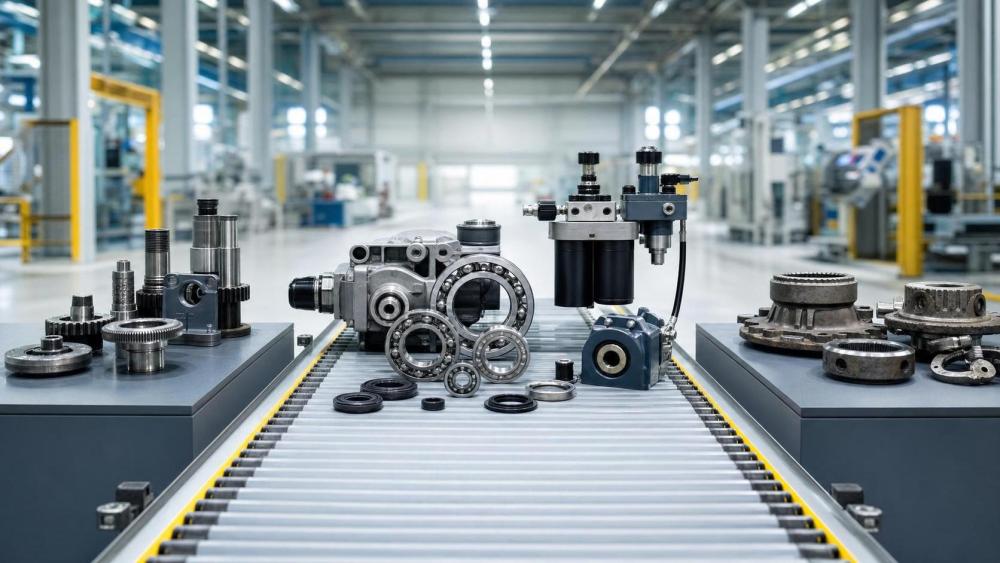
Before choosing bearings, seals, hydraulic units, or transmission parts, a price quote is only the starting point.
A lower purchase price can still create higher long-term cost through maintenance, energy loss, downtime, and shorter service life.
That is why lifecycle cost analysis matters in industrial procurement.
It helps compare total ownership cost before a buying decision locks in years of operating consequences.
In practical terms, lifecycle cost analysis looks beyond unit price and asks a harder question.
Which option will cost less to own, support, replace, and run across the full service period?
For industrial components, that question is often where real savings appear.
Why Purchase Price Is Not the Real Cost
Many sourcing decisions still lean too heavily on initial quotation comparisons.
That works for low-risk consumables, but not for critical rotating or sealing components.
A cheaper bearing may need more frequent lubrication, produce more vibration, and fail earlier under load.
A lower-cost seal may harden faster in heat, leak in chemical exposure, and increase contamination risk.
A basic hydraulic pump may look economical at purchase, yet waste energy and require more service calls.
In each case, total ownership cost rises even when the invoice looks attractive.
Lifecycle cost analysis brings those hidden costs into the comparison before a contract is signed.
What Lifecycle Cost Analysis Should Include
A useful lifecycle cost analysis should cover every major cost driver across the operating life.
The exact model will vary by equipment type, but the core categories are consistent.
- Purchase cost, including unit price, freight, duties, and qualification expense
- Installation cost, including alignment, tooling, labor, and commissioning time
- Operating cost, especially energy consumption, lubricant use, and air or fluid efficiency
- Maintenance cost, including inspections, spare parts, planned replacement, and technician hours
- Downtime cost from leakage, overheating, vibration, belt slip, or unexpected stoppage
- End-of-life cost, including disposal, rebuild, recycling, or production disruption during changeout
This broader view makes lifecycle cost analysis a decision tool, not just a finance exercise.
How to Compare Total Ownership Cost Step by Step
A clear process keeps lifecycle cost analysis practical and comparable across suppliers.
- Define the duty conditions. Record speed, load, pressure, temperature, media, and running hours.
- Set the service period. Use one, three, or five years depending on replacement cycle and asset criticality.
- Collect supplier data. Ask for expected life, maintenance interval, efficiency, and failure history in similar applications.
- Estimate operating cost. Include electricity, compressed air, lubrication, and fluid loss where relevant.
- Estimate maintenance cost. Add labor, planned downtime, consumables, and spare inventory requirements.
- Model failure risk. Assign a cost for unplanned stoppage, scrap, leakage, or downstream equipment damage.
- Compare total ownership cost. Rank options by full lifecycle value, not by unit price alone.
In real procurement work, even a simple model often changes the preferred supplier list.
A Simple Lifecycle Cost Analysis Example
Consider two bearing options for a production conveyor.
Option A costs less upfront, but requires replacement every twelve months.
Option B costs more, but lasts thirty months and reduces vibration-related downtime.
This is the core value of lifecycle cost analysis.
It reveals when a more durable component delivers the lower total ownership cost.
Where Buyers Often Miss Hidden Cost
Several cost items are routinely underestimated during supplier comparison.
- Energy inefficiency in hydraulic pumps, motors, and pneumatic systems
- Lubrication burden for bearings, chains, and couplings
- Seal failure costs from leakage, cleaning, contamination, and lost product
- Inventory carrying cost for short-life spare parts
- Line restart losses after an unexpected shutdown
- Supplier lead-time risk when emergency replacements are needed
These hidden items can outweigh the original price difference very quickly.
That also means lifecycle cost analysis becomes more important as equipment criticality rises.
How Supplier Evaluation Supports Better Lifecycle Cost Analysis
A reliable cost model depends on reliable supplier information.
During evaluation, ask for evidence instead of broad performance claims.
- Application references under similar speed, pressure, or media conditions
- Test reports for wear, heat resistance, leakage control, or fatigue life
- Maintenance recommendations and expected replacement intervals
- Quality consistency data across batches and production sites
- Service support, local stock, and emergency response capability
For bearings, hydraulic units, seals, and transmission parts, technical reliability directly shapes procurement economics.
Without that evidence, lifecycle cost analysis turns into guesswork.
Using Lifecycle Cost Analysis Across Industrial Categories
Different components create cost in different ways, so the model should reflect actual failure patterns.
Bearings
Focus on fatigue life, lubrication interval, vibration behavior, mounting accuracy, and downtime exposure.
Hydraulic and Pneumatic Components
Look closely at efficiency, leakage, cycle stability, contamination tolerance, and serviceability.
Chains, Belts, and Transmission Parts
Measure wear rate, alignment sensitivity, retensioning labor, torque transfer stability, and spare availability.
Seals and O-Rings
Assess material compatibility, temperature resistance, chemical resistance, leakage cost, and changeout frequency.
This category-specific view makes lifecycle cost analysis far more credible in technical purchasing reviews.
Practical Questions to Ask Before You Buy
A stronger sourcing decision usually starts with better questions.
- What is the expected service life under my real operating conditions?
- What maintenance interval is required to achieve that life?
- How does this product affect energy consumption or system efficiency?
- What failure mode is most likely, and what does that failure cost?
- What local support and spare stock are available during urgent replacement needs?
- Can the supplier support data-based lifecycle cost analysis with evidence?
These questions help move the discussion from price pressure to operational value.
Make Lifecycle Cost Analysis Part of Every Major Purchase
Industrial buying decisions shape maintenance cost, uptime, energy use, and production stability for years.
That is why lifecycle cost analysis should be a standard step before selecting critical components.
It supports better supplier comparison, better total ownership cost control, and better long-term equipment reliability.
For bearings, seals, hydraulic systems, pneumatic components, and transmission parts, the best buying decision is rarely the cheapest quote.
The better decision is the one that performs longer, fails less, and costs less across the full operating life.
Use lifecycle cost analysis early, compare total ownership cost carefully, and let evidence guide the final purchase decision.
Want to dive deeper into these market dynamics, or need data-driven support for your next business move? Drop a line below and let the analysts at PCTS provide customized insights.
We respect your privacy. Your information is strictly confidential.
Related News
- 00
0000-00
IndexBox Forecasts 3.8% Annual Growth for Global Radial Seals Market Through 2035 - 00
0000-00
How to assess the chemical compatibility of FFKM sealing sheets - 00
0000-00
IndexBox Forecasts 3.6% Annual Growth for Construction Bearings Market - 00
0000-00
When do hydraulic components require an export license? - 00
0000-00
How to size modular pneumatic valve systems for adequate airflow
Weekly Insights
Stay ahead with our curated technology reports delivered every Monday.